The 2026 TTS Market and a Practical Strategy for Publishers
Market forecasts point to rapid growth in AI voice, but publishers still need disciplined tests, clear costs, and product-level comparisons.
Text-to-speech (TTS) converts written language into synthetic speech. For publishers in 2026, it serves two roles: improving access to written work and redistributing existing articles into moments when reading is impractical.
I first encountered publisher TTS experiments while working in ad tech. The debate then centered on robotic voices. Now that I build audio products, most of my time goes elsewhere: pronunciation dictionaries, player placement, article updates, and measurement. Model quality alone does not determine whether a deployment works.
The AI voice market is growing, but definitions matter
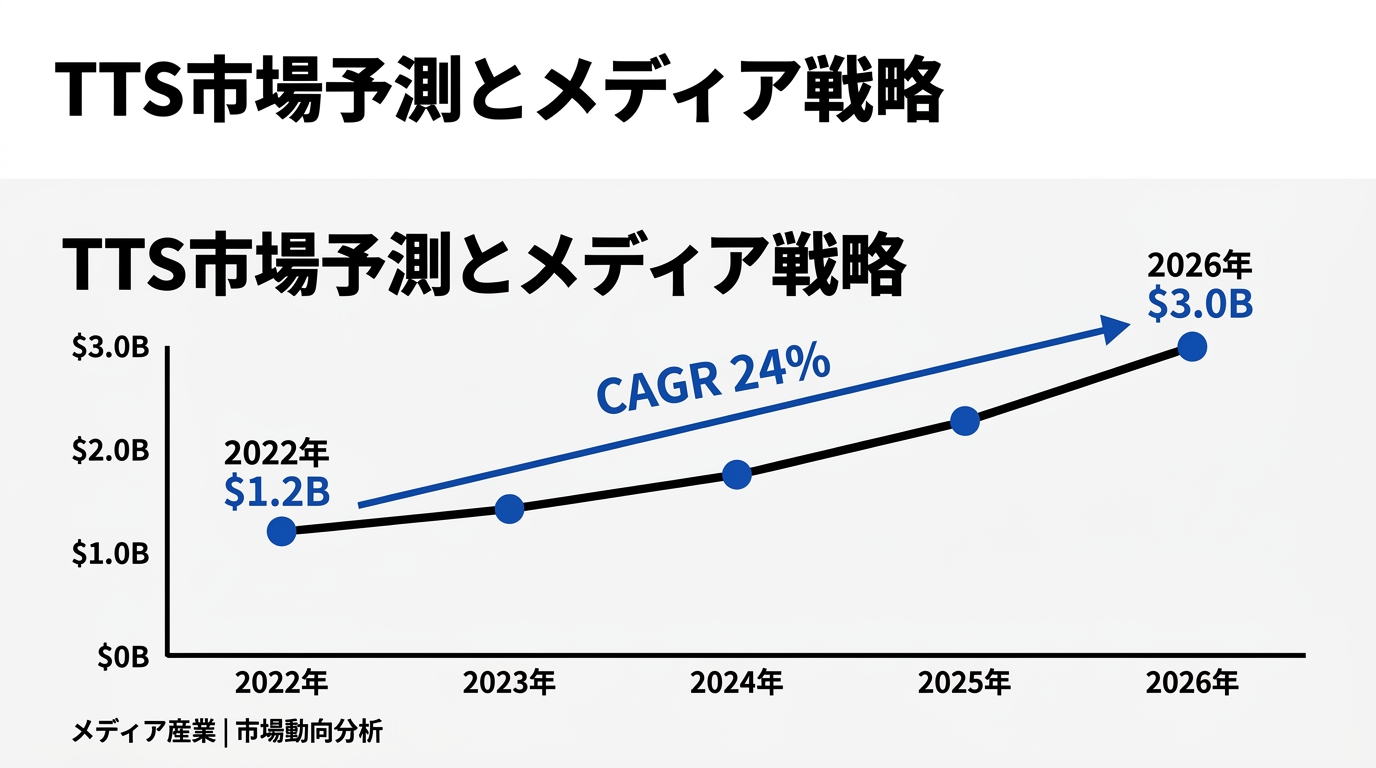
Market estimates often combine TTS with broader AI voice generation. Grand View Research estimates that the AI voice generators market will grow from $3.6 billion in 2023 to $21.8 billion in 2030, a compound annual growth rate of 29.5%. That forecast covers more than article narration and should not be presented as a TTS-only figure.
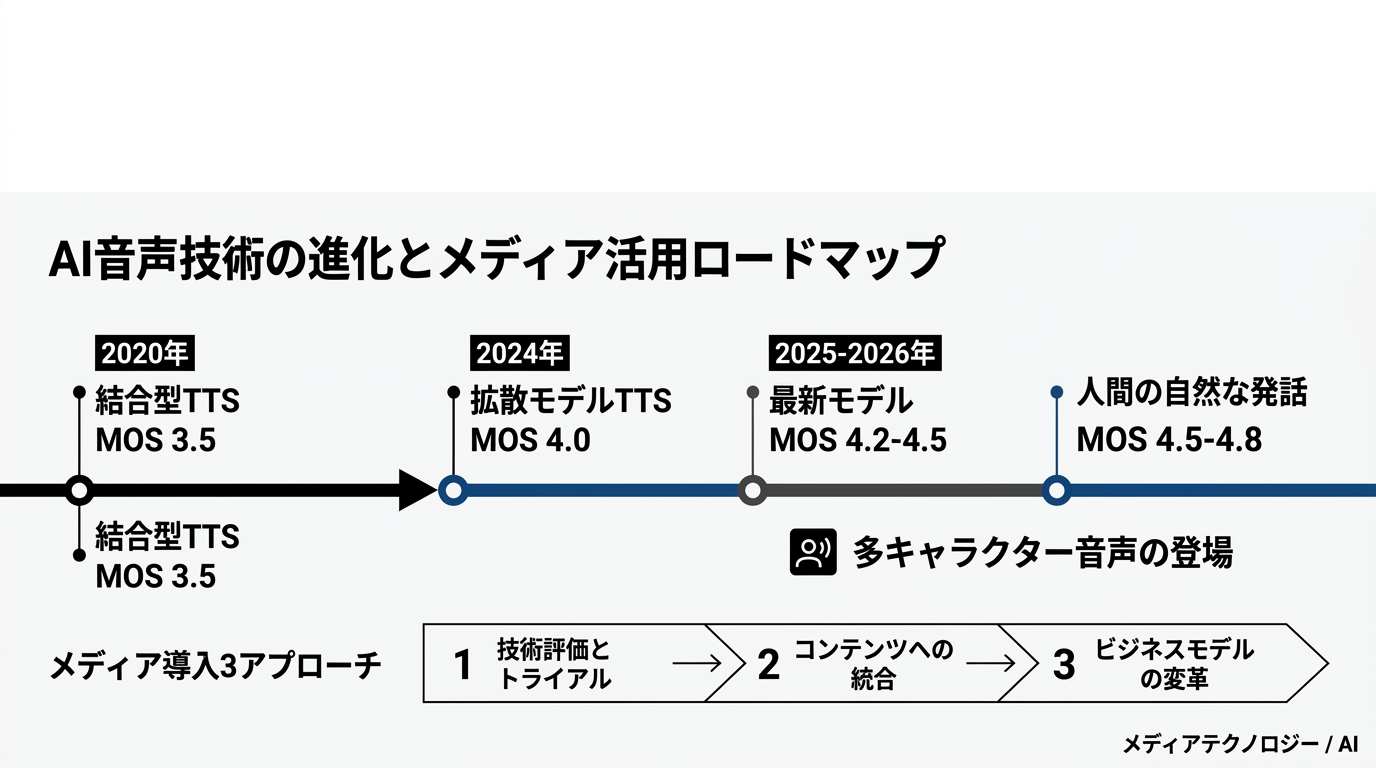
Neural speech quality and API access are genuine growth drivers. Claims that generated speech is “indistinguishable from humans,” however, depend on language, voice, script, and listening conditions. A polished demo is not evidence that a model will handle a publication’s long-form archive.
Google Cloud Text-to-Speech pricing shows the common character-based model and different rates by voice class. API charges are only one part of cost. Script cleanup, pronunciation management, regeneration, storage, delivery, and monitoring also matter.
I learned this after adding pronunciation dictionaries and regeneration history later than I should have. Missing operational tools become labor costs.
The market splits into APIs and publishing workflows
Large cloud platforms such as Google Cloud, Amazon Polly, and Azure AI Speech fit teams already building on those ecosystems. Newer voice platforms emphasize expression and model choice, while audio CMS products cover more of the publishing workflow.
ElevenLabs v3 supports more than 70 languages and uses audio tags for expressive direction. Fish Audio focuses on models and APIs that engineering teams can incorporate into their own systems. BeyondWords packages ingestion, players, analytics, and monetization for publishers.
The right comparison goes beyond demo preference. Review language performance, licensing, dictionaries, CMS integration, analytics, and replacement procedures after an error. MediaLeap Inc.’s PUBVOICE is one option for Japanese publishers, but an API may give a well-resourced engineering team better control. Our article audio services comparison goes deeper into these trade-offs.
What changes for publishers
One reporting effort can now support both a written and an audio edition. That does not require a newsroom to become an audio studio. A web player can test demand without an app install, as described in web versus app audio.
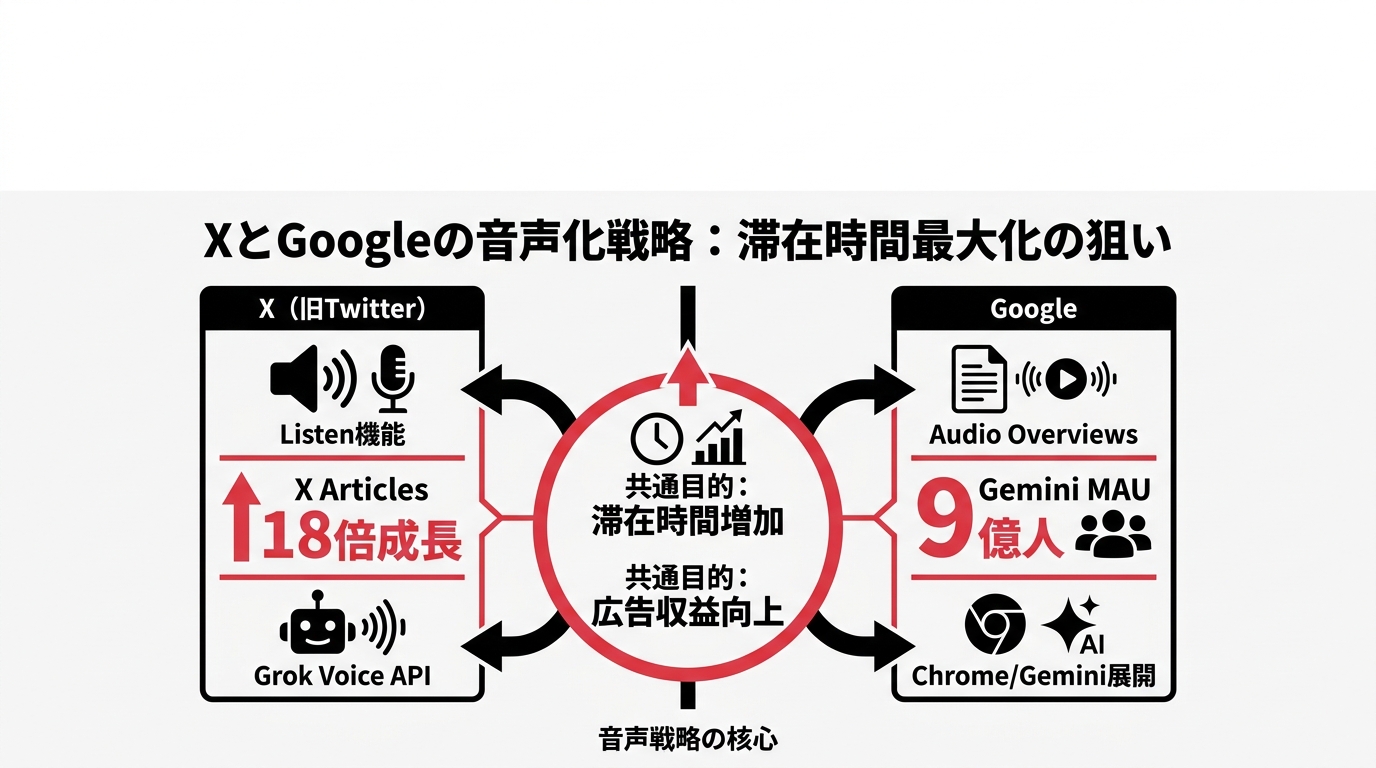
Monetization requires caution. Audio advertising, paid audio, and sponsorship can create revenue, but only after a publication develops listening volume and a sales process. Background listening should not be sold as attention to an on-screen display ad. Our analysis of increasing ad value without adding slots separates visible page activity from audio listening.
This distinction reflects my earlier work in publisher monetization. A new ad placement became a product only when measurement and sales were in place. Generating audio and building an audio business are likewise separate jobs.
Run a narrow test before a broad rollout
Select a small group of evergreen stories, keep the player position consistent, and measure starts and completion over a defined period. If measuring engaged time, separate active-page listening from background playback. Record the conditions in the same way used by our audio impact measurement guide.
Japanese TTS has language-specific operational issues: alternative kanji readings, proper nouns, numbers, and mixed Latin text. Other languages bring their own ambiguities. Medical, legal, and performance-driven work may still justify human narration or mandatory human review.
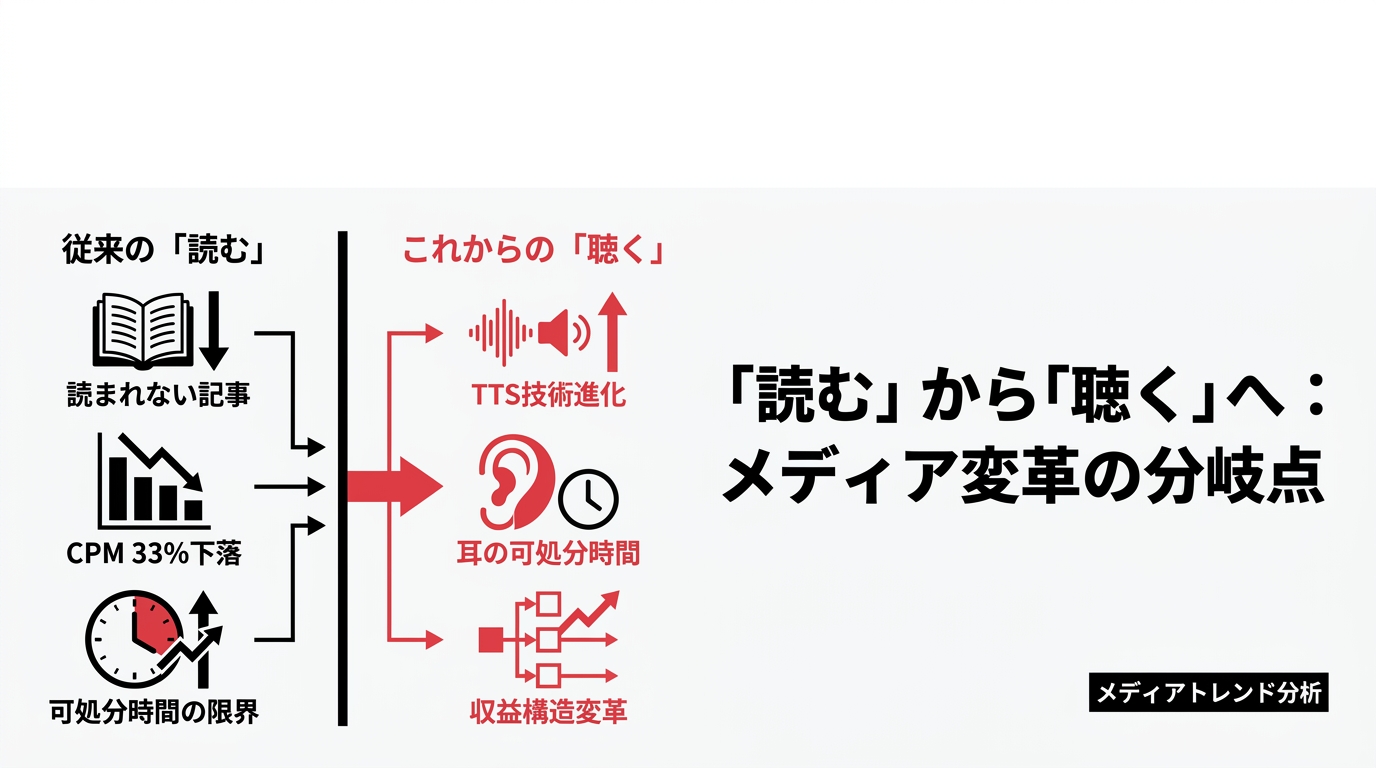
A market forecast cannot tell a publisher whether its readers will listen. The better starting point is an audience gap: a valuable article that fails to reach people because their eyes are occupied. Where that gap exists, audio deserves a measured test.
By Yutaro Sasao, CEO of MediaLeap Inc.
PUBVOICE - Deliver your articles as audio
We built PUBVOICE so media operators can add a listening experience without extra workload. Register an RSS feed and every new article gets audio automatically.
Every time we hear editors worry that readers never finish their articles, we keep coming back to the same answer: audio reaches the moments text cannot - commutes, chores, workouts. PUBVOICE was born from that conviction.

Yutaro Sasao
We take each person's "I want to" and "I want to be able to" seriously, and use technology to make it happen. That is our mission.
Opening up new possibilities with digital technology. Drawing on roughly ten years in the advertising and media industries, Yutaro builds app development for web media companies with AI-driven efficiency.
Talk to us about your next project
Contact us about app development or other digital initiatives. We will review your requirements and recommend an approach suited to your business.
Related posts
Contact
Contact us to discuss app development for your media business. We will recommend an approach based on your requirements and commercial goals.
Contact Form
Send us your inquiry using the form below. We aim to respond within 24 hours.
Contact by Email
info@media-leap.com
We aim to respond within 24 hours
Business Hours
Weekdays: 9:00–18:00 JST
Weekends and public holidays: Closed