What Makes a Well-Rated AI Voice App Work
Natural delivery, useful listener choice, and a short path to playback matter more than a long feature list. These lessons transfer directly to publisher audio.
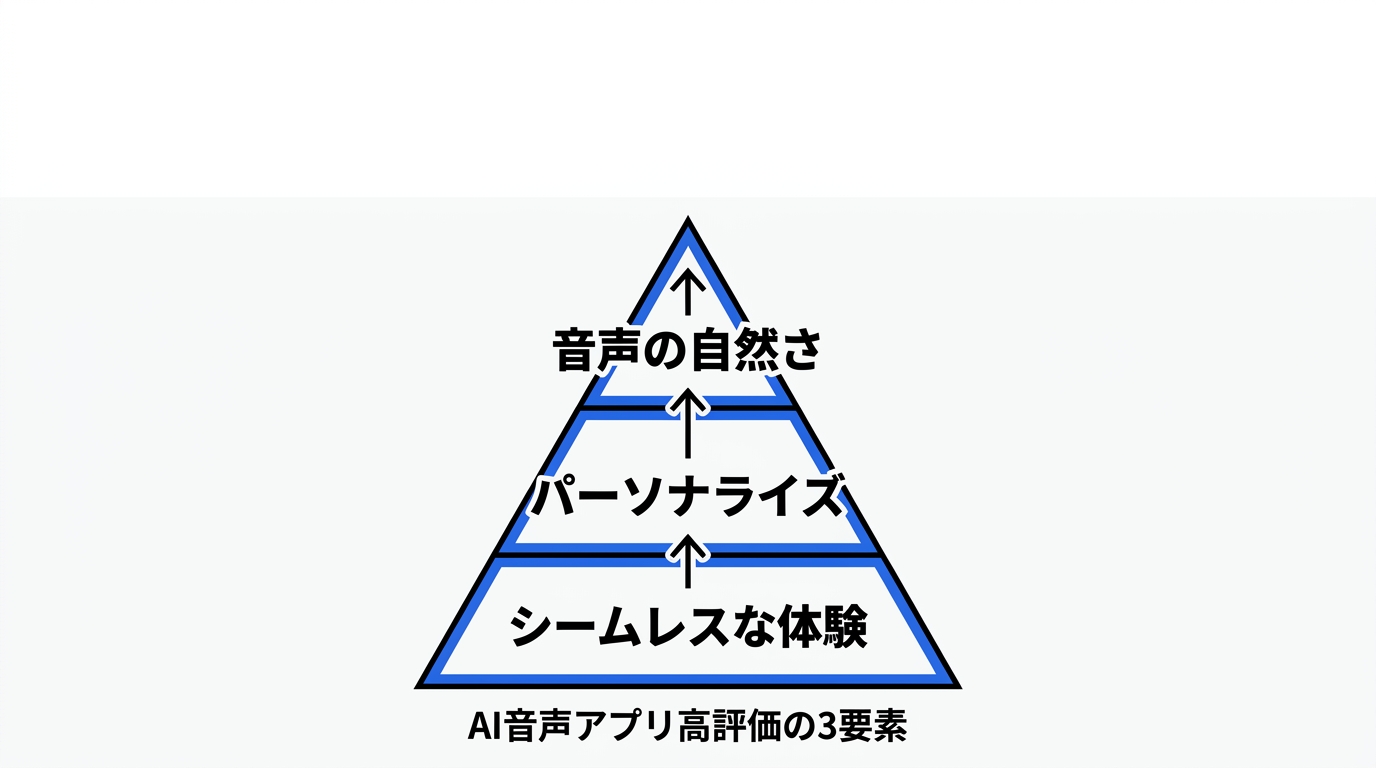
A well-rated voice app is not necessarily the one with the most features. It is the one that sounds credible, offers choices people understand, and starts when they expect it to.
I built and operated AITOMO, a voice chat app that passed 5,000 downloads and reached a 4.2 store rating. Reviews and support messages repeatedly pointed to small frictions: a name pronounced incorrectly, an answer that ran too long, or a delay that made the app feel unresponsive.
Natural speech is more than a voice model
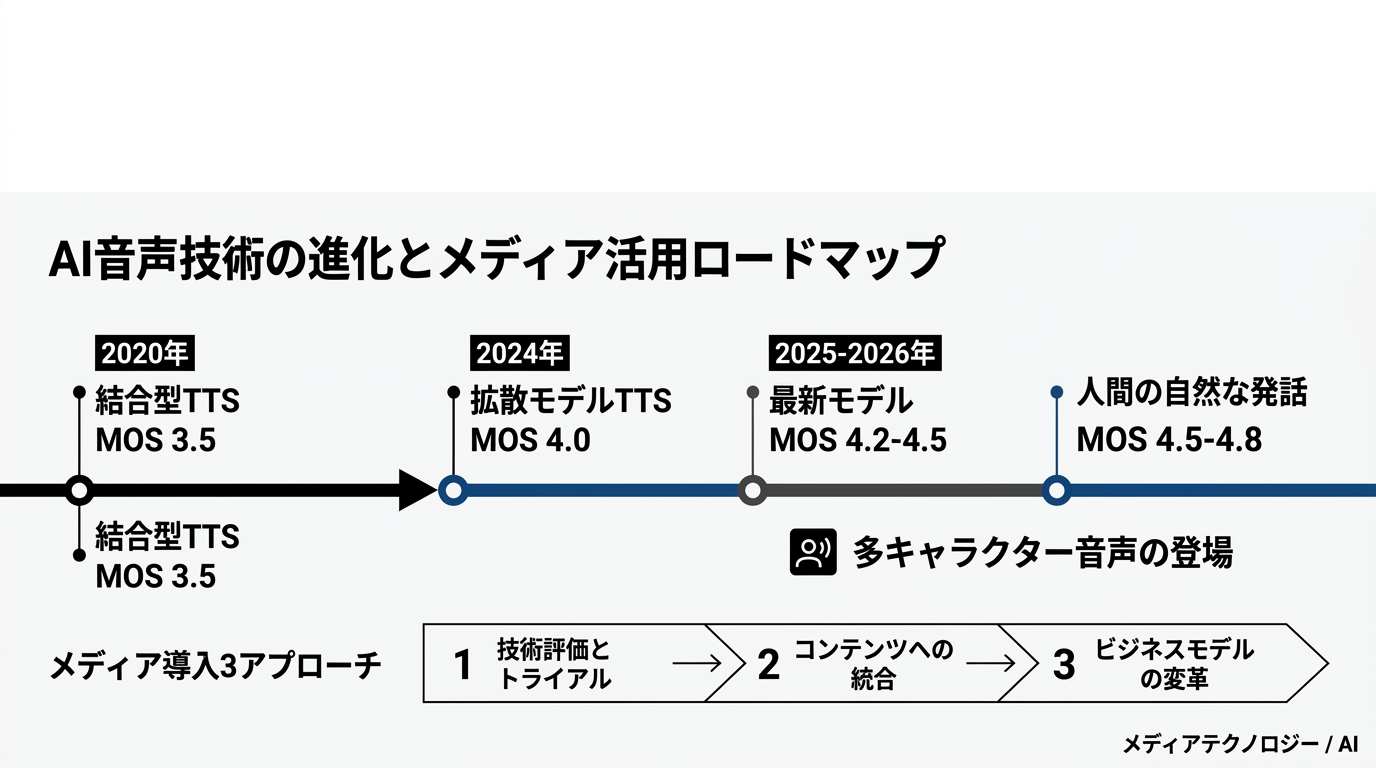
Text-to-speech quality depends on the model, but also on the script, pronunciation, pauses, and sentence length. Modern systems sound far better than their predecessors. They still struggle when publishers feed them prose written for a screen: nested parentheses, tables, link text, and long sentences with several clauses.
Changing AITOMO's model did not solve every complaint. Shortening replies, tuning punctuation, and reducing the wait before speech often mattered more. Lessons from international audio apps reaches the same conclusion: “natural” describes the whole interaction, not an isolated demo voice.
For a publisher, quality testing should use complete stories. Include names, quotations, headings, and transitions. A ten-second marketing sample will not expose the parts that make a listener stop.
Choice helps until it becomes another task
Listener control can expand the situations in which audio works. Playback speed, pause, and saved position are usually more useful than dozens of narrator choices.
AITOMO eventually included more than 100 characters. People enjoyed finding a favorite, but showing too many options too early slowed the first conversation. Personal control and decision overload sit close together.
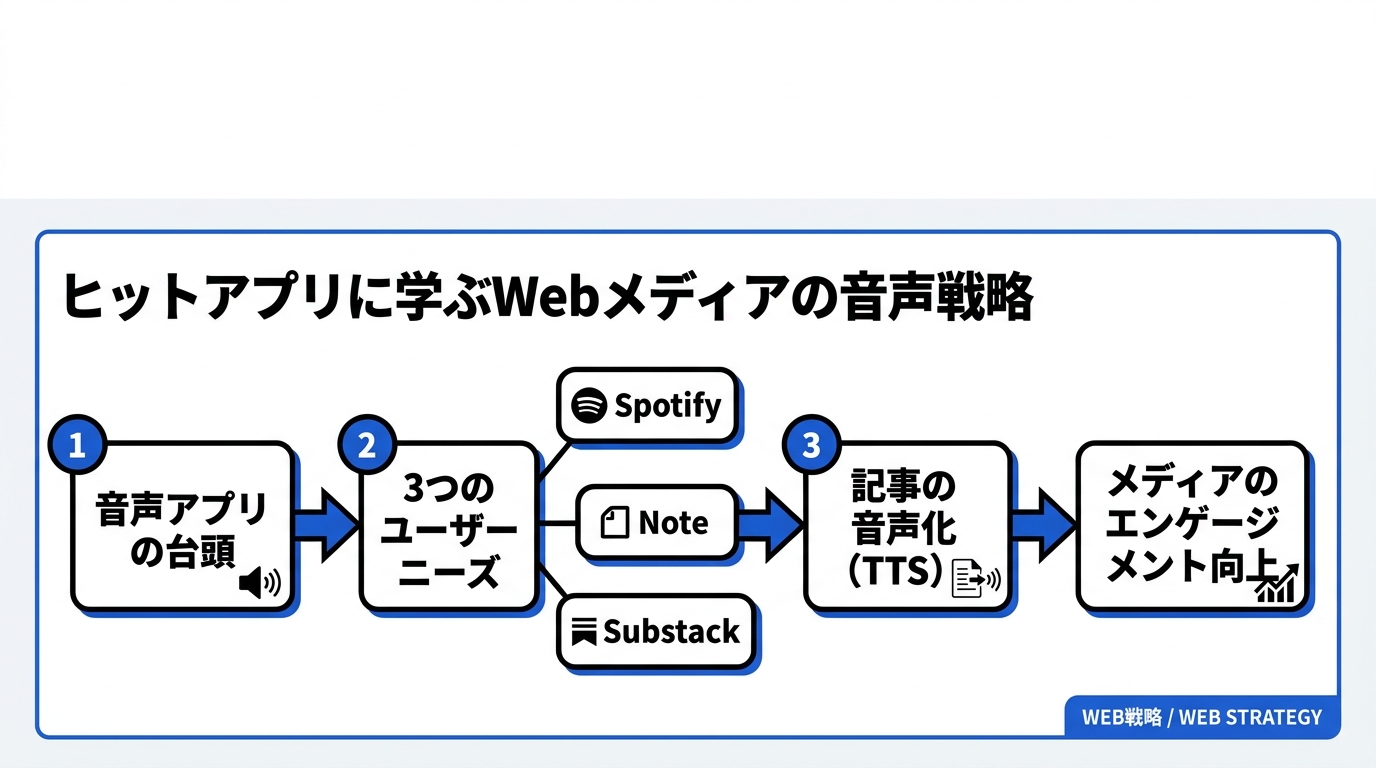
For article audio, begin with 1x and 1.5x speed, clear play and pause controls, and resume position. Add narrators only when research shows that the audience wants them. What hit audio apps reveal examines that demand in Spotify, ElevenReader, note, and Substack.
Playback speed includes the wait before sound
Generate article audio at publication time and store it on a CDN. Calling a TTS service only after the reader presses play adds avoidable latency. MP3 and AAC remain practical formats because browsers and mobile devices support them broadly.
Test on a physical phone and an ordinary mobile connection. During development, I repeatedly found delays that were invisible on office Wi-Fi. Loading feedback, prefetch behavior, and tap response all changed how fast the product felt.
The player itself should sit near the headline. It should not require a login, installation, or settings walkthrough. The desired action is playback, so playback must remain visually dominant.
More features can lower the product's quality
Equalizers, transcripts, sharing, bookmarks, chapter controls, and multiple narrators may all be useful. Shipping them at once can bury the primary action and make quality control harder.
Audio is also a poor fit for some pages. Breaking news can be scanned faster. Code, charts, and image-led reporting depend on the screen. A publisher should reduce the eligible story set before expanding the player.
Five publisher audio mistakes covers the operational risks: converting everything, skipping checks, hiding the player, loading it with ads, and measuring too late.
PUBVOICE applies lessons from our app work to script preparation and embedded playback for Japanese publishers. A custom implementation can still make more sense for a newsroom with dedicated engineering staff and unusual requirements.
The three durable traits are modest: credible delivery, enough control, and little waiting. Store ratings taught me that the smallest parts of a product are often the ones users encounter every day—and therefore the ones they remember.
PUBVOICE - Deliver your articles as audio
We built PUBVOICE so media operators can add a listening experience without extra workload. Register an RSS feed and every new article gets audio automatically.
Every time we hear editors worry that readers never finish their articles, we keep coming back to the same answer: audio reaches the moments text cannot - commutes, chores, workouts. PUBVOICE was born from that conviction.

Yutaro Sasao
We take each person's "I want to" and "I want to be able to" seriously, and use technology to make it happen. That is our mission.
Opening up new possibilities with digital technology. Drawing on roughly ten years in the advertising and media industries, Yutaro builds app development for web media companies with AI-driven efficiency.
Talk to us about your next project
Contact us about app development or other digital initiatives. We will review your requirements and recommend an approach suited to your business.
Related posts
Contact
Contact us to discuss app development for your media business. We will recommend an approach based on your requirements and commercial goals.
Contact Form
Send us your inquiry using the form below. We aim to respond within 24 hours.
Contact by Email
info@media-leap.com
We aim to respond within 24 hours
Business Hours
Weekdays: 9:00–18:00 JST
Weekends and public holidays: Closed