How to Create AI Audio Content in Five Steps
Creating an audio article involves content selection, script adaptation, speech generation, human review, and publishing with analytics. The operational system matters more than choosing the most expensive TTS model.
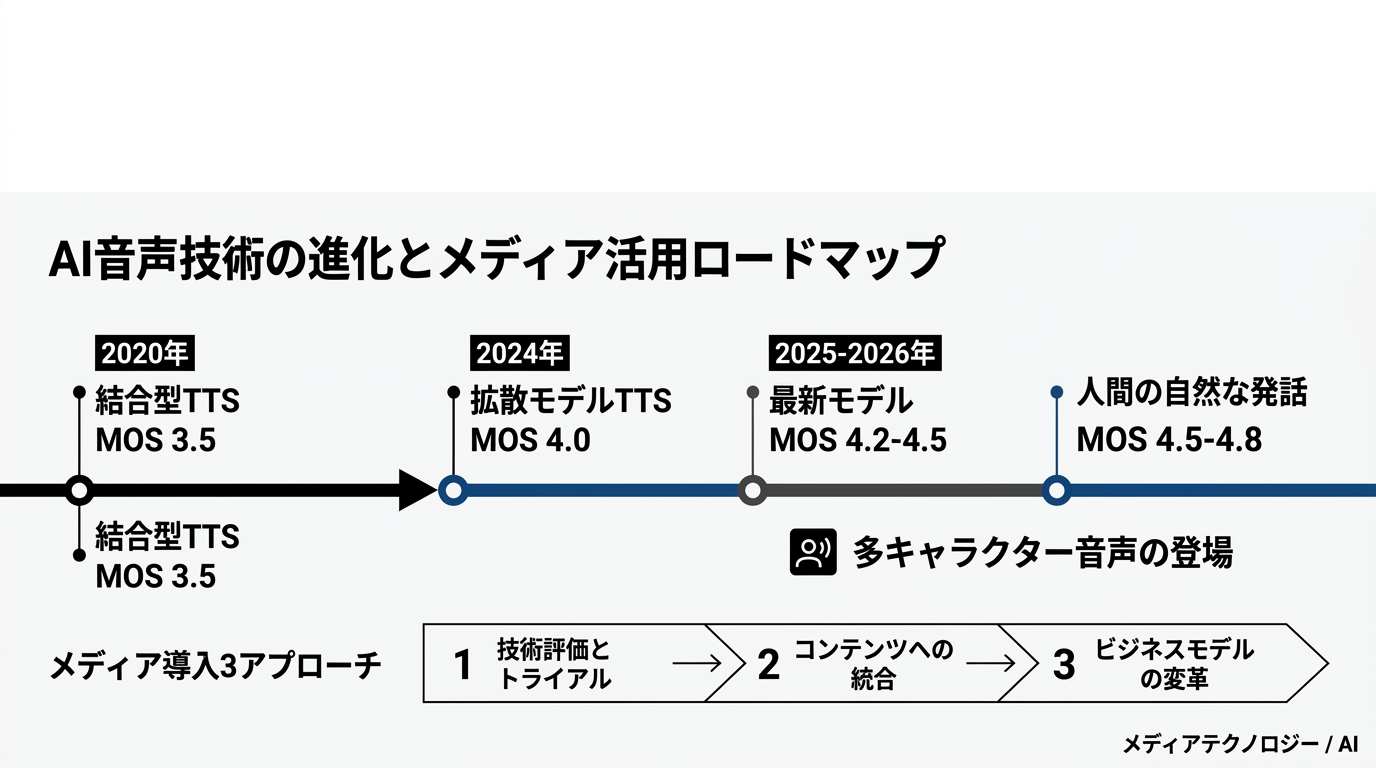
An AI audio article is not finished when text is sent to a speech API. A publisher must select the right story, adapt it for the ear, review pronunciation and meaning, deliver the file, and measure how people use it.
I have built an AI audio SaaS product and a voice-chat application using VOICEVOX in Japan. The API connection was rarely the long part. A mispronounced name discovered after publication could send us back through dictionary updates and regeneration.
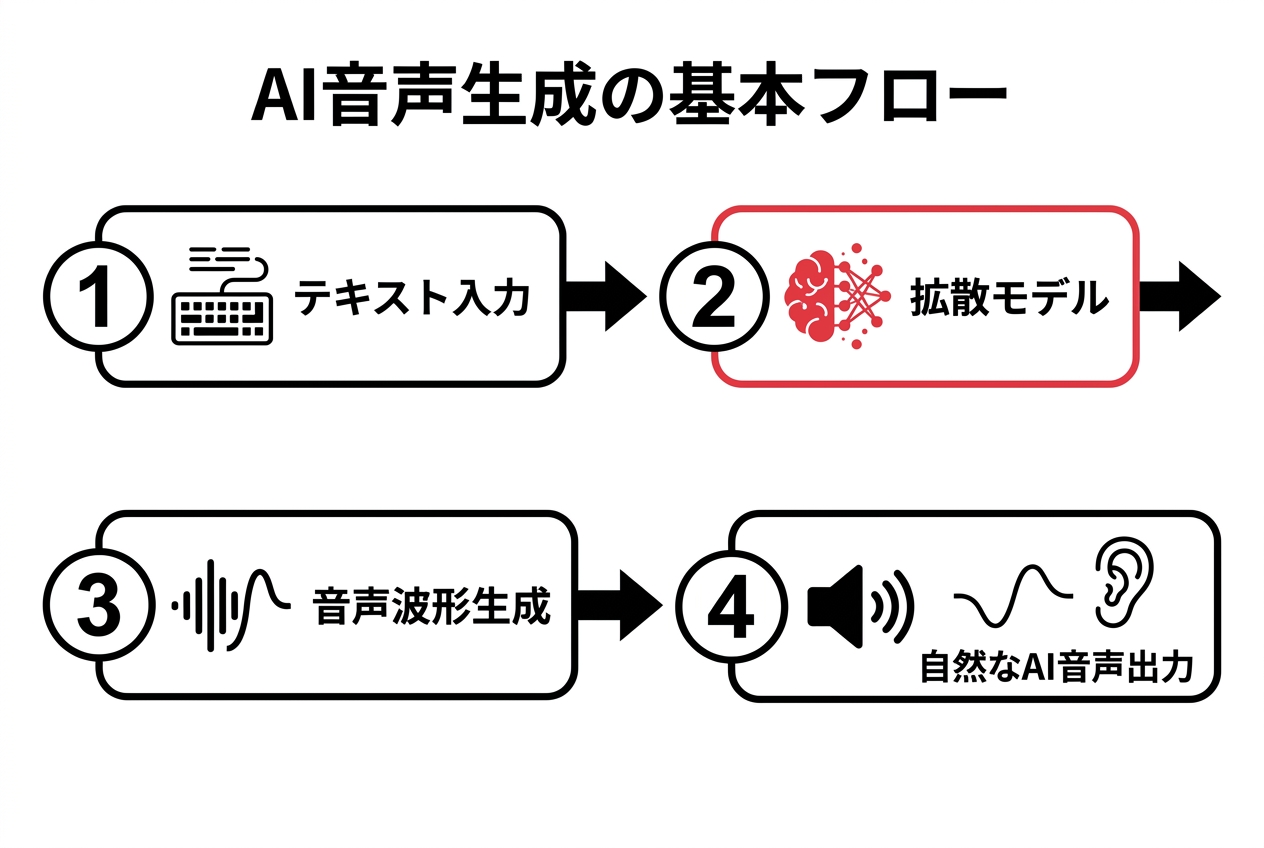
TTS turns written language into generated speech
Text-to-speech (TTS) systems convert text into pronunciation, timing, prosody, and an audio waveform. Modern neural systems generally sound smoother than older concatenative approaches, but quality varies across languages, speakers, scripts, and listeners.
The Japanese source article previously included universal MOS ranges for 2020–2026 systems without a traceable model-specific source. Those figures have been removed. "Indistinguishable from a human" is also too broad without a defined listening test.
In our voice-chat application, some users praised the natural speech while others caught names and emotional passages that sounded wrong. Current systems are useful enough for production, but only after testing them with the actual language and editorial material.
Choose between full narration and an audio summary
Full narration works for linear explainers, columns, and narrative reporting. A summary is often better for stories dominated by charts, code, photography, or reference material.
An archive-wide automation rule tends to generate poor-fit audio and a large review queue. Across more than 30 publisher conversations, teams that began with a small, selected set found it easier to understand the workload. This is a practical observation, not a controlled performance study.
Classify content as full audio, summary audio, or no audio. Why web publishers need an audio option offers criteria for that decision.
Create AI audio in five steps
The workflow separates editorial judgment from repeatable automation:
- Select the article. Begin with a few evergreen explainers, columns, or single-speaker interviews.
- Adapt the script for listening. Rewrite URLs, tables, footnotes, and visual references. Break long sentences where the meaning permits.
- Generate speech. Compare providers with the same script. Evaluate language support, speaker quality, speed controls, commercial rights, and cost.
- Run human review. Check names, numbers, quotations, pauses, clipping, and volume. Add confirmed corrections to a pronunciation dictionary.
- Publish and measure. Supply visible controls and a transcript. Track starts, milestones, completion, onward navigation, and return visits.
Generate in sections rather than as one long file when the platform permits it. During product development, I repeatedly regenerated entire recordings because of a small correction. Smaller units make updates faster and cheaper, though joins must be checked for consistent volume and pacing.
The input script determines much of the result
Punctuation helps a TTS model decide where to pause. Aim for sentences that can be understood in one pass, often around 40–60 Japanese characters in Japanese or roughly 15–25 words in English. These are editing heuristics, not hard model limits.
Names, acronyms, product terms, and mixed-language phrases belong in a pronunciation dictionary. Numbers also need context: a year, model number, currency, and decimal should not necessarily be read the same way.
An expensive engine cannot repair a script written entirely for the eye. Tables need verbal framing, parenthetical comments need a clear place in the sentence, and links usually need to be described rather than read aloud.
How audio articles can reduce drop-off explains why completion and comprehension must still be measured separately after production quality improves.
Multiple speakers improve clarity and increase review work
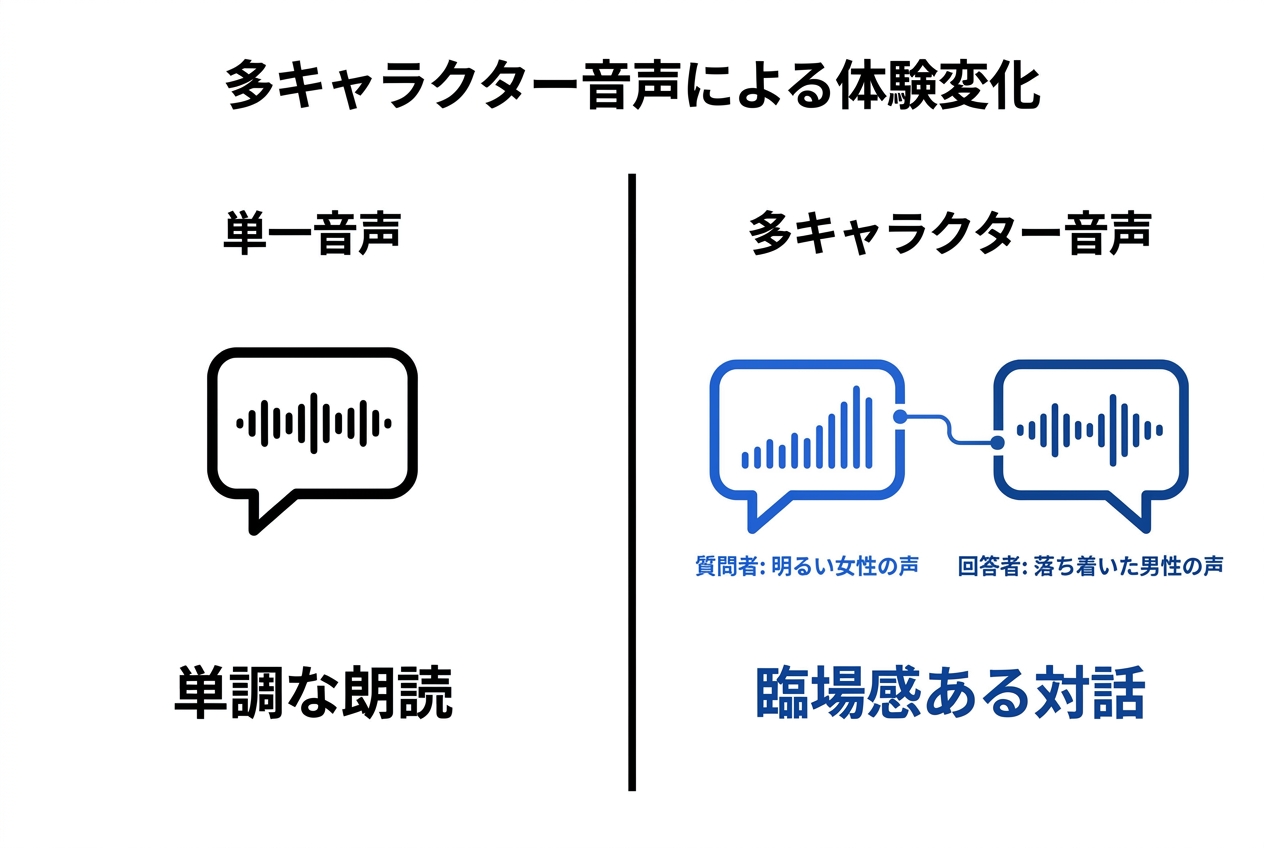
Multiple synthetic voices can distinguish interviewer from guest or anchor from analyst. They can make a dialogue understandable without repeatedly announcing speaker names.
The tradeoff is additional casting, level matching, transition review, and rights management. API support for multiple voices does not make the operational work disappear. Measure editing time on a few pieces before choosing the format for a series.
Celebrity or performer-like voices create legal and contractual risk. Copyright is only one issue; publicity, passing off, unfair competition, platform terms, and local law may also apply. Obtain appropriate permission and legal advice before commercial release.
Match automation to the publishing operation
Fully automated generation fits high-volume publishing, but can expose pronunciation errors immediately. A human-in-the-loop process offers more control and creates a review bottleneck. Selective generation offers a lower-risk path for teams still learning what their audience uses.
I generally recommend selective generation at the beginning, not as a universal answer. A breaking-news operation may need automation, while a publication built around a recognizable author's voice may prefer recording.
The five-step publisher audio rollout covers CMS and player integration. Audio content for AI search adds transcript and metadata requirements for answer engines.
Faster generation requires narrower human review
As generation scales, listening to every file from beginning to end becomes the bottleneck. Focus review on names, numbers, quotations, legal risk, and sections changed since the previous version. Feed reliable corrections back into the dictionary and script rules.
Track correction time and regeneration cost alongside audio quality. If the operation cannot sustain the review queue, reduce the content set or switch some articles to summaries.
The differentiator is not access to a natural voice. It is an editorial system that can keep correcting that voice after the first impressive demo.
PUBVOICE - Deliver your articles as audio
We built PUBVOICE so media operators can add a listening experience without extra workload. Register an RSS feed and every new article gets audio automatically.
Every time we hear editors worry that readers never finish their articles, we keep coming back to the same answer: audio reaches the moments text cannot - commutes, chores, workouts. PUBVOICE was born from that conviction.

Yutaro Sasao
We take each person's "I want to" and "I want to be able to" seriously, and use technology to make it happen. That is our mission.
Opening up new possibilities with digital technology. Drawing on roughly ten years in the advertising and media industries, Yutaro builds app development for web media companies with AI-driven efficiency.
Talk to us about your next project
Contact us about app development or other digital initiatives. We will review your requirements and recommend an approach suited to your business.
Related posts
Contact
Contact us to discuss app development for your media business. We will recommend an approach based on your requirements and commercial goals.
Contact Form
Send us your inquiry using the form below. We aim to respond within 24 hours.
Contact by Email
info@media-leap.com
We aim to respond within 24 hours
Business Hours
Weekdays: 9:00–18:00 JST
Weekends and public holidays: Closed