Comparing Article Audio Services: Four Buying Criteria
ElevenLabs, Fish Audio, BeyondWords, and publisher-focused options serve different teams. Compare them by voice, engineering, workflow, and analytics.
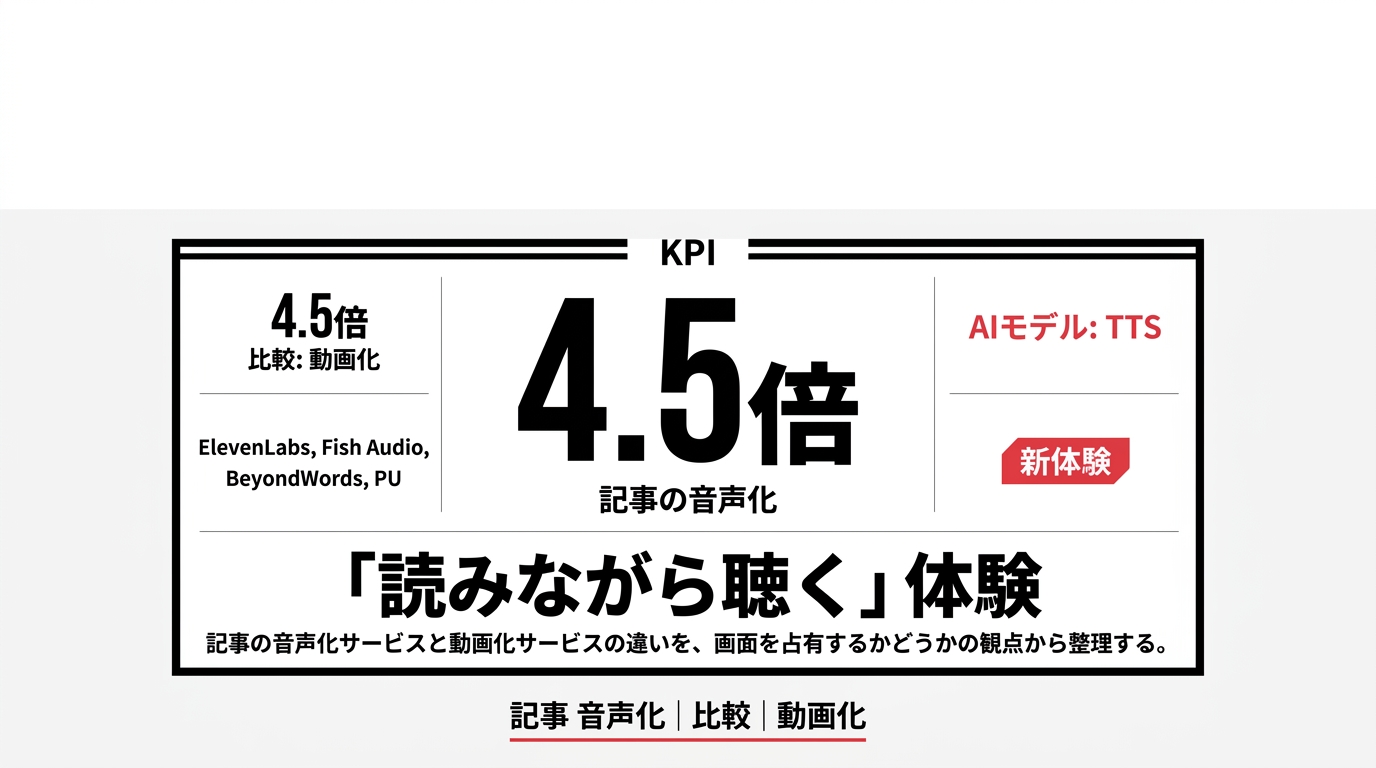
An article audio service cannot be selected from voice demos alone. An engineering team integrating an API has different needs from a newsroom expecting automatic ingestion, approvals, a web player, and analytics. That distinction changes how ElevenLabs, Fish Audio, and BeyondWords should be evaluated.
I have worked on monetization and analytics inside a large publisher and now build audio software. In implementation, synthesis was rarely the longest task. Article updates, pronunciation rules, player behavior, and measurement consumed more time. I therefore use four buying criteria: voice, engineering, editorial workflow, and analytics.
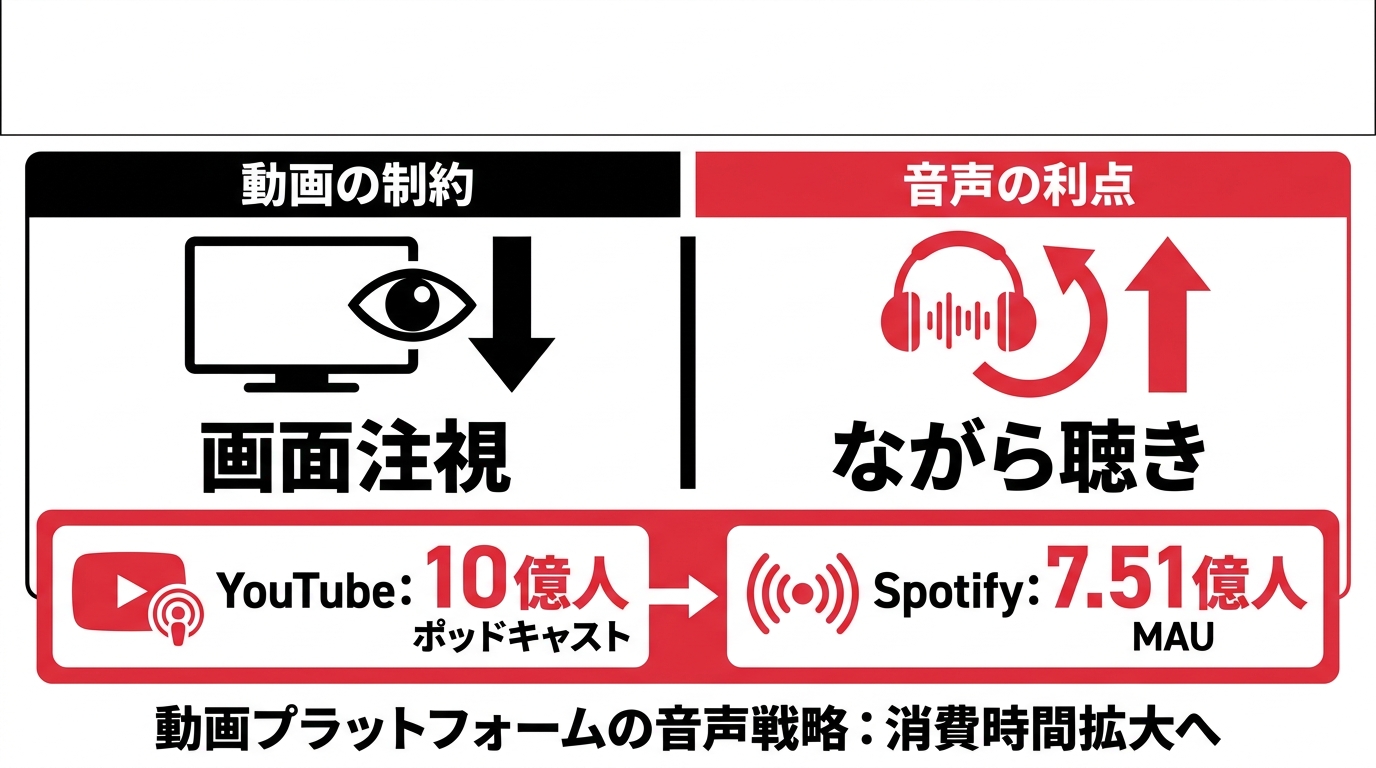
Audio and video use the screen differently
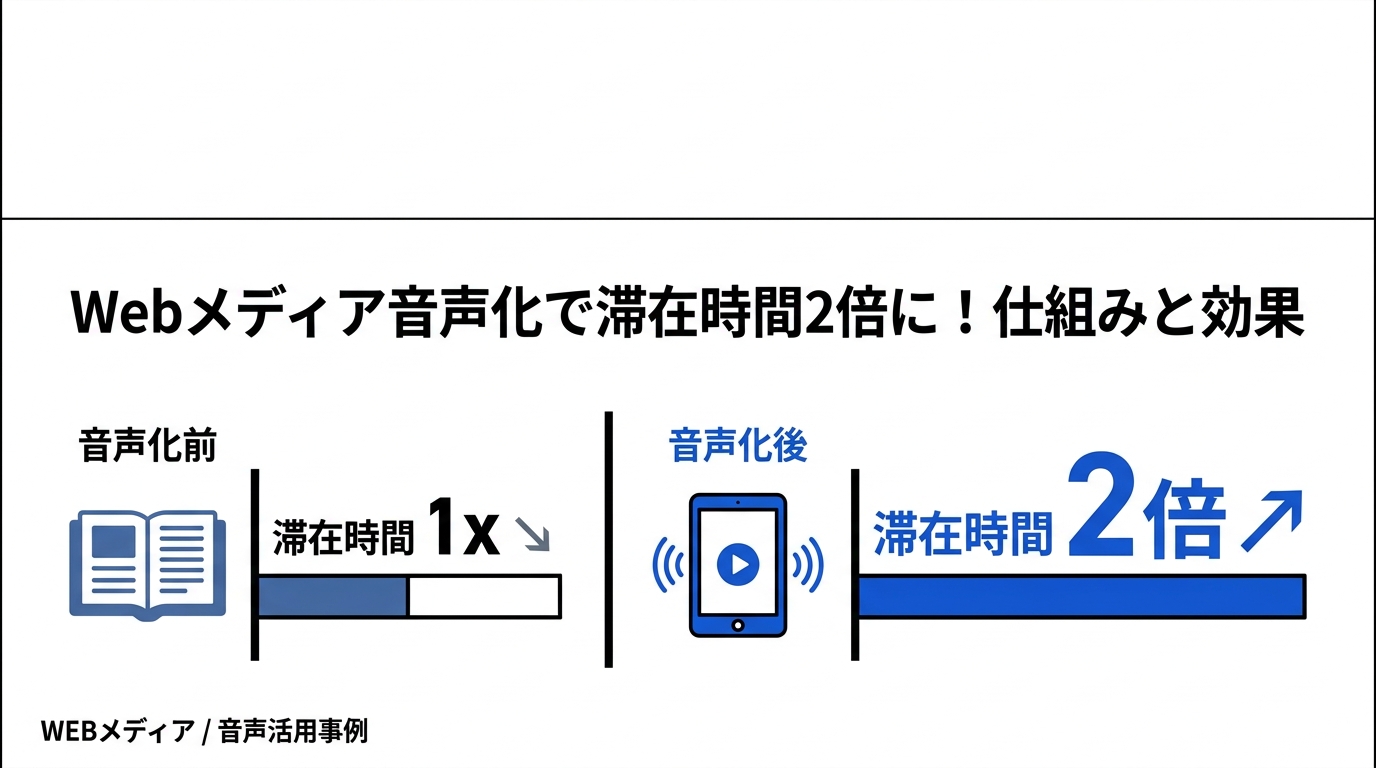
Article audio keeps the written page available while adding another way to follow it. Video usually asks for visual attention of its own. Audio can support both background listening and synchronized reading and listening.
That does not mean every audio play benefits the page. During background playback, the listener may not see any display advertising. Active-page use and background use should be measured separately, as explained in how to increase ad value without more slots.
Reading while listening deserves its own measurement
Reading while listening means keeping the article open and following text and speech together. It may help readers with print difficulties, language learners, or anyone who benefits from multimodal access. Background listening serves a different need by reaching moments when the screen is unavailable.
Neither mode is inherently better. Page visibility, playback state, and scrolling can help estimate the difference, but they do not prove where a person was looking. Our own player tests became more useful only after we separated tab state from playback duration. The audio impact measurement guide explains why conditions must remain explicit.
How the major service types differ
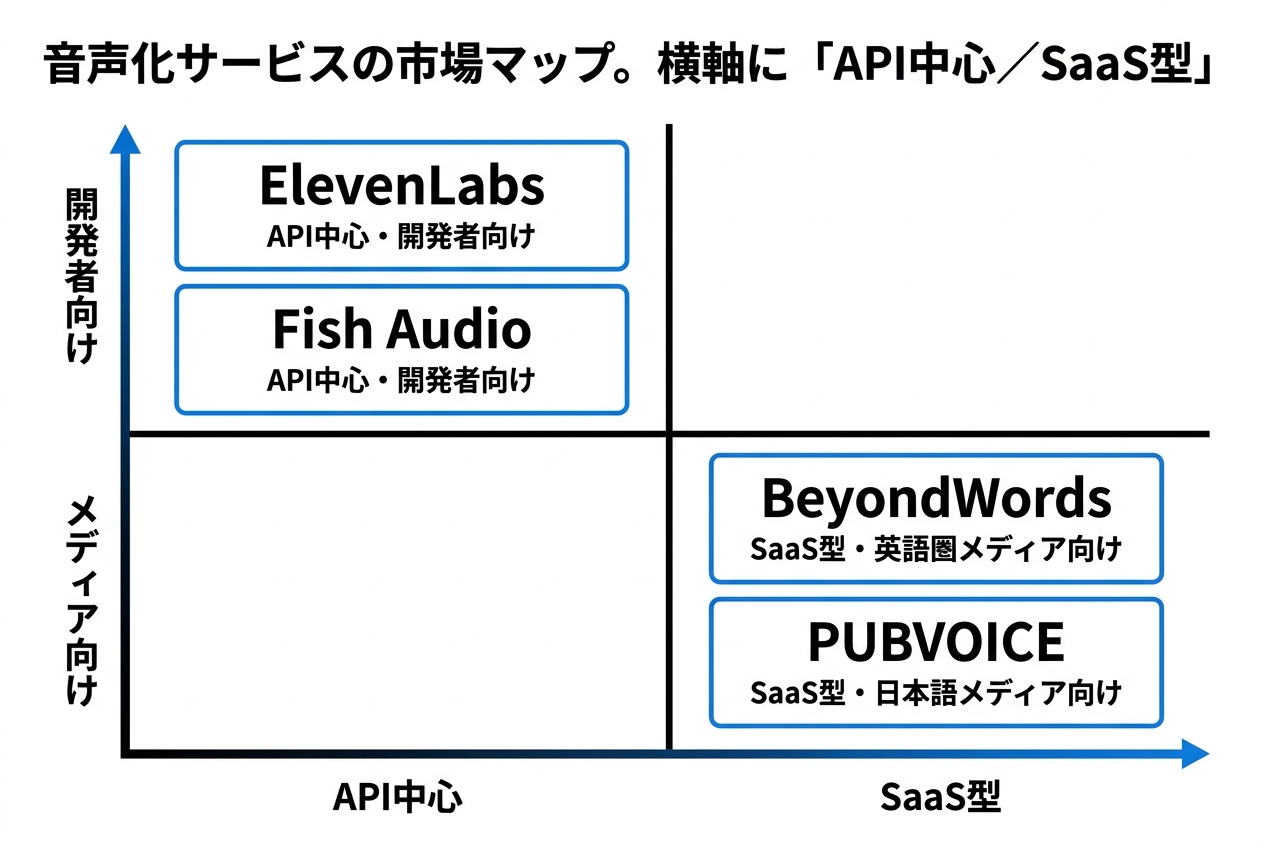
The market broadly separates API-led voice platforms from products that manage a publishing workflow. Voice quality varies by language, speaker, and script, so the services below are not ranked.
ElevenLabs
ElevenLabs combines APIs with production tools. According to the Eleven v3 announcement, v3 supports more than 70 languages, audio tags for expressive direction, and multi-speaker dialogue.
It is a strong candidate for teams that need expressive control or multilingual production. Publishers should separately verify article ingestion, update handling, site-player requirements, and publication-specific analytics. A team with engineers can build these layers around the API.
Fish Audio
Fish Audio offers speech models and APIs documented in its official developer documentation. It fits teams that want to incorporate voice generation into a system they control.
That control comes with integration work. A publisher may need to build article-update detection, approvals, a player, and analytics. The Japanese source article previously cited a WER score as evidence of overall superiority; we removed it because a benchmark cannot support that conclusion without aligned language, dataset, and test conditions.
BeyondWords
BeyondWords is an audio CMS for publishers and newsrooms. Its official product site presents article ingestion, voice production, players, analytics, and monetization as one workflow.
That wider workflow can benefit a newsroom managing many stories or publications. Buyers should test their target languages on real articles and confirm current CMS support, pricing, analytics, and regional support. It would be unfair to label the product unsuitable for Japanese media or dependent on one CMS without checking current requirements.
Choose by operating model, not brand recognition
An API is often a better fit when a publisher has engineers and needs detailed control. A managed audio CMS is more attractive when editors must run ingestion, publication, and analysis without a custom build. Japanese-language publishers should test their own proper nouns rather than relying on a generic demo.
MediaLeap Inc.’s PUBVOICE is designed for Japanese publishers that want to begin with article ingestion and a web player. This comparison therefore has a disclosed conflict of interest. Large multilingual operations or custom applications may be better served by another option.
The broader 2026 TTS market analysis makes the same distinction: market growth does not guarantee a successful deployment. During a trial, record correction time, publication steps, update behavior, and access to listening data.
When I worked in ad tech, adding inventory could improve short-term revenue while damaging the page. Audio can add access without taking more screen space, but only if people use it and the newsroom can sustain the workflow. The most useful comparison is not the longest feature table. It is the shortest reliable path from a published article to a measured listening experience.
By Yutaro Sasao, CEO of MediaLeap Inc.
PUBVOICE - Deliver your articles as audio
We built PUBVOICE so media operators can add a listening experience without extra workload. Register an RSS feed and every new article gets audio automatically.
Every time we hear editors worry that readers never finish their articles, we keep coming back to the same answer: audio reaches the moments text cannot - commutes, chores, workouts. PUBVOICE was born from that conviction.

Yutaro Sasao
We take each person's "I want to" and "I want to be able to" seriously, and use technology to make it happen. That is our mission.
Opening up new possibilities with digital technology. Drawing on roughly ten years in the advertising and media industries, Yutaro builds app development for web media companies with AI-driven efficiency.
Talk to us about your next project
Contact us about app development or other digital initiatives. We will review your requirements and recommend an approach suited to your business.
Related posts
Contact
Contact us to discuss app development for your media business. We will recommend an approach based on your requirements and commercial goals.
Contact Form
Send us your inquiry using the form below. We aim to respond within 24 hours.
Contact by Email
info@media-leap.com
We aim to respond within 24 hours
Business Hours
Weekdays: 9:00–18:00 JST
Weekends and public holidays: Closed