How TTS Is Changing the Future of Web Publishing
Text-to-speech gives a published article a second mode of distribution without asking writers to record a podcast. The opportunity is real, but so are the editorial and measurement costs.
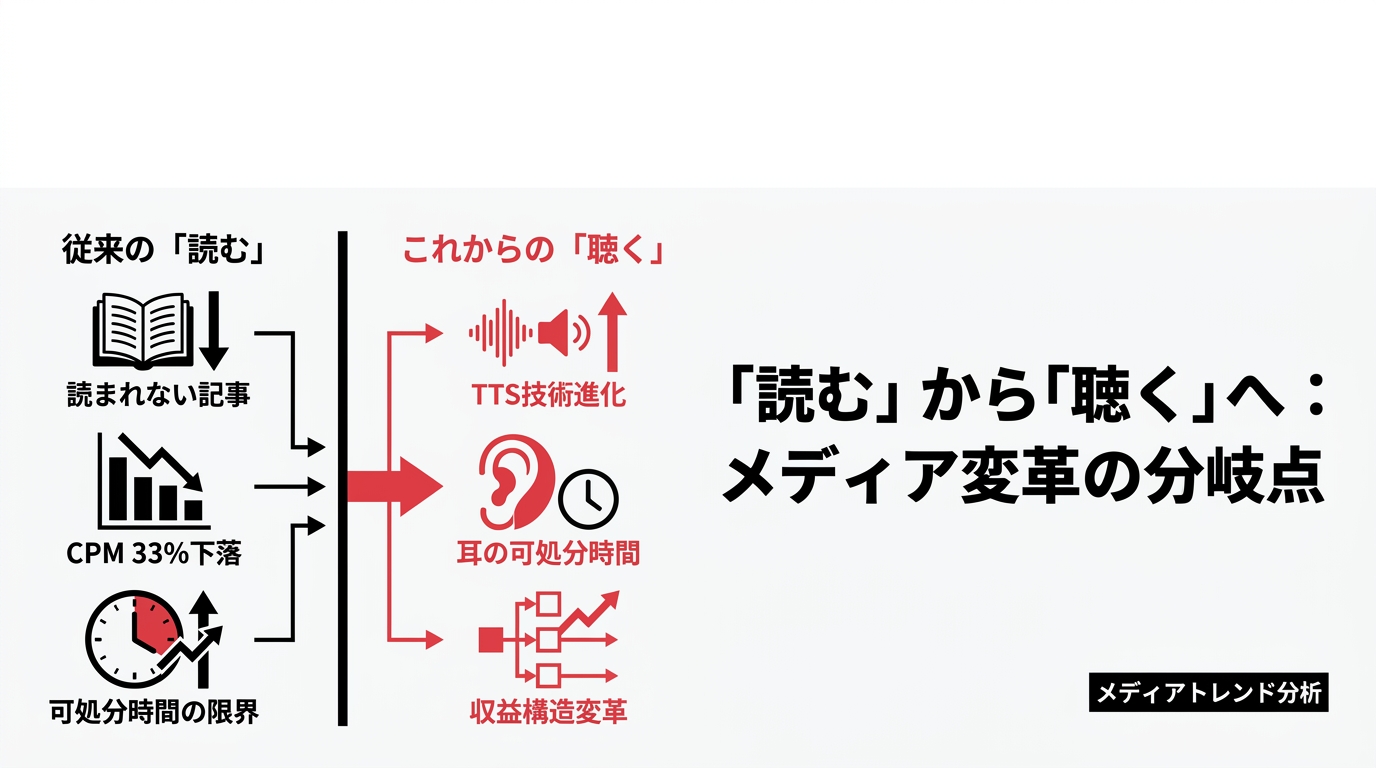
By Yutaro Sasao, CEO of MediaLeap Inc. and an AI voice product developer.
"I wanted to finish the article, but it was too long."
I heard versions of that sentence in reader interviews while working with a large publishing business. The article might have been valuable. The reader's commute ended, a household task began, or another screen took priority. The problem was often not lack of interest but an interruption that text could not survive.
Publishing volume has increased while the audience still has 24 hours in a day. Claims about the percentage of AI-generated pages vary with detection method and with whether edited or partially assisted work counts as "AI." The precise share matters less here than the constraint: more text is competing for fixed reading time.
Listening reaches a different part of the day. That possibility led me from media monetization and ad technology into building voice products at MediaLeap Inc.
The strain is economic as well as editorial
Text advertising supply can grow faster than advertiser demand. More pages create more available impressions, but not necessarily more valuable attention. During my years in SSP operations and publisher analytics, I repeatedly saw the trade-off: adding placements could lift immediate revenue while weakening the experience that brought readers back.
AI answer interfaces add another pressure. They can satisfy an informational query before a user visits the source. Advertising can then appear beside the answer rather than on the publisher page. The revenue implications are examined in ChatGPT ads and publisher strategy.
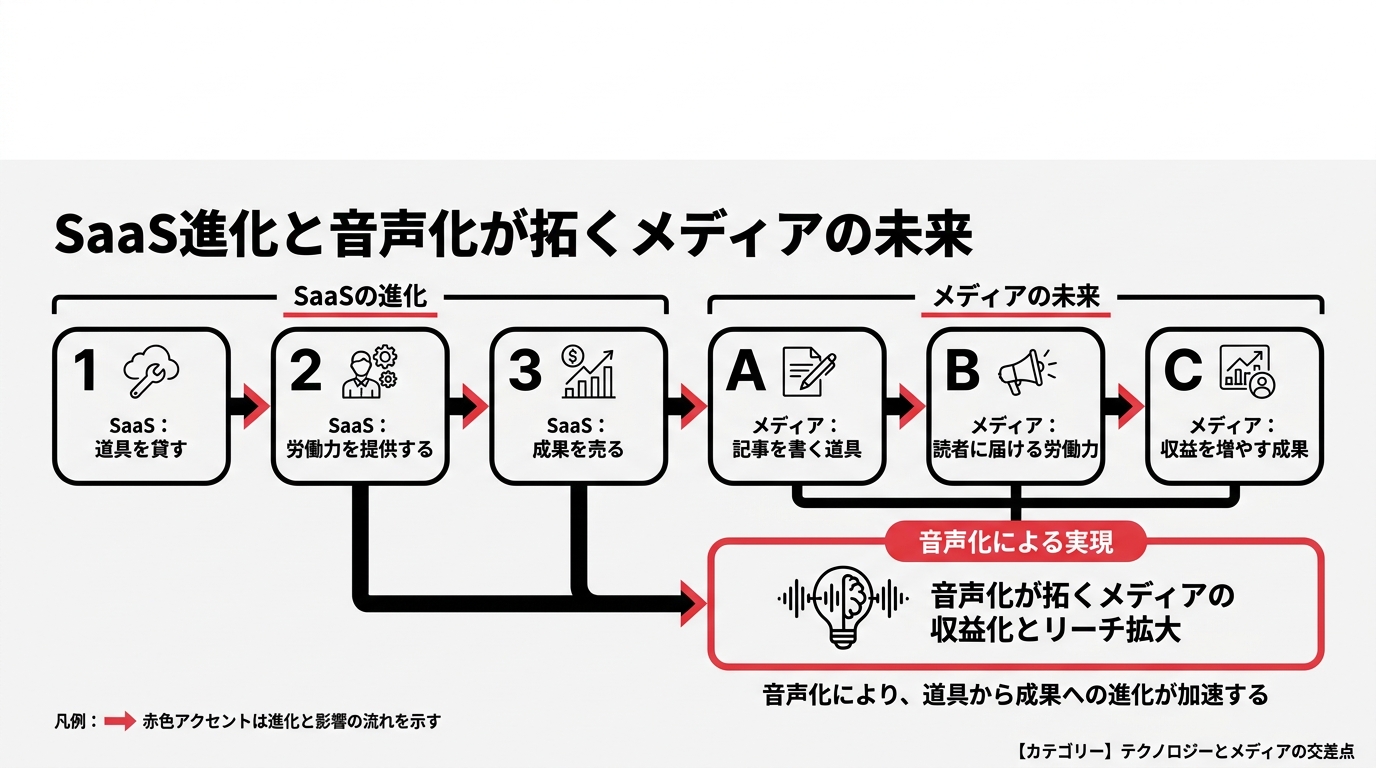
No single format solves that structural problem. Membership, direct traffic, email, events, and products may be more important for a given publication. Audio matters because it can increase the amount of time an existing article remains useful without requiring another reporting assignment.
TTS has moved from demonstration to production
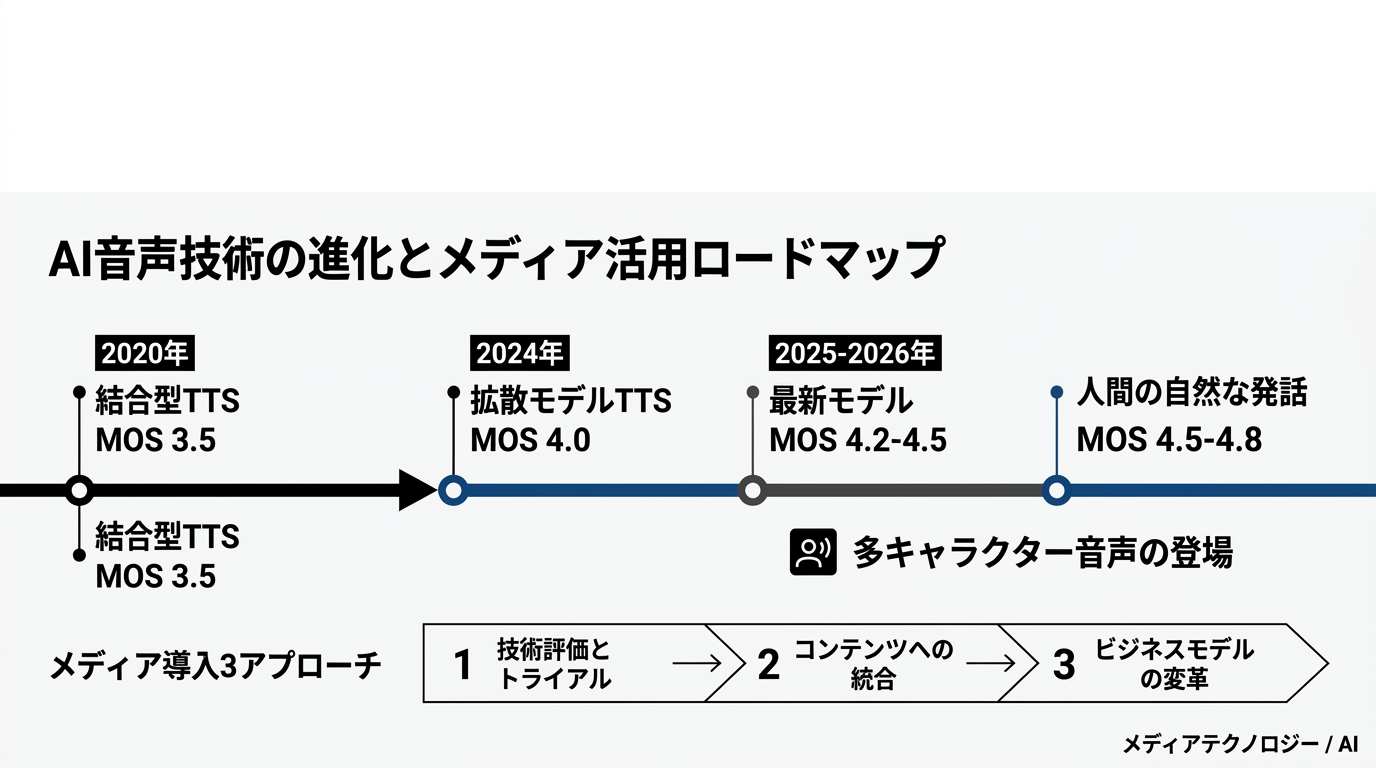
Text-to-speech converts written language into synthesized speech. I first tested Google Cloud TTS for work around 2018. It read the words, but the illusion of a human speaker broke quickly.
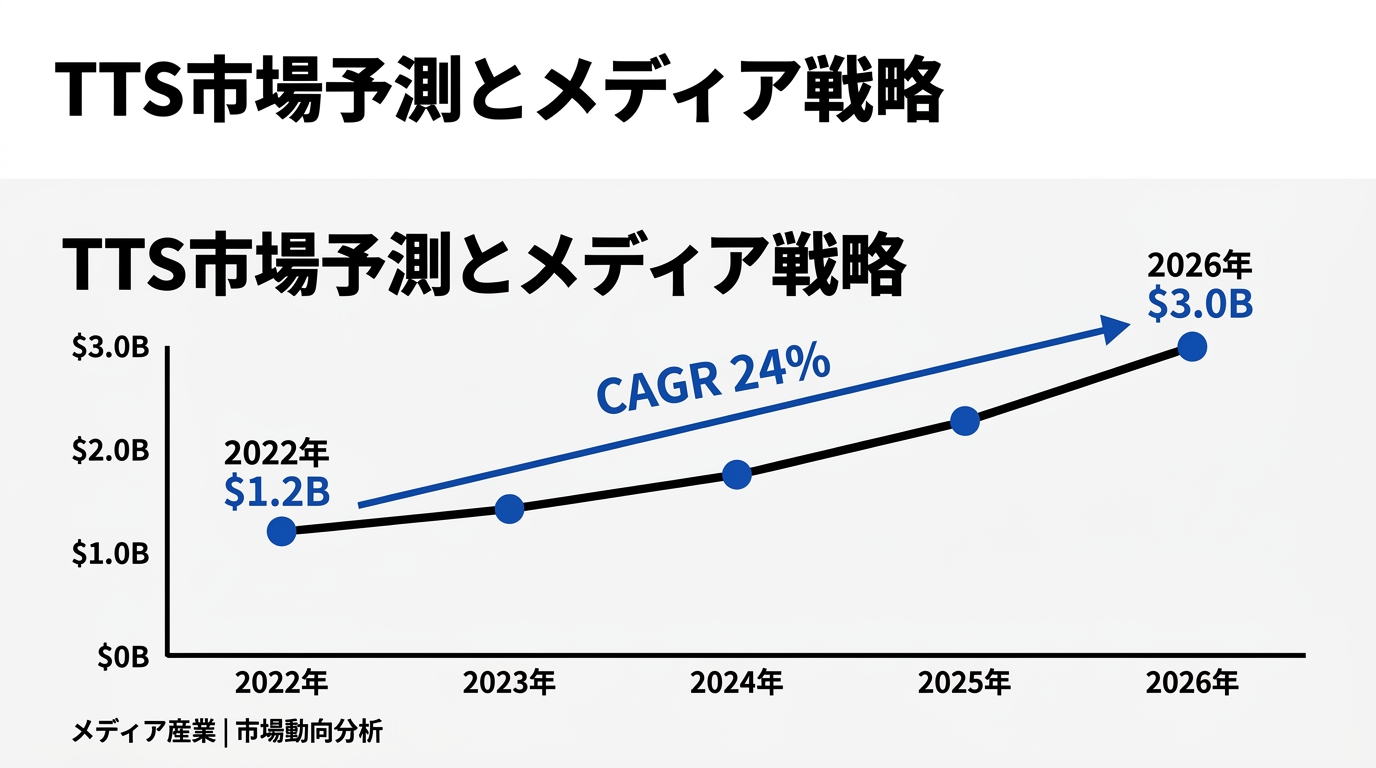
Research such as Google's Tacotron 2 accelerated the shift. The 2017 paper reported a Mean Opinion Score of 4.53 for its generated speech and 4.58 for recorded human speech under that experiment's conditions (Tacotron 2 paper). Those figures should not be compared casually with scores from another language or panel.
Commercial systems can now control pacing, emotion, and pauses with much greater precision. Yet a model that performs well in English may mishandle Japanese names, and a multilingual product may still sound inconsistent inside one sentence. Publishers should test their own archive rather than buy from a feature list.
The five-step implementation guide covers engine evaluation, player design, pronunciation, and analytics in operational detail.
A second path does not require a second story
A podcast is a new production: concept, script, recording, editing, distribution, and promotion. I have attempted to start one several times and stopped when that workload met the rest of the business.
An audio article uses the reporting and writing that already exist. A publishing workflow can create a listening version at release time, subject to editorial review. The writer does not need to record every piece.
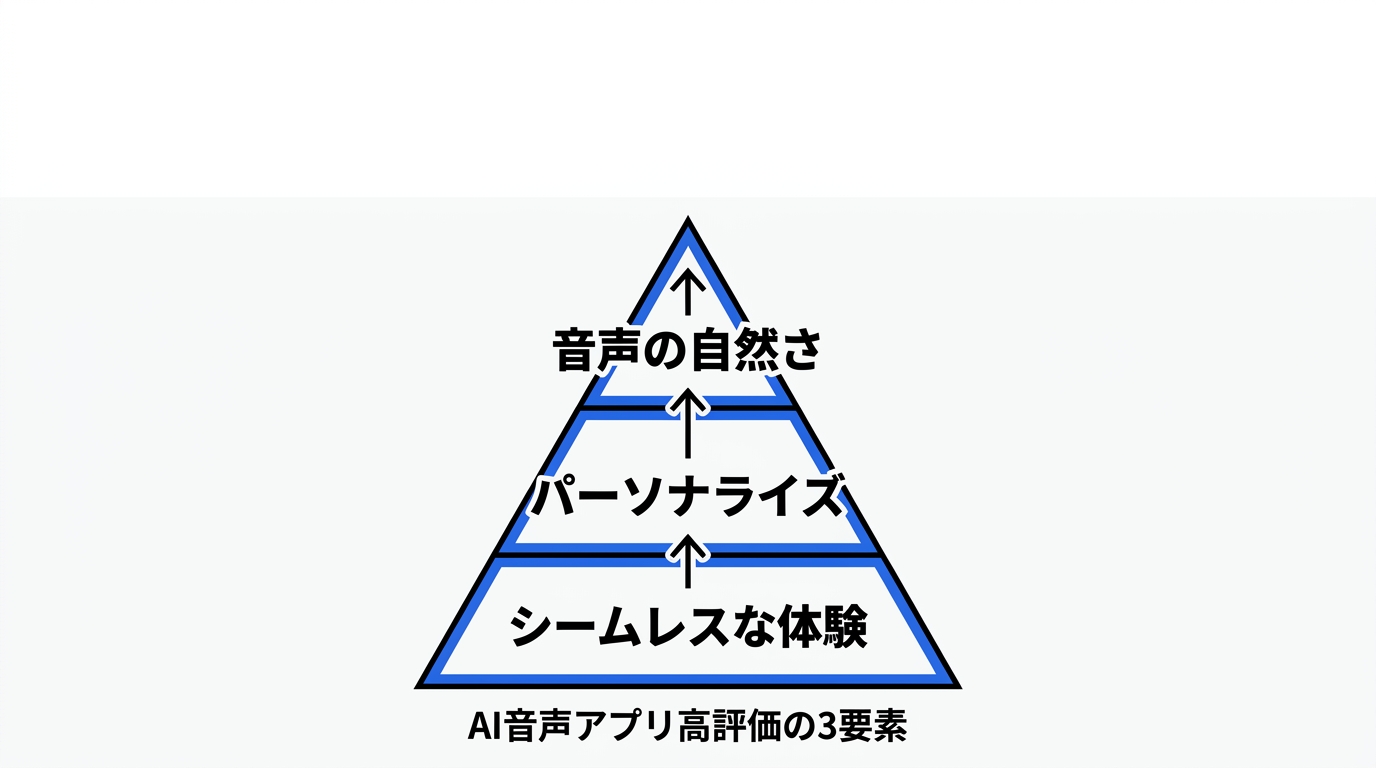
I saw the relational effect while building a voice-chat application. It passed 5,000 downloads with a 4.2 app rating, and several users wrote that they occasionally forgot they were talking with an AI. This is our own product observation, not evidence that every synthesized voice produces the same response. It did show me that sound can create a type of attention that text alone does not.
<figure> <img src="https://images.media-leap.com/blog/2026/07/1784643011938-g9gldwja.png" alt="Comparison of time available for reading and listening to a web article" /> <figcaption>An article can reach screen-reading time and listening time, including commutes, household work, and exercise. Safe, hands-free operation must be part of the design.</figcaption> </figure>Engagement gains need careful language
Across more than 30 MediaLeap client properties measured in GA4 from 2024 to 2026, sessions that initiated audio generally showed 1.5 to 2.5 times the average engagement time of non-playing sessions on comparable article sets.
The comparison is observational. Listeners may begin with stronger interest, and properties differed by topic, device mix, player position, and measurement window. It does not mean that adding TTS multiplies sitewide engagement. The dataset, interpretation, and limitations are documented in the audio engagement measurement article.
The mechanism is still plausible. Listening can continue when screen reading stops. For a text-heavy analysis, that may preserve the argument through a transition in the reader's day. For a photo essay or interactive chart, it may remove essential information and make the experience worse.
The input text matters more than publishers expect
High-quality speech synthesis cannot repair a script designed only for the eye. Long nested sentences, abbreviations, visual references, dense bullet lists, and unexplained symbols sound awkward when read aloud.
In our voice product work, user-interface and script preparation took more effort than choosing the engine. Pronunciation dictionaries need ownership. Headings need audible transitions. Quotes need attribution that makes sense without visual punctuation. A human must review exceptions.
This changes editorial architecture. A publication designed for reading and listening will think differently about sentence length, captions, chart descriptions, player placement, and analytics. The audio file is the visible output of a larger workflow.
Revenue options come after listening behavior
Audio can eventually support sponsorship, premium feeds, subscriptions, or audio advertising. The international market demonstrates that advertisers will pay for listening attention; the audio advertising revenue playbook examines the public numbers and the conditions behind them.
I chose a paid software model for PUBVOICE rather than inserting ads into every player. I spent years helping publishers add and optimize ad inventory, and I did not want the audio format to begin as another forced interruption. That choice also creates a clear obligation: the product has to earn its cost through measurable value.
A paid model is not automatically more ethical, and an advertising model is not automatically poor. A public-service publisher, a local newspaper, and a specialist B2B site have different economics. The useful decision is the one that matches audience behavior and can be measured honestly.
Listening is an option, not the replacement for reading
Text remains faster for scanning, searching, quoting, and inspecting detail. Audio works well for continuity and hands-free consumption. Neither sits above the other.
Short updates, visual reporting, and content with heavy correction risk may not justify narration. Publications without the capacity to review names and measure use should delay implementation. The cost of a low-trust audio experience can exceed the benefit.
The durable idea is smaller than a prediction about the end of reading. A writer can publish once and give the audience two ways to stay with the work. Whether that second path deserves a permanent place should be decided by the publication's own listeners, correction log, and data.
PUBVOICE - Deliver your articles as audio
We built PUBVOICE so media operators can add a listening experience without extra workload. Register an RSS feed and every new article gets audio automatically.
Every time we hear editors worry that readers never finish their articles, we keep coming back to the same answer: audio reaches the moments text cannot - commutes, chores, workouts. PUBVOICE was born from that conviction.

Yutaro Sasao
We take each person's "I want to" and "I want to be able to" seriously, and use technology to make it happen. That is our mission.
Opening up new possibilities with digital technology. Drawing on roughly ten years in the advertising and media industries, Yutaro builds app development for web media companies with AI-driven efficiency.
Talk to us about your next project
Contact us about app development or other digital initiatives. We will review your requirements and recommend an approach suited to your business.
Related posts
Contact
Contact us to discuss app development for your media business. We will recommend an approach based on your requirements and commercial goals.
Contact Form
Send us your inquiry using the form below. We aim to respond within 24 hours.
Contact by Email
info@media-leap.com
We aim to respond within 24 hours
Business Hours
Weekdays: 9:00–18:00 JST
Weekends and public holidays: Closed