Why X and Google Are Turning Long-Form Text into Audio
X and Google are making articles and source material easier to consume without a screen. The strategy expands attention and data collection while creating new risks for publishers.
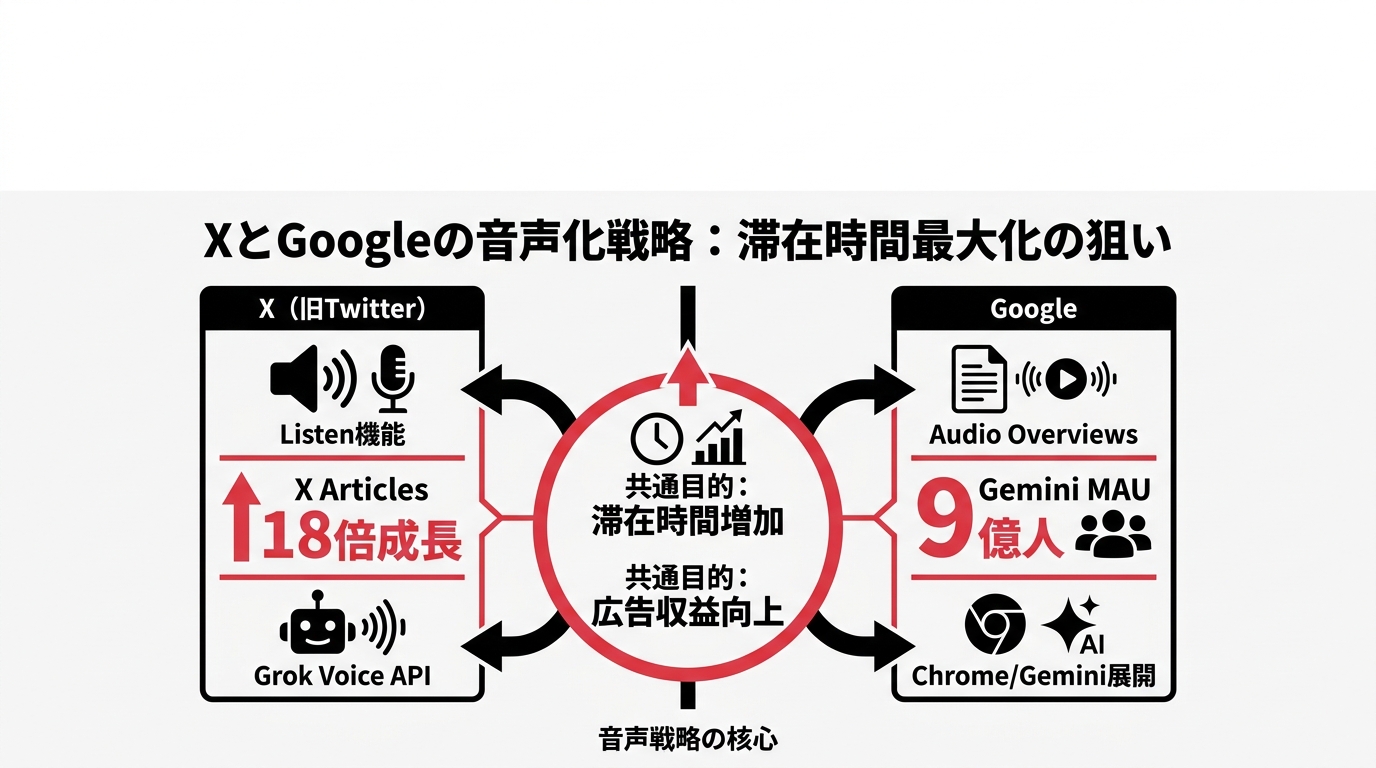
X and Google are creating more ways to consume long-form material without looking at a screen. X has tested narration for Articles, while Google has expanded NotebookLM’s Audio Overviews across its product portfolio.
Calling this a move into “the audio market” misses part of the strategy. Audio lets both companies remain present when users cannot keep watching, and it produces another stream of behavioral data.
I worked in both ad tech and publisher analytics. Longer platform use creates more commercial opportunities, but it does not necessarily create more value for the source publisher. If listening finishes inside the platform, the original site may receive no visit at all.
X can keep the destination inside its app
Narrated X Articles allow a user to continue with a long post in the background. Early coverage of the feature is available from Social Media Today.
An “18x growth” claim about X Articles came from an X executive’s post without a published baseline or full measurement definition. This adaptation therefore treats it as a company statement, not as a market growth statistic.
When I worked on the SSP side, outbound clicks were examined as moments when the platform lost advertising opportunities. In-app narration can reduce that loss. The user gains convenience, while the linked publisher may lose referral traffic.
Google turns source material into a new format
Google introduced Audio Overviews in NotebookLM in 2024. The feature transforms source material into a discussion between two AI hosts (Google Blog).
This differs from direct narration because it summarizes and restructures the material. That makes a long source easier to enter, but qualifications and details can disappear. Legal analysis, medical information, and investigative reporting should not rely on the generated overview as the final version.
Google can distribute audio across search, Chrome, Android, Gemini, and other surfaces. Users move less, but publisher identity can become less visible. The same convenience that improves access can weaken the relationship between a newsroom and its audience.
Listening time also produces behavioral signals
Audio creates events such as play, pause, replay, and speed changes. These may offer richer clues than a pageview, but they do not reveal intention directly. A replay can indicate high interest—or unclear narration.
I learned the same lesson with web analytics. Deep scrolling can reflect careful reading, or a frustrated search for one paragraph. Audio behavior needs several signals and qualitative context before it becomes a measure of understanding.
Edison Research’s The Infinite Dial provides a long-running view of online audio in the United States. Its results should be described as US survey findings, not global or Japanese usage rates.
Publishers gain distribution and dependency
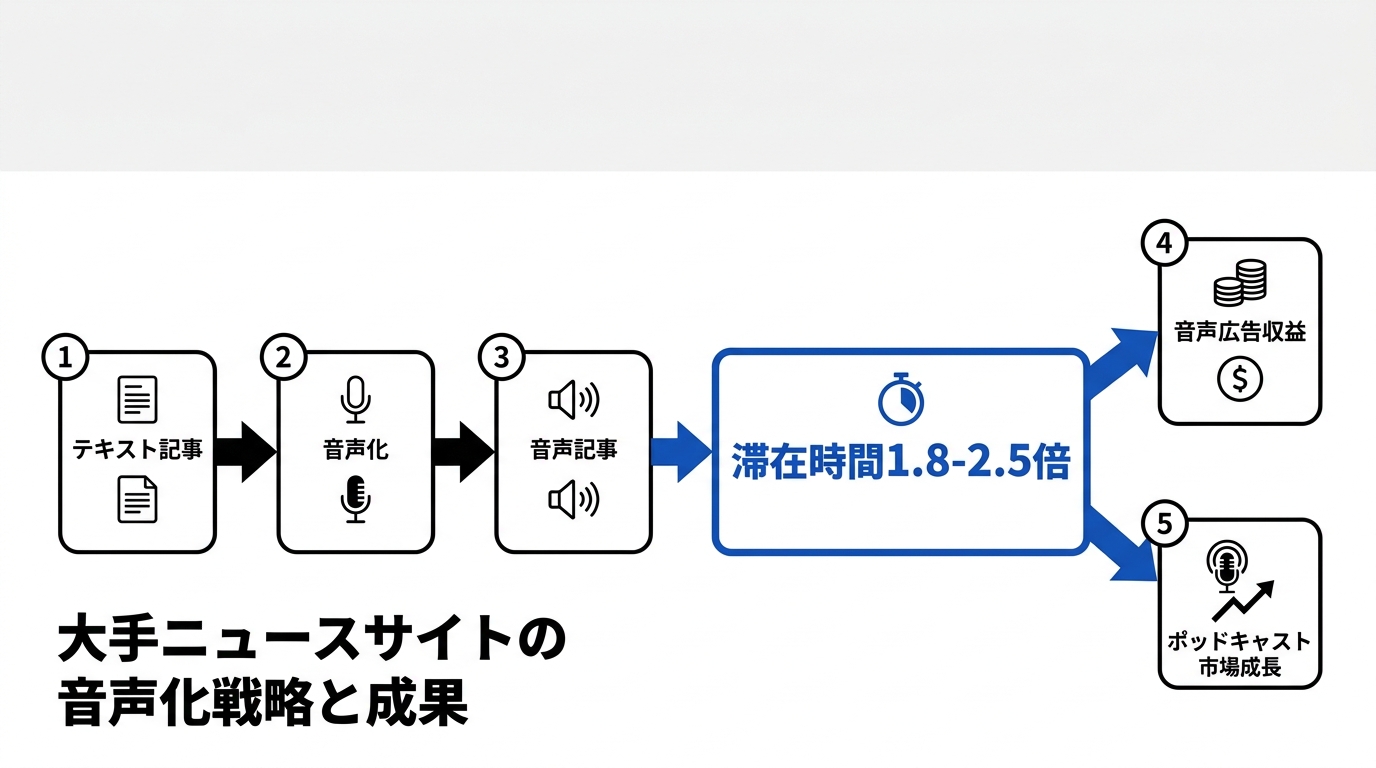
Platform narration can create audio reach without development work. It also normalizes listening to articles, much as YouTube and Spotify’s audio investments have normalized podcasts across video and music services.
The cost is control. A publisher may not be able to adjust pronunciation, voice, summary choices, ad placement, or data access. If an error occurs, the correction path may also be unclear.
Listening data could later support contextual or generated advertising, as discussed in AI and audio advertising. Publishers should know who owns that data and what reporting comes back before depending on a platform feature.
Owned audio is valuable only in the right cases
Publishers that need a distinct voice, first-party listening data, membership integration, or site-based advertising have a stronger case for owned audio. A limited test following an audio measurement plan can establish whether the additional control is worth the operating cost.
PUBVOICE is one option for retaining that control on existing articles. It may be unnecessary for fast-changing news, charts, or heavily visual pages. Some publishers will be adequately served by external narration.
The choice is not to reject platform audio or surrender everything to it. Platforms can support discovery while publishers keep selected listening experiences, brand choices, and data on their own properties. Deciding where that boundary sits is now part of publishing strategy.
PUBVOICE - Deliver your articles as audio
We built PUBVOICE so media operators can add a listening experience without extra workload. Register an RSS feed and every new article gets audio automatically.
Every time we hear editors worry that readers never finish their articles, we keep coming back to the same answer: audio reaches the moments text cannot - commutes, chores, workouts. PUBVOICE was born from that conviction.

Yutaro Sasao
We take each person's "I want to" and "I want to be able to" seriously, and use technology to make it happen. That is our mission.
Opening up new possibilities with digital technology. Drawing on roughly ten years in the advertising and media industries, Yutaro builds app development for web media companies with AI-driven efficiency.
Talk to us about your next project
Contact us about app development or other digital initiatives. We will review your requirements and recommend an approach suited to your business.
Related posts

Contact
Contact us to discuss app development for your media business. We will recommend an approach based on your requirements and commercial goals.
Contact Form
Send us your inquiry using the form below. We aim to respond within 24 hours.
Contact by Email
info@media-leap.com
We aim to respond within 24 hours
Business Hours
Weekdays: 9:00–18:00 JST
Weekends and public holidays: Closed