How Audio Articles Affect Time on Page
A close look at the 1.5–2.5x engagement-time observation, its measurement limits, published evidence, costs, and cases where article audio is a poor fit.
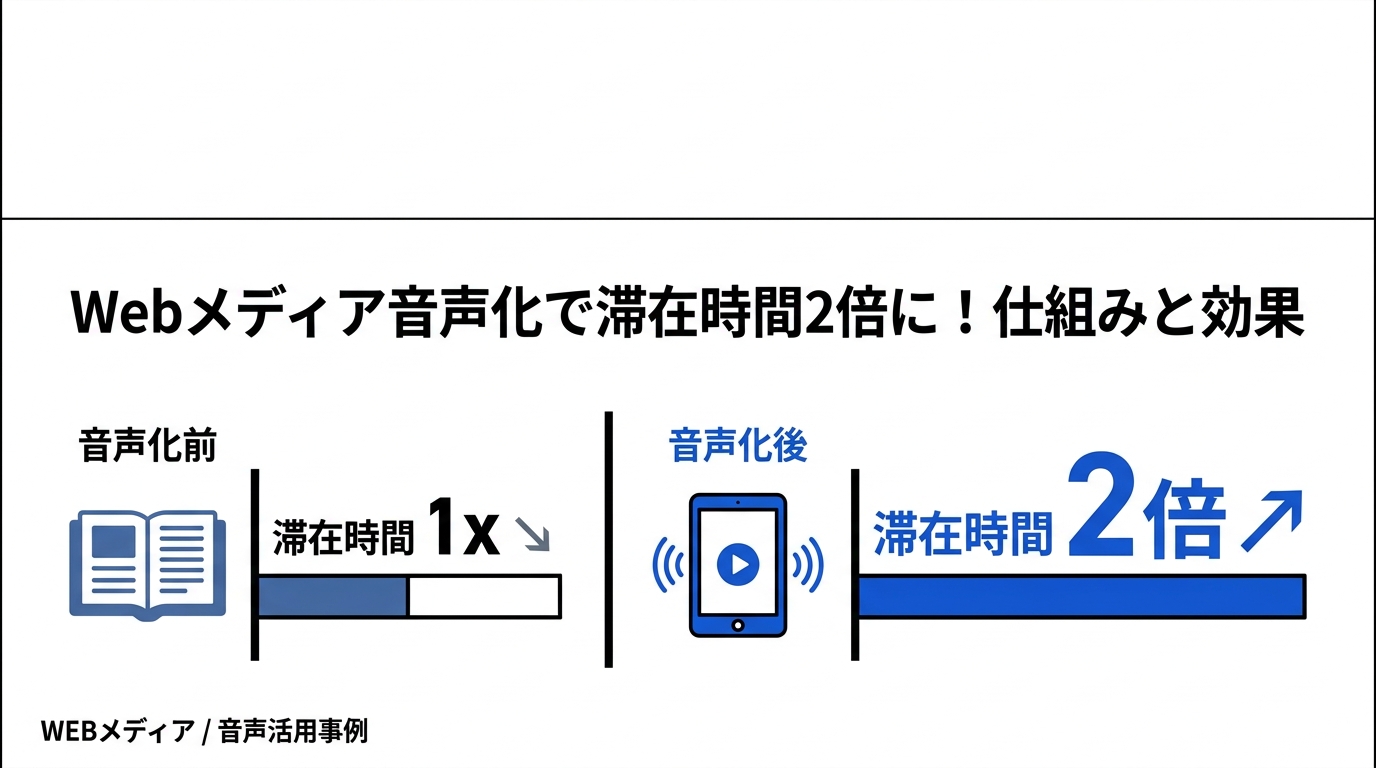
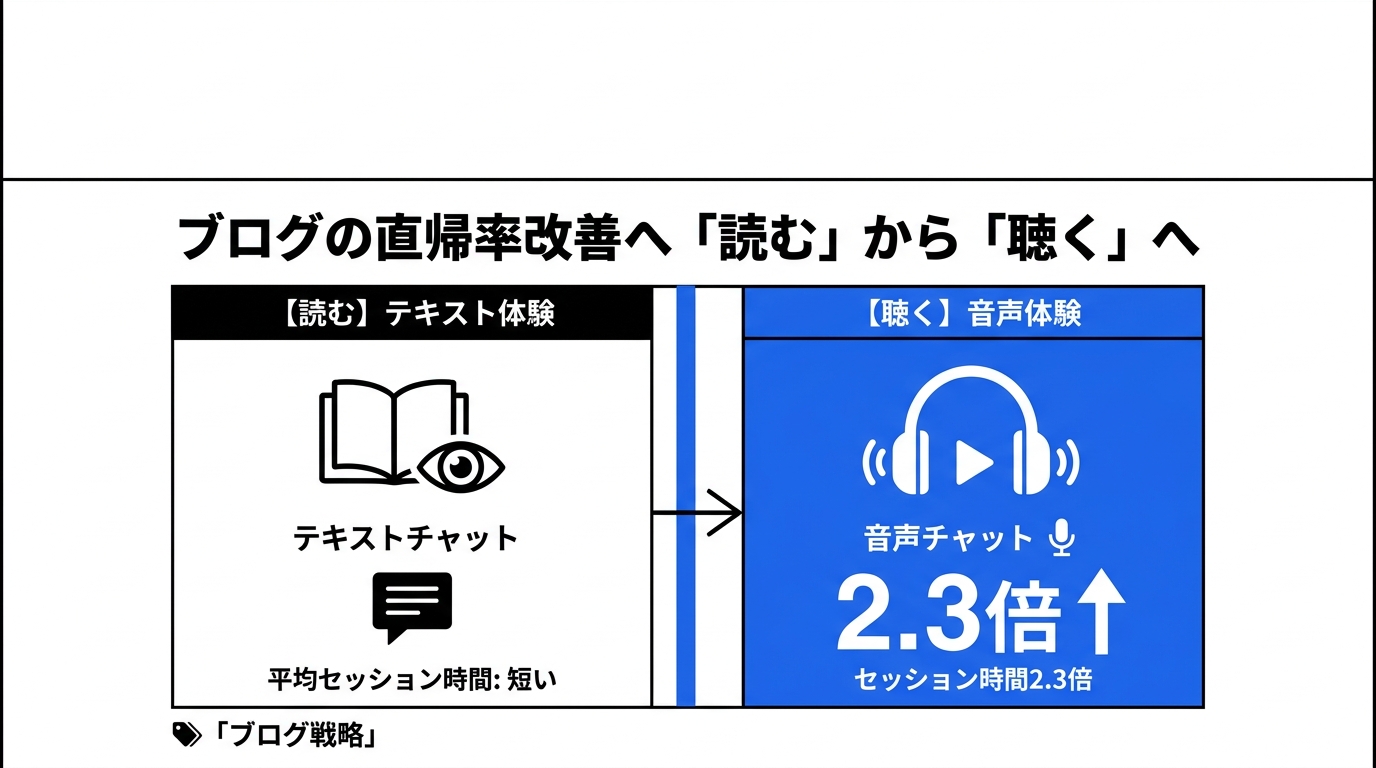
Sessions in which a visitor starts an article’s audio player tend to last longer than sessions with no playback. On a MediaLeap-operated publication, we observed a 1.5–2.5x difference. That does not mean adding a player automatically multiplies sitewide engagement by the same amount.
I have worked on advertising and analytics for a large publishing site and now operate audio products at MediaLeap Inc. When a result looks impressive, I check the denominator and comparison groups before the headline number.
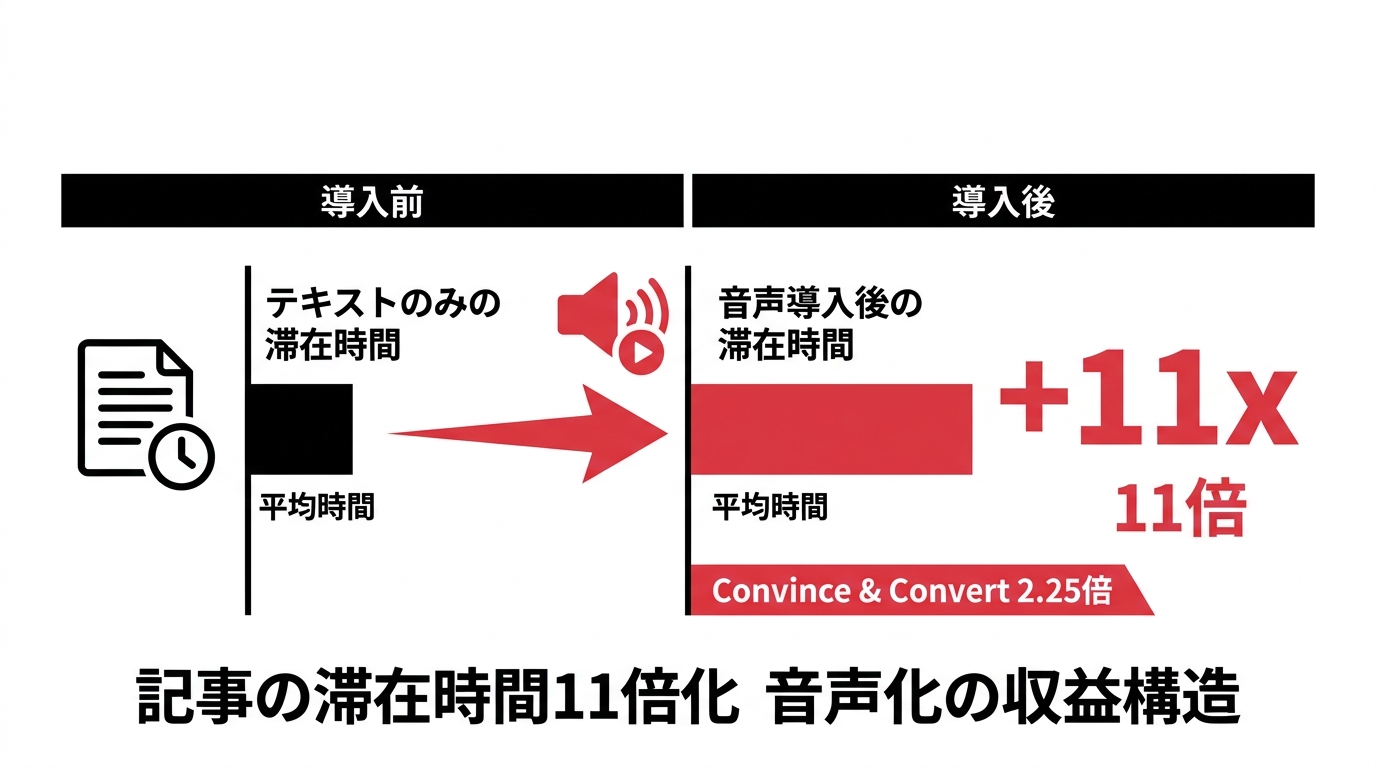
There is supporting public evidence. In 2019, Convince & Convert reported that visitors using its article audio stayed for about nine minutes, versus four minutes for text-only visitors. Its audience, content, and analytics setup differ from other publications, so 2.25x is evidence of possibility, not a universal benchmark.
How we defined the 1.5–2.5x observation
The range is an internal observation from a MediaLeap-operated publication, not an externally audited industry average.
- Period: listening and non-listening sessions were compared within the same post-launch period. The source analysis did not preserve a verifiable number of days, so we do not invent one
- Listening session: a session on an eligible article page with at least one audio-play event
- Non-listening session: a session on the same eligible article set with no play event
- Metric: GA4 average engagement time, rather than the time a tab was merely left open
- Sample size: the original aggregate did not retain a verifiable session count, so no sample size is claimed
This was not a randomized A/B test. People who choose audio may already be more interested in the article, creating self-selection bias. The range therefore describes an association, not a clean causal estimate. A stronger test would randomly vary player visibility across the same articles.
Playback rate also changes the sitewide result. If only 5% of pageviews produce a listening session, a 2x result among listeners will not double the average across all traffic.
Audio reaches moments when screens do not
Audio expands the time in which an article can be consumed. Commuting, cooking, and exercise leave little room for sustained reading but often leave attention available for listening. The difference tends to matter more for long-form work.
While operating a voice-chat app, I saw people keep audio running while doing something else on screen. Article audio behaves similarly. That is why publishers should measure playback milestones and completion alongside engagement time.
Audio also preserves the author’s sequence better than scanning headings. The tradeoff is control: for charts, recipes, legal references, and numerical comparisons, text is usually faster to verify and revisit.
Player design determines whether people press play
Across more than 30 media implementations and support engagements, I have seen placement change usage even when the audio itself was identical. A player directly below the headline, labeled “Listen to this article,” is easier to understand than an icon in a sidebar.
The first view should stay simple: play, pause, and progress. Speed and voice controls can sit behind settings. Track starts, 25% progress, completions, and post-play navigation separately. Related measurement patterns are covered in audio KPI measurement, while audio revenue and engagement addresses commercial models.
Implementation costs more than speech generation
Text-to-speech API usage is often the smaller expense. Player development, delivery, pronunciation dictionaries, editorial review, and analytics instrumentation consume more time.
A custom implementation can require ¥500,000–¥1.5 million in Japan, depending on the player and publishing stack. SaaS reduces initial engineering work but introduces subscription cost and vendor dependency. Our audio ROI model separates these assumptions.
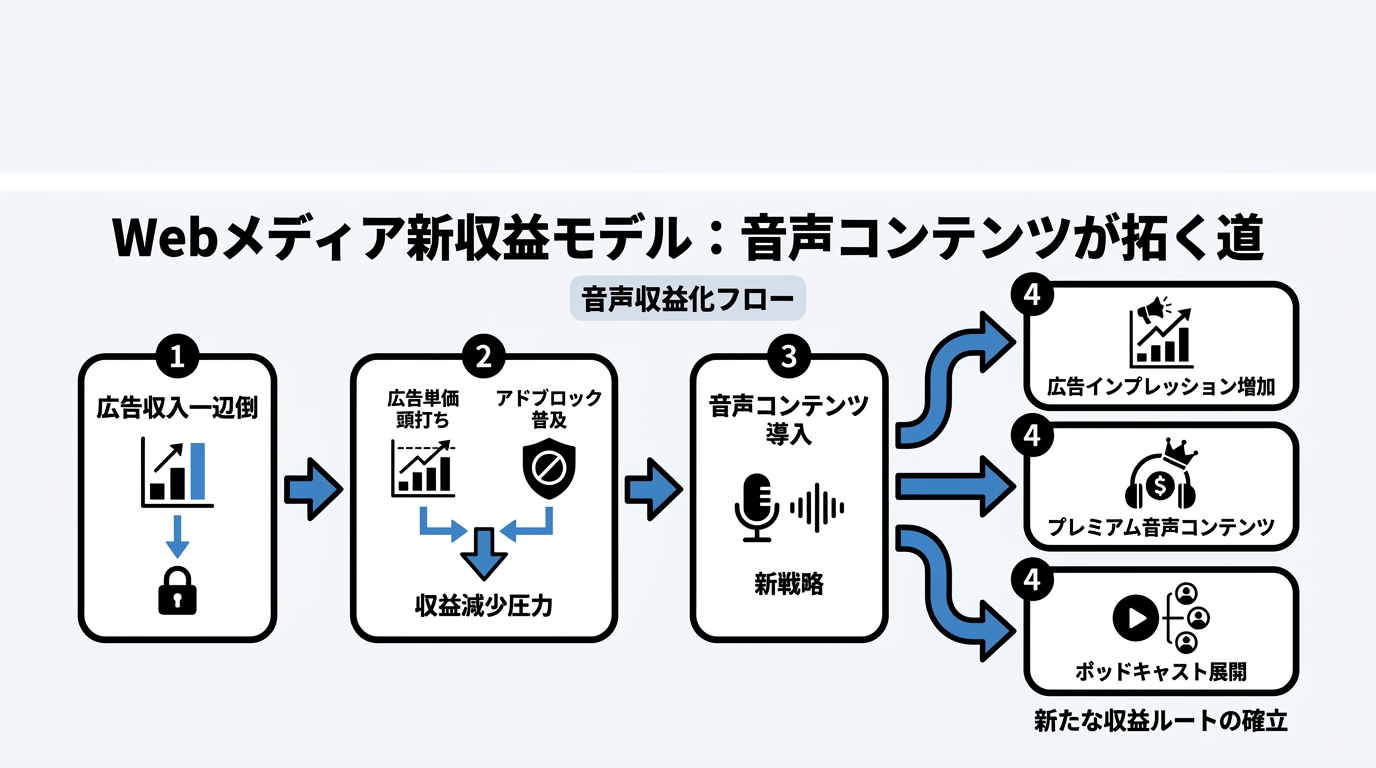
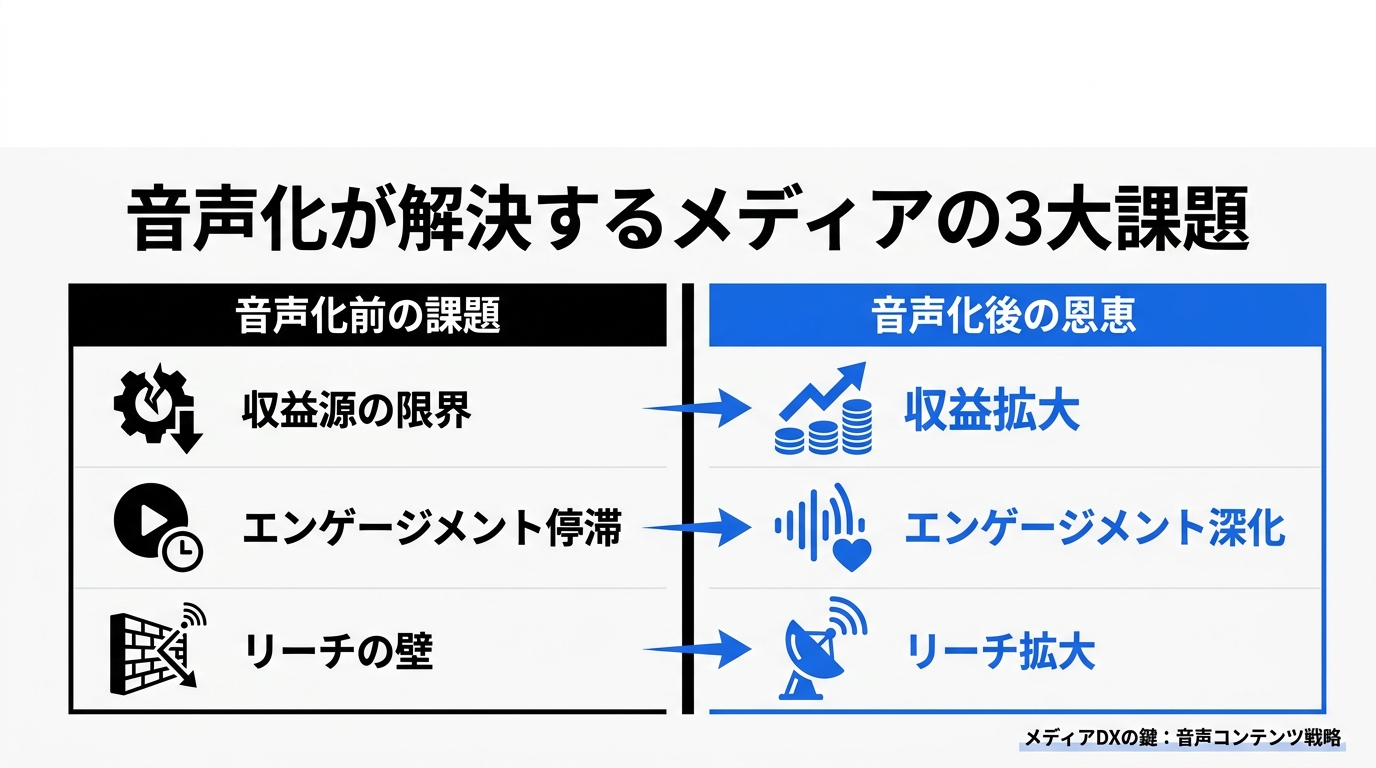
Revenue should be modeled with a publication’s actual playback rate, ad refresh rules, and RPM. A large engagement multiple cannot substitute for those inputs.
Where article audio is a poor fit
Image-led stories, data tables, recipes, and breaking news may lose value or expire before audio production pays back. Legal, medical, and tax content requires human review of names, units, and numbers. Short pages that answer one search query rarely give visitors a reason to press play.
Long interviews, columns, and explanatory features are better test candidates. Audio strategies at major news publishers compares the main production models.
Treat the range as a starting hypothesis
MediaLeap Inc. develops PUBVOICE for Japanese publishers, so we have a commercial interest in article audio. That is precisely why we do not present 1.5–2.5x as a guarantee.
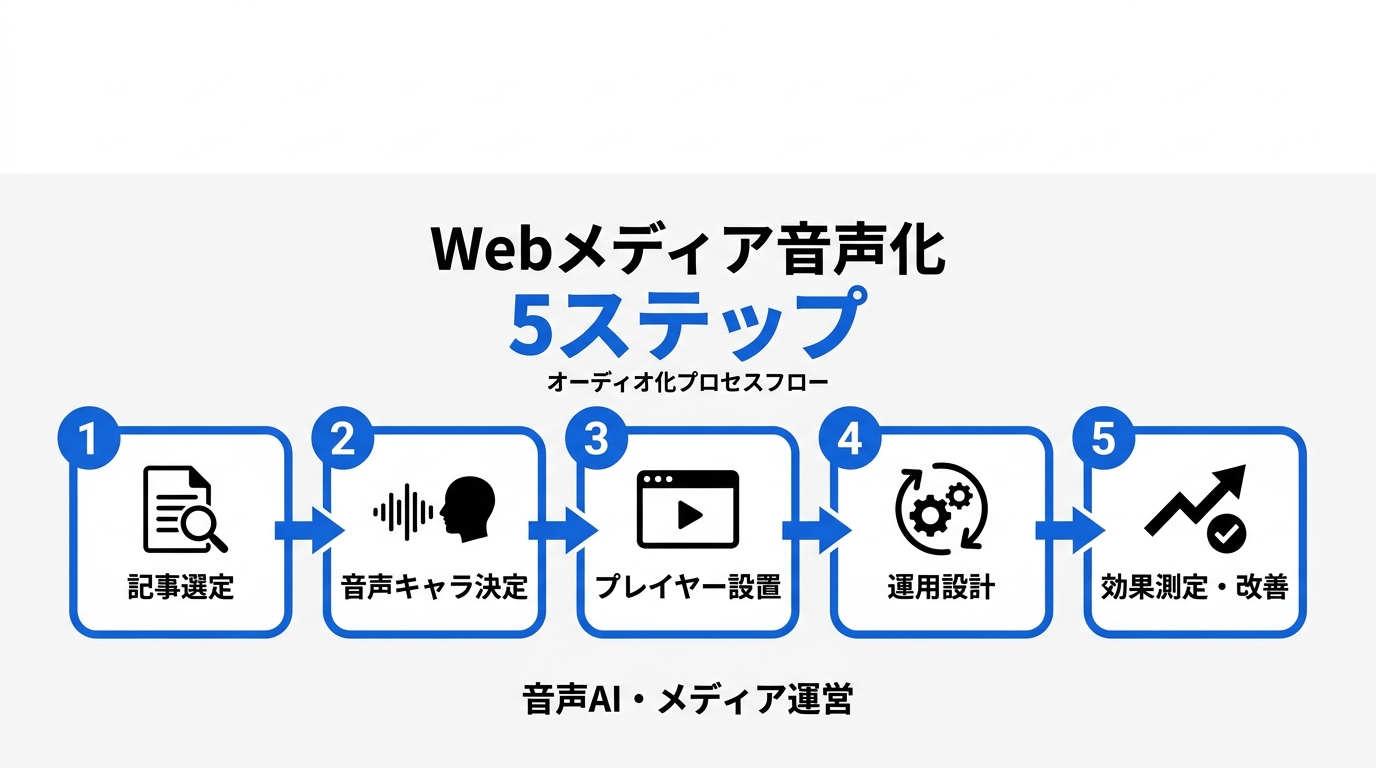
Save a pre-launch baseline, select 10–20 established long-form articles, and compare equivalent groups. If playback and engagement do not move, do not expand the rollout. The measurement plan is part of the product decision.
Publishers that want to run a small Japanese-language test can review PUBVOICE and its implementation options.
PUBVOICE - Deliver your articles as audio
We built PUBVOICE so media operators can add a listening experience without extra workload. Register an RSS feed and every new article gets audio automatically.
Every time we hear editors worry that readers never finish their articles, we keep coming back to the same answer: audio reaches the moments text cannot - commutes, chores, workouts. PUBVOICE was born from that conviction.

Yutaro Sasao
We take each person's "I want to" and "I want to be able to" seriously, and use technology to make it happen. That is our mission.
Opening up new possibilities with digital technology. Drawing on roughly ten years in the advertising and media industries, Yutaro builds app development for web media companies with AI-driven efficiency.
Talk to us about your next project
Contact us about app development or other digital initiatives. We will review your requirements and recommend an approach suited to your business.
Related posts
Contact
Contact us to discuss app development for your media business. We will recommend an approach based on your requirements and commercial goals.
Contact Form
Send us your inquiry using the form below. We aim to respond within 24 hours.
Contact by Email
info@media-leap.com
We aim to respond within 24 hours
Business Hours
Weekdays: 9:00–18:00 JST
Weekends and public holidays: Closed