Why Audio Article Sessions Show 1.5–2.5x Engagement
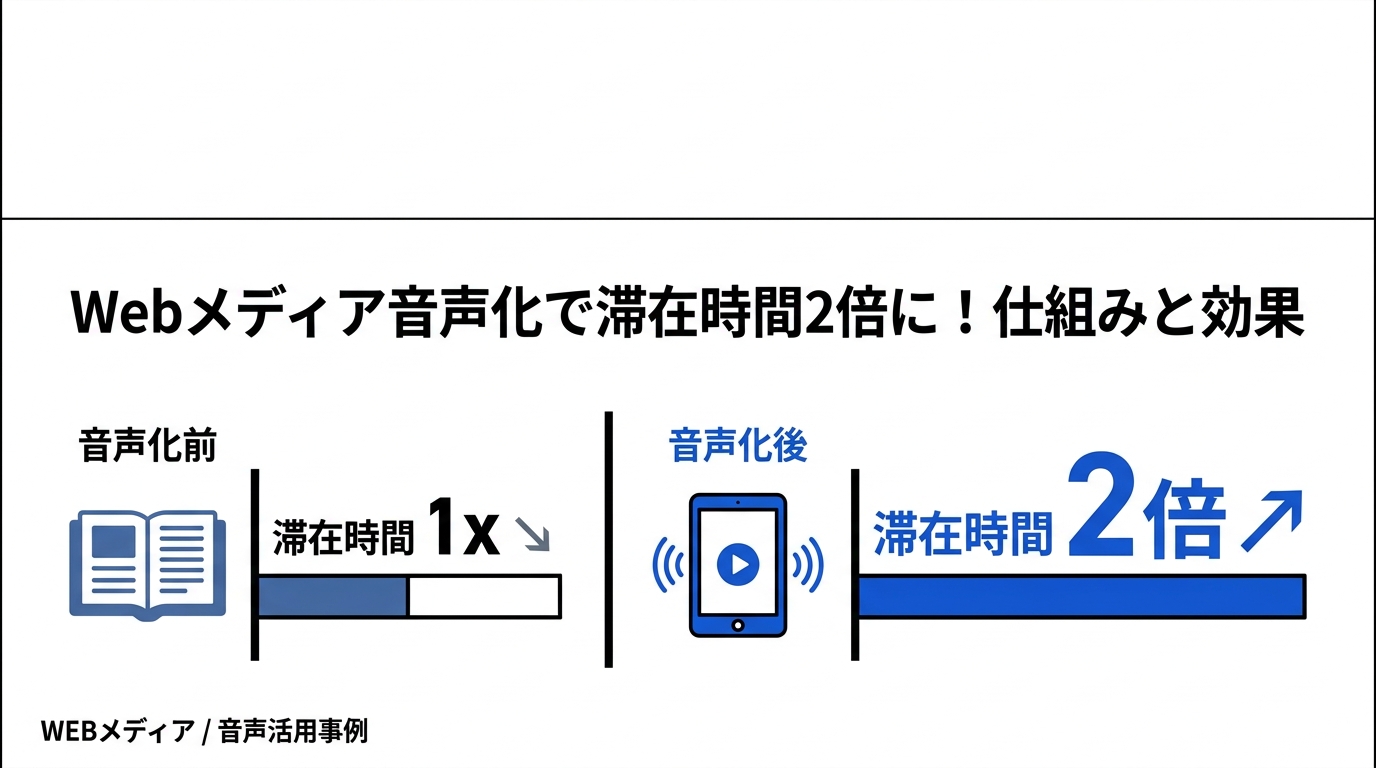
Across more than 30 publisher implementations, audio-playing sessions showed 1.5 to 2.5 times the average engagement time of comparable non-playing sessions. The measurement has useful signals and important limits.
By Yutaro Sasao, CEO of MediaLeap Inc. and a publisher analytics practitioner.
"Traffic is growing, but revenue is not."
Publisher business teams brought me versions of that problem throughout my years in ad technology and media operations. More page views do not automatically create valuable impressions. Placement, viewability, time in view, demand, and the reading experience all intervene.
Audio articles add another variable: a visitor can continue listening after their eyes and hands move elsewhere. Across publisher implementations I have worked on, sessions that used audio often showed much longer engagement. That observation is useful only when its conditions are visible.
What the 1.5–2.5x figure measures
The dataset covers more than 30 MediaLeap client properties that agreed to measurement between 2024 and 2026. We used GA4 average engagement time and separated sessions that initiated article audio from sessions on comparable article sets that did not play audio. Ratios were examined within each property because traffic mix and baseline engagement varied sharply.
Across participating properties, the observed session ratio was generally in the 1.5 to 2.5 range. Some text-heavy long-form articles produced larger outliers, including a case near 11 times the non-playing session average.
This was not a randomized controlled trial. People who press play may already have more interest, more available time, or a preference for long-form content. Article categories, devices, player positions, and measurement windows differed. The figure does not mean that adding a player will multiply whole-site engagement by 1.5 to 2.5.
Return frequency up 32% and page views up 19% were also observed in before-and-after data for a subset of implementations. Seasonality, publishing volume, and audience changes were not fully isolated, so those figures should be treated as directional client observations, not universal product benchmarks.
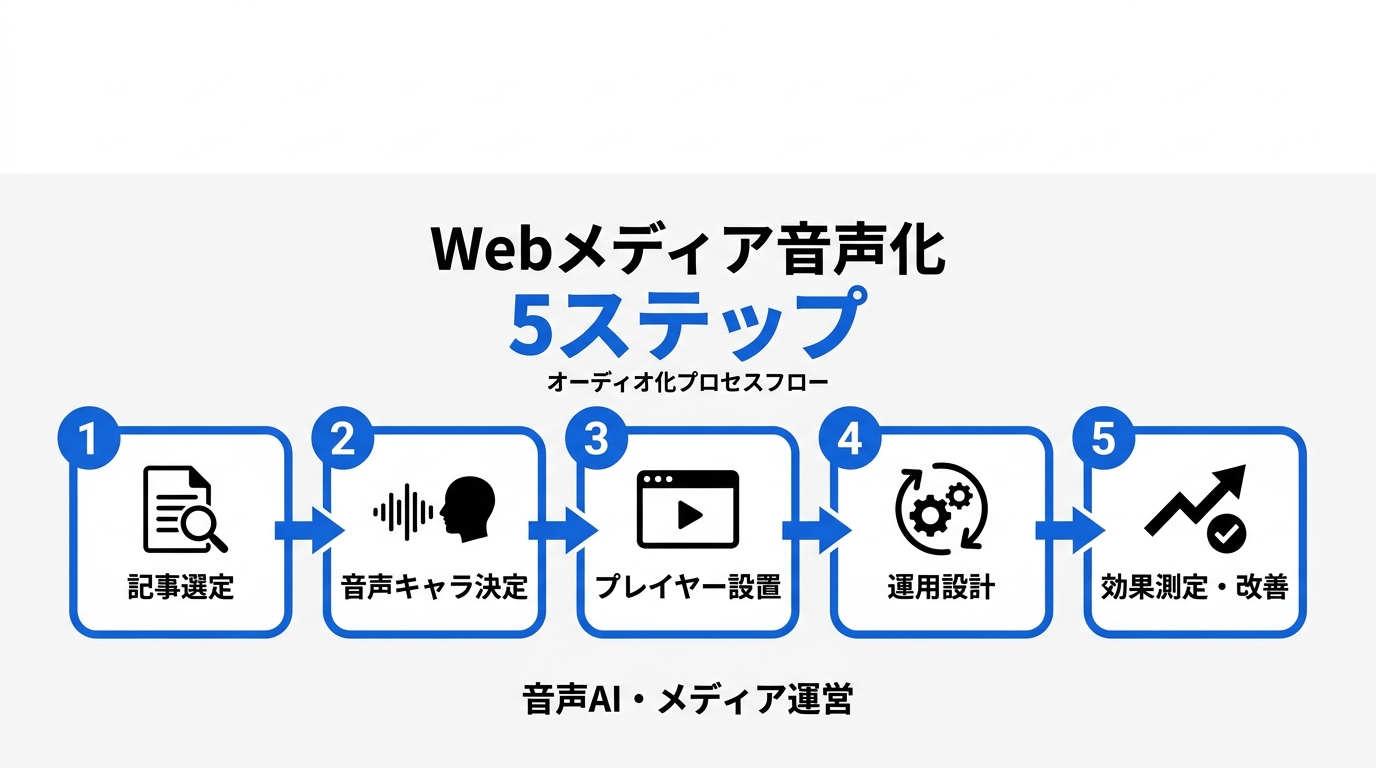
The implementation sequence behind these tests is described in the five-step audio publishing guide.
Why listening can extend a session
Reading requires the screen, the eyes, and usually one hand. A train arrives, a household task starts, or another tab demands attention. Listening can continue through some of those transitions.
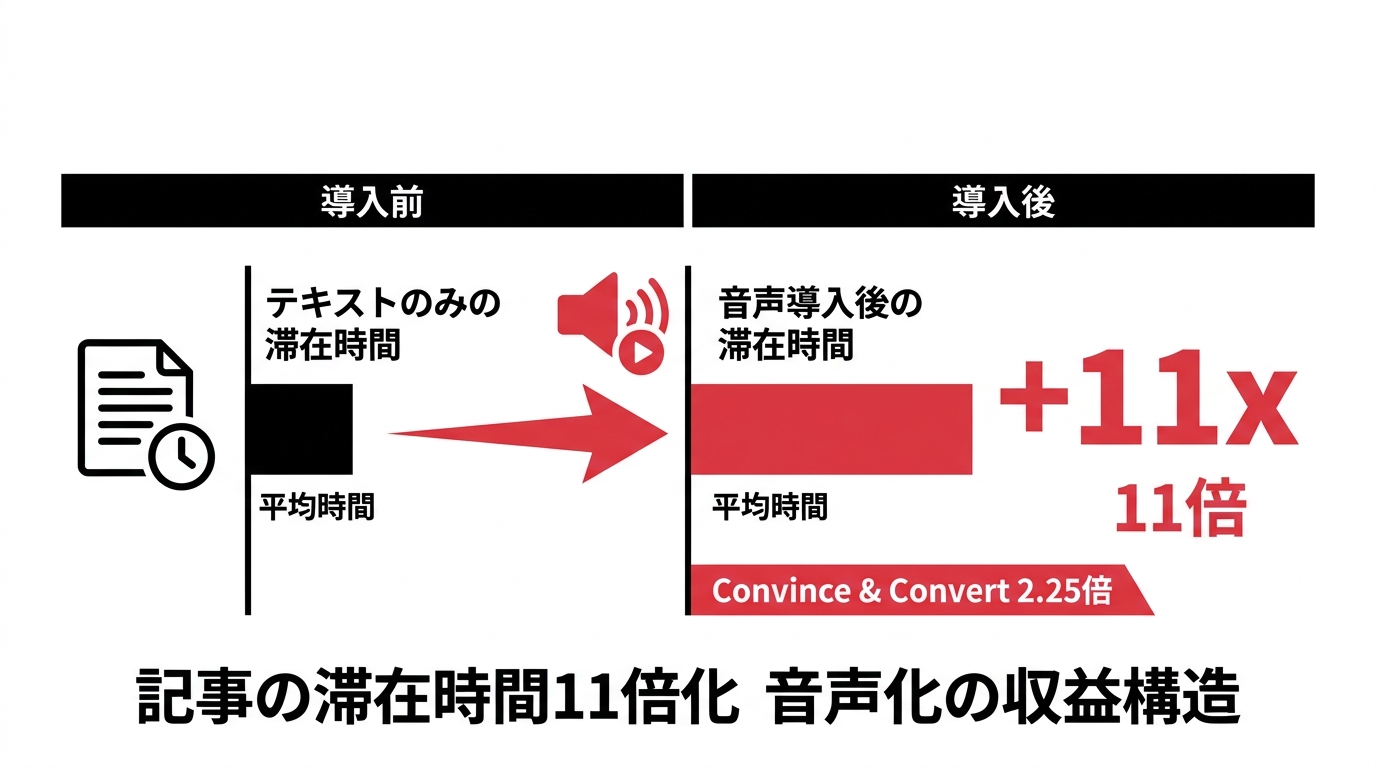
Convince & Convert reported a similar pattern after introducing audio versions in 2019: users who played audio spent an average of nine minutes on site, compared with four minutes for text-only users (Convince & Convert). That 2.25x ratio is an external case study, not proof that every publication will reproduce it.
In our implementations, long explainers and columns often showed the clearest difference. My interpretation is that these articles contain unrealized attention: readers want the argument but cannot finish it on screen. We did not hold article length constant across every property, so that explanation remains a working hypothesis.
<figure> <img src="https://images.media-leap.com/blog/2026/07/1784643289858-24q6h5u9.png" alt="Illustration of reading time and continued listening time" /> <figcaption>Listening can continue during activities that interrupt screen reading. Listener self-selection is also part of the observed difference.</figcaption> </figure>Longer engagement can affect revenue in three ways
The first path is viewable inventory. Under the Media Rating Council definition, a display impression is viewable when at least 50% of its pixels are on screen for at least one continuous second. Longer time does not make an already viewable impression "more viewable." It can, however, increase the chance that lower placements enter the viewport.
The second path is time in view and eligible refresh. Buyers using attention signals may value inventory that remains visible longer. Refresh can create additional impressions only when it follows platform policies, user activity rules, and demand quality requirements. An audio file playing in a background tab is not automatically a valid basis for endless refresh.
The third path is session revenue. If a visitor reaches more placements or another article, revenue per session can rise. This is not guaranteed. A stationary player at the top of a page may extend audio duration without creating another viewable ad impression.
I spent years looking at this tension from both SSP and publisher positions. Adding inventory can lift short-term revenue and weaken user trust. Audio should not become an excuse to add aggressive refresh or another mandatory ad.
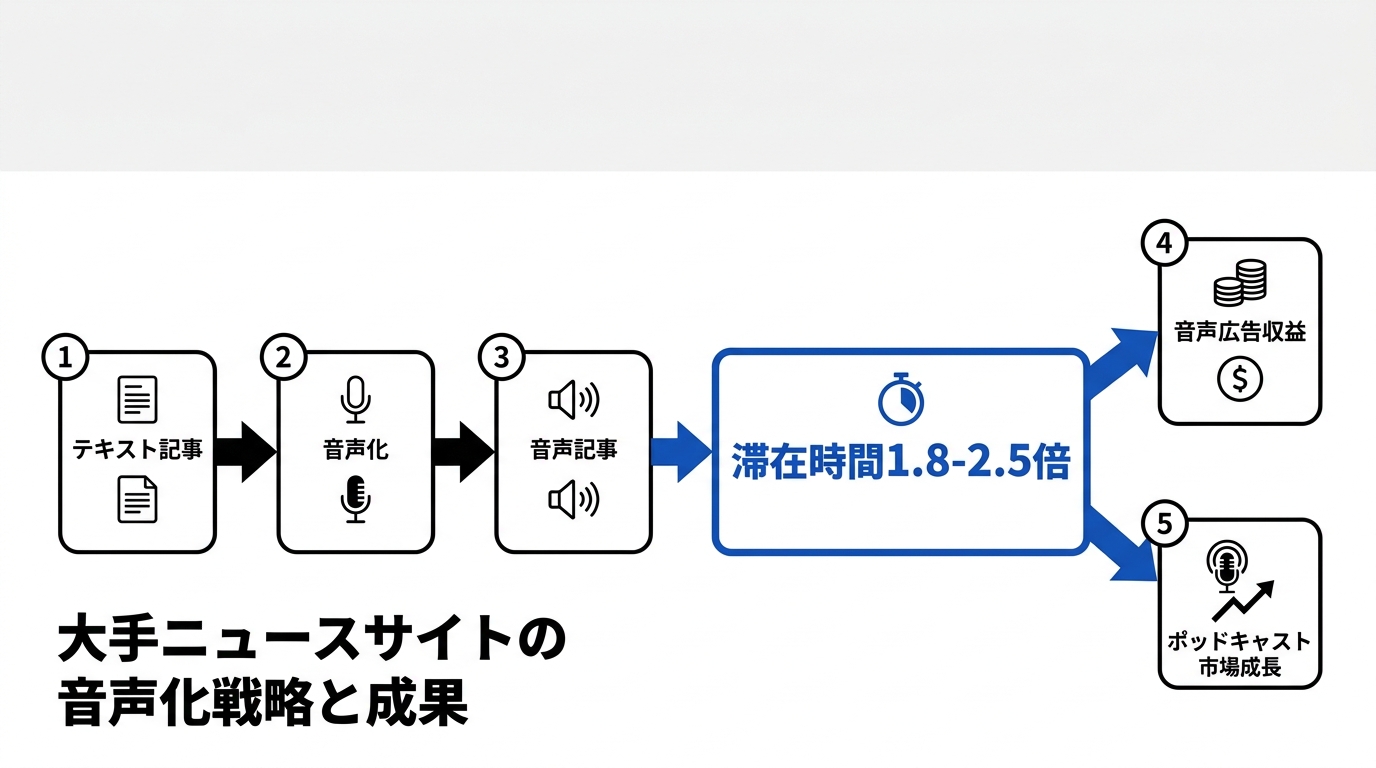
The commercial ceiling is visible in the international audio advertising market, but publisher-side audio starts with listening behavior, not ad insertion.
Player design changes the size of the opportunity
Across the properties I observed, headline-adjacent players were noticed more often than sidebar or footer placements. A small interface with play, pause, progress, and a clear "Listen to this article" label usually created a cleaner test than a feature-heavy player.
In a subset of client changes, adding explanatory copy coincided with a 20% to 30% relative increase in play rate. The tests were not standardized across sites, so this is not a promised uplift. It is a reasonable A/B-test hypothesis.
Play rate matters because a large engagement ratio among 1% of sessions may have little whole-site effect. A smaller ratio among 10% of sessions can matter more. Report both the conditional result for listeners and the blended result for all eligible sessions.
Where audio performs poorly
Charts, galleries, maps, and visual instructions lose essential information when converted without adaptation. Short breaking news may be consumed faster as text than as audio. Specialist publications also need a maintained pronunciation dictionary; one incorrect name can damage trust.
Cost is another constraint. Raw synthesis may be inexpensive, but player engineering, accessibility, editorial review, analytics, and pronunciation maintenance are recurring work. Public 2026 API pricing suggests a broad ¥1,600 to ¥4,000 per million characters, while a limited custom build outsourced in Japan might be estimated at ¥500,000 to ¥1.5 million. Both ranges depend heavily on provider and scope.
The broader role of listening in web publishing is explored in the future of TTS for publishers.
A test should separate correlation from impact
Choose comparable evergreen articles and define the measurement before launch. Run the test for at least one month, longer for low-traffic publications. Record:
- eligible sessions and play rate;
- audio completion;
- GA4 engagement time for playing and non-playing sessions;
- blended engagement across all eligible sessions;
- viewable impressions and revenue per session;
- editorial correction time.
Segment by device, traffic source, article category, and new versus returning visitor. If possible, randomize player visibility across comparable traffic. That design will produce a stronger estimate than a simple listener-versus-non-listener comparison.
I am building PUBVOICE to lower the cost of running this test, not to turn an observational ratio into a guarantee. The number worth keeping is the one a publisher can reproduce under its own editorial and audience conditions.
PUBVOICE - Deliver your articles as audio
We built PUBVOICE so media operators can add a listening experience without extra workload. Register an RSS feed and every new article gets audio automatically.
Every time we hear editors worry that readers never finish their articles, we keep coming back to the same answer: audio reaches the moments text cannot - commutes, chores, workouts. PUBVOICE was born from that conviction.

Yutaro Sasao
We take each person's "I want to" and "I want to be able to" seriously, and use technology to make it happen. That is our mission.
Opening up new possibilities with digital technology. Drawing on roughly ten years in the advertising and media industries, Yutaro builds app development for web media companies with AI-driven efficiency.
Talk to us about your next project
Contact us about app development or other digital initiatives. We will review your requirements and recommend an approach suited to your business.
Related posts
Contact
Contact us to discuss app development for your media business. We will recommend an approach based on your requirements and commercial goals.
Contact Form
Send us your inquiry using the form below. We aim to respond within 24 hours.
Contact by Email
info@media-leap.com
We aim to respond within 24 hours
Business Hours
Weekdays: 9:00–18:00 JST
Weekends and public holidays: Closed