How Audio Articles Can Reduce Drop-Off
Audio lets an article continue when a reader can no longer look at the screen. Publisher case studies suggest longer sessions, but completion, comprehension, and business value must be measured separately.
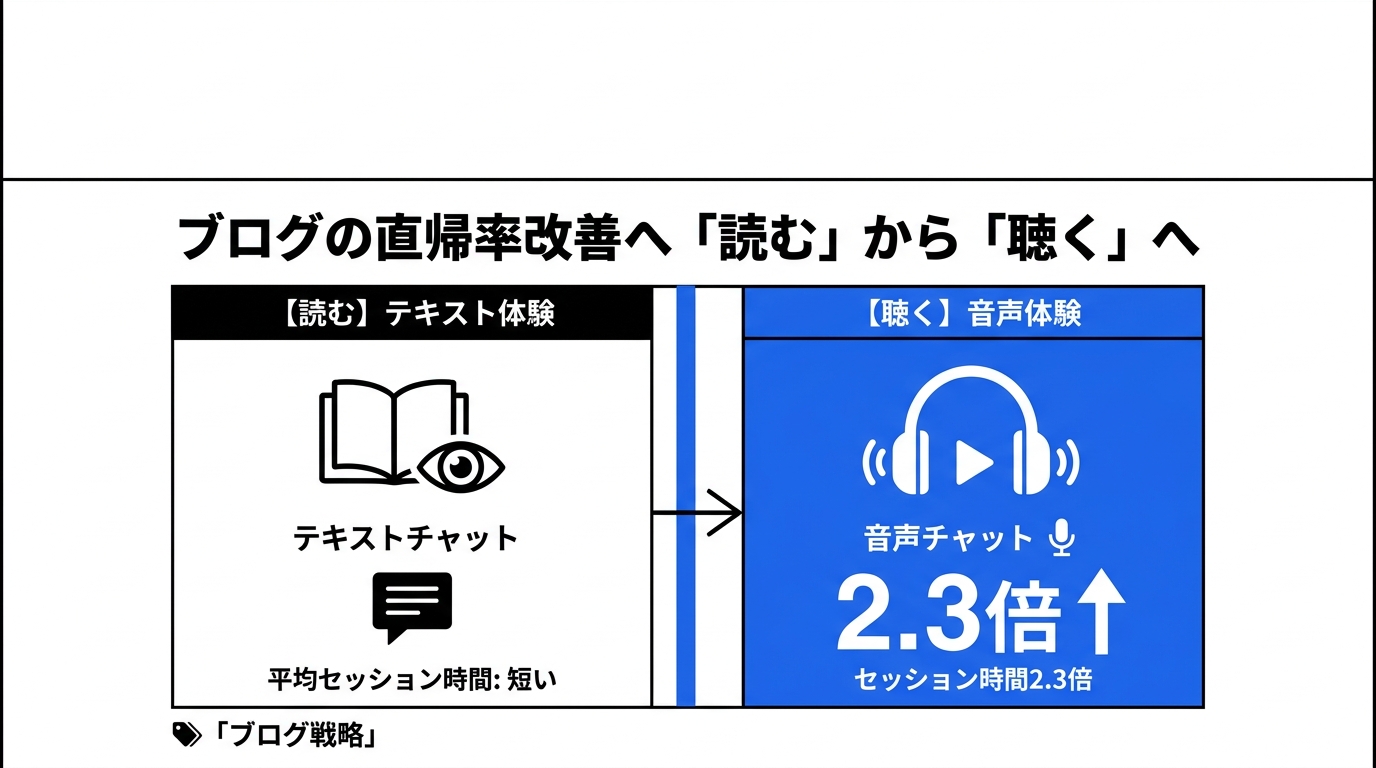
Sometimes an article's exit rate barely changes after a rewrite or a new headline. The constraint may not be editorial quality. A visitor may have opened the page at a moment when continuing to look at a screen is difficult.
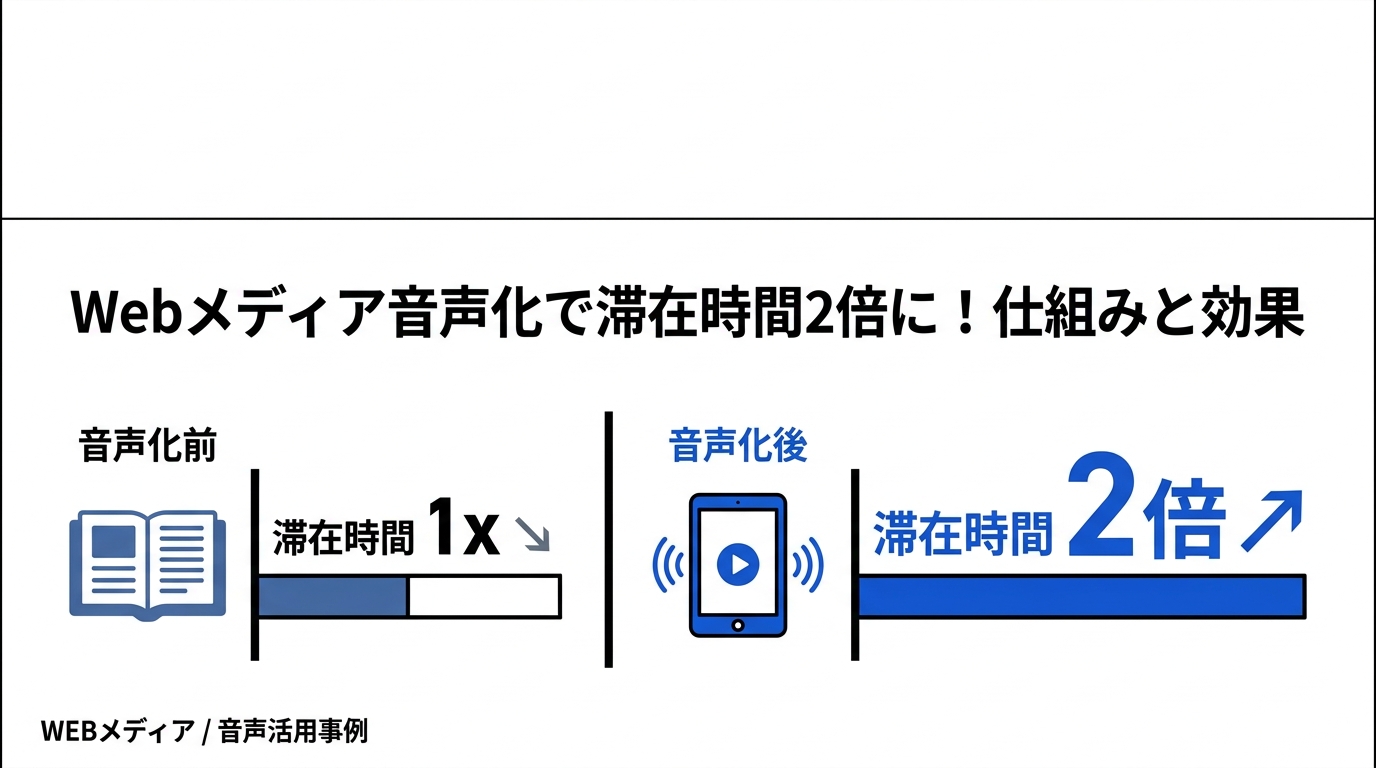
In 2019, US marketing publisher Convince & Convert reported that audio users on its blog averaged nine minutes on site, compared with four minutes for text-only users (company case study). It is one company's observational result. People who chose audio may already have been more engaged, so the case does not establish universal causality.
I used to analyze exits and time on page for a large publisher. A longer session never told us, by itself, whether the reader was satisfied. Audio needs a broader scorecard that includes navigation, return visits, and meaningful actions after playback.
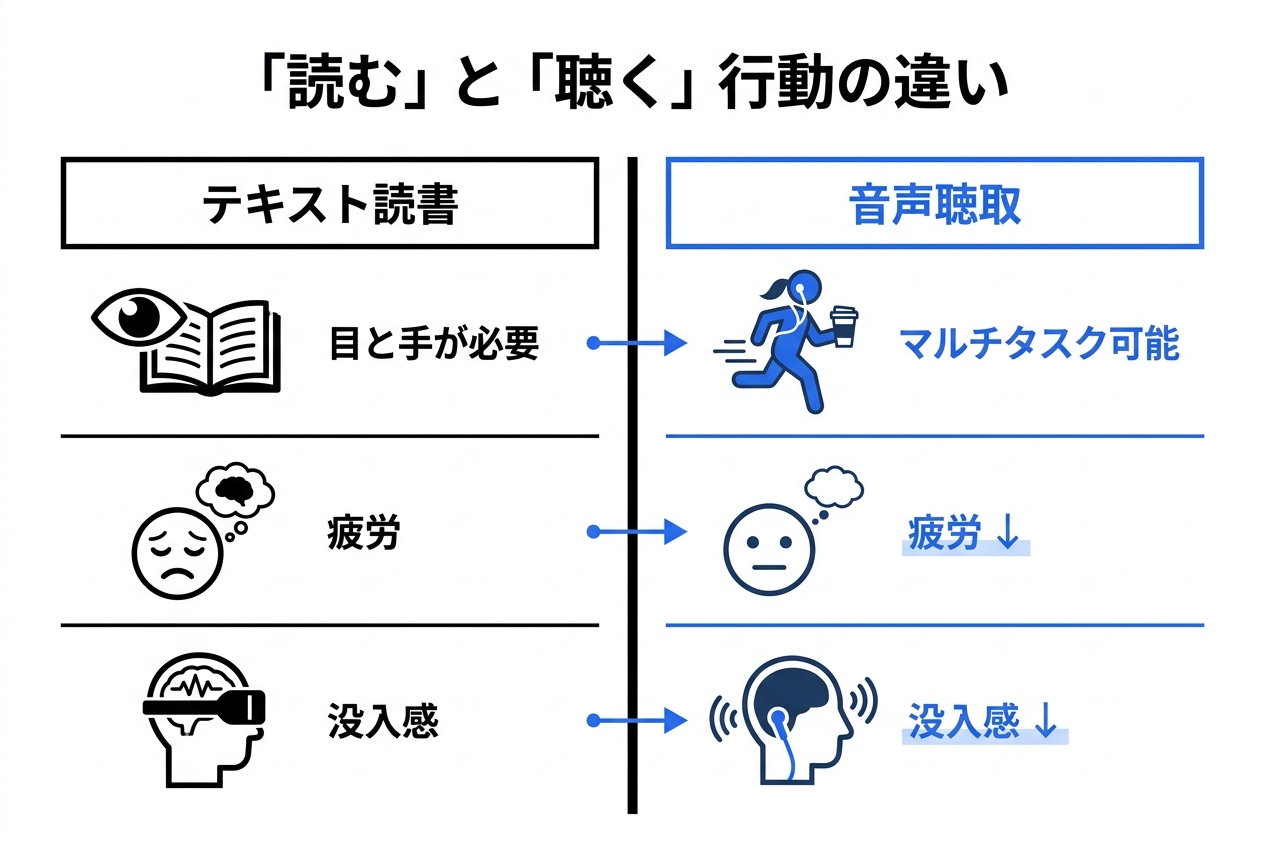
Reading and listening consume different resources
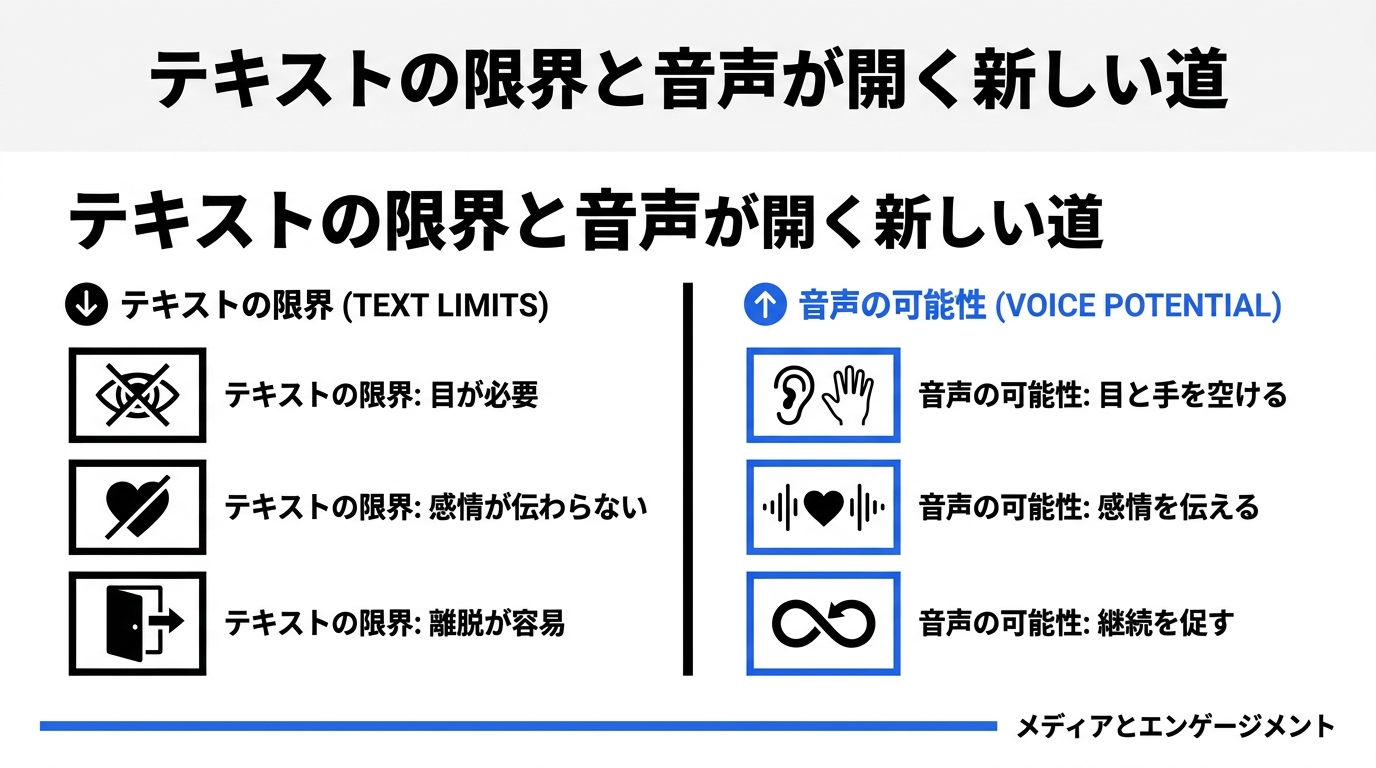
Text occupies the eyes but gives the reader direct control. A person can scan, compare, and return to a sentence. Audio yields some of that control in exchange for the ability to leave the screen.
That exchange matters during a commute, workout, walk, or household task. It does not make audio superior. A pricing table or code sample is usually easier to understand visually.
In publisher analytics, I sometimes saw the same long-form format behave differently on morning mobile traffic and evening desktop traffic. An audio test should therefore segment by device and time, not only by article. Why web publishers need an audio option examines these contexts in more detail.
Behavioral explanations should remain hypotheses
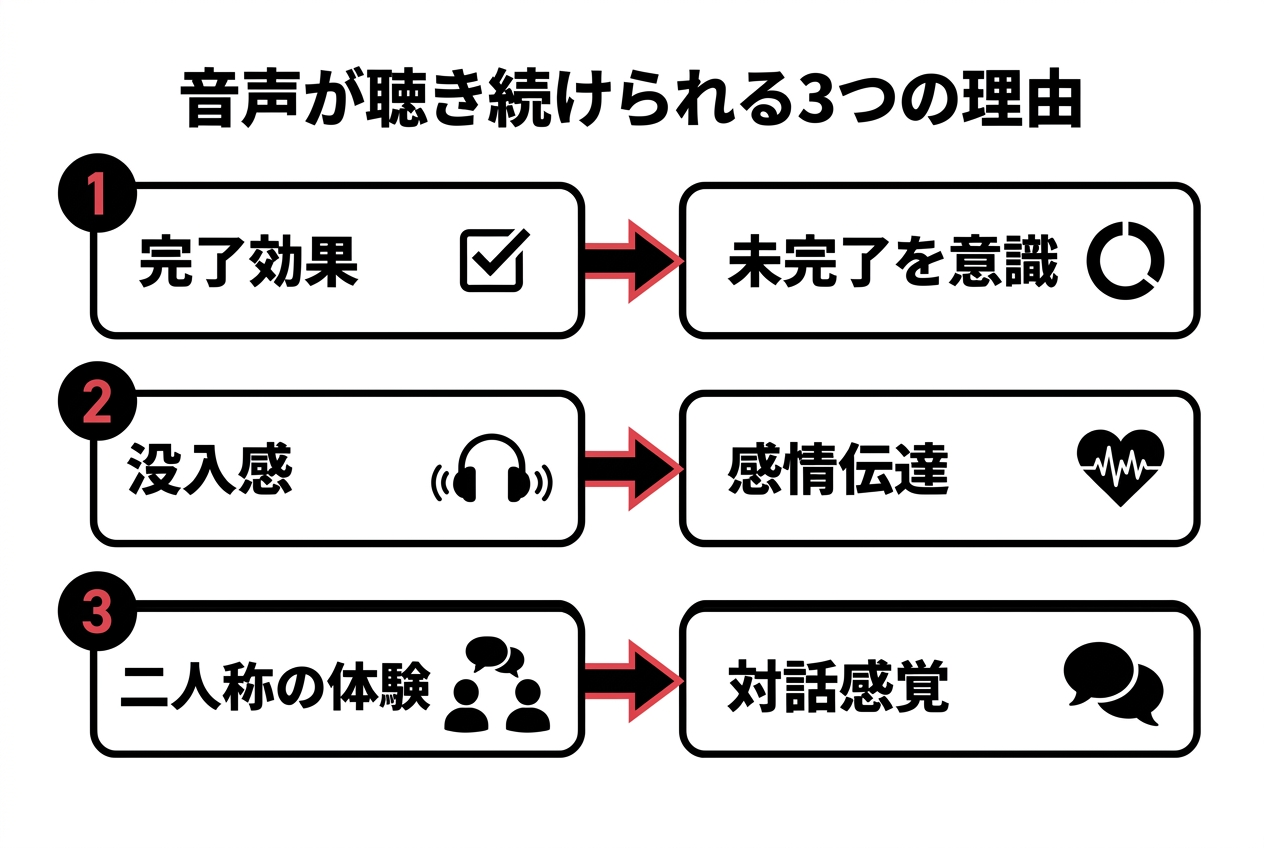
Audio moves forward without scrolling, which may preserve a sense of being "in the middle" of a task. The Zeigarnik effect—the tendency for unfinished tasks to remain salient—is sometimes used to explain completion. Its direct application to audio-article completion is not established, so it should be treated as a hypothesis rather than proof.
Voice can also carry pauses and emphasis. Listening through headphones may feel more personal than reading a page. These effects vary with voice preference, playback environment, language, and speed.
While operating a voice-chat app, I saw user reactions change when we changed voices. I also saw natural speech fail to retain people when the underlying content was weak. Voice affects the entrance to an experience; it does not replace editorial value.
Podcast growth shows a habit, not a guaranteed outcome
Edison Research's Infinite Dial 2025 found that 55% of Americans aged 12 and older had listened to a podcast in the previous month, up from 37% in 2020. This is strong evidence that regular audio use has expanded in the United States.
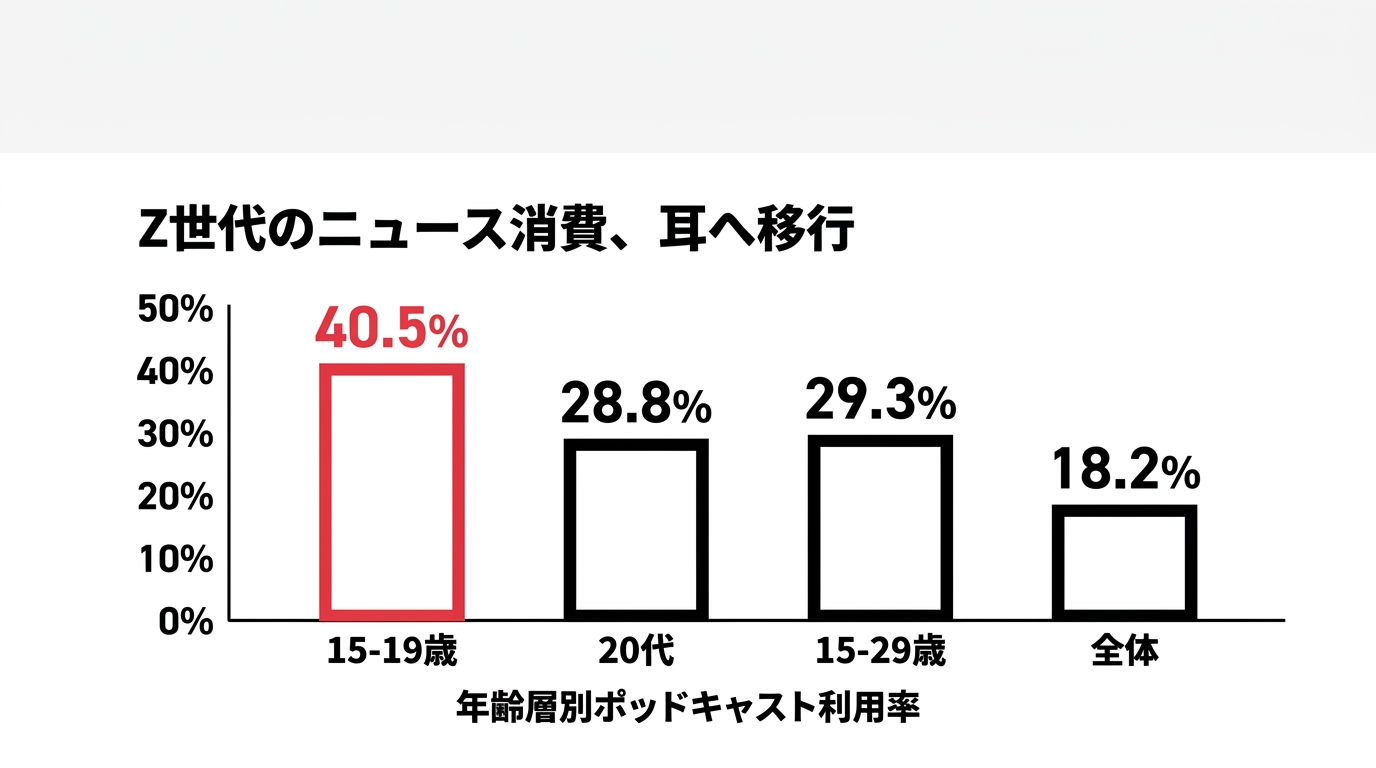
Japan shows a younger but notable pattern. A 2025 survey by Otonal and The Asahi Shimbun Company reported monthly podcast use of 40.5% among people aged 15–19. That age-specific result should not be generalized to the whole country.
Neither statistic proves that a search visitor wants a narrated blog post. Podcast discovery and article discovery involve different intentions. A publisher's own playback data matters more than the size of the overall audio market.
Completion rate needs a denominator
Audio completion rate is the share of playback sessions that reach a defined endpoint. A high rate can still have little audience impact if only a small fraction of page visitors start the audio.
Track starts, 25%, 50%, 75%, and completion. Report each as a share of playback sessions and of all article sessions. Compare onward reading, return visits, subscription, or another relevant outcome between listeners and non-listeners.
Some publisher programs report 1.5–2.5x longer sessions for listeners, but the range is conditional rather than a benchmark. Our audio time-on-page methodology describes the measurement assumptions.
Avoid autoplay. It inflates starts without recording intent. In ad UX work, I saw tactics improve an exposure metric while making exits or complaints worse. Audio can create the same false confidence.
Start with long-form, evergreen reporting
Analysis, columns, and single-speaker interviews are reasonable test candidates. Pick articles with stable demand and enough length to make screen-free listening useful.
Breaking news, frequently updated pages, photo essays, and highly visual tutorials are poor fits. A one-voice reading of a panel discussion also obscures speaker identity. Multiple voices can help, but increase production and rights work.
Pronunciation dictionaries, regeneration, player maintenance, and transcript review all add operational cost. How to create AI audio content lays out that workflow. A selective trial reveals the workload more clearly than an archive-wide launch.
Measure the quality of contact, not only its duration
Audio can turn a moment when reading stops into a moment when the article continues. That may reduce drop-off. It does not prove understanding, satisfaction, or revenue.
When completion rises, examine what happens next. Do listeners open another article, return later, subscribe, or convert? If not, test content selection, player placement, and voice separately.
The useful question is not whether audio keeps a browser session open. It is whether listening creates a relationship with the reporting that survives after playback ends.
PUBVOICE - Deliver your articles as audio
We built PUBVOICE so media operators can add a listening experience without extra workload. Register an RSS feed and every new article gets audio automatically.
Every time we hear editors worry that readers never finish their articles, we keep coming back to the same answer: audio reaches the moments text cannot - commutes, chores, workouts. PUBVOICE was born from that conviction.

Yutaro Sasao
We take each person's "I want to" and "I want to be able to" seriously, and use technology to make it happen. That is our mission.
Opening up new possibilities with digital technology. Drawing on roughly ten years in the advertising and media industries, Yutaro builds app development for web media companies with AI-driven efficiency.
Talk to us about your next project
Contact us about app development or other digital initiatives. We will review your requirements and recommend an approach suited to your business.
Related posts
Contact
Contact us to discuss app development for your media business. We will recommend an approach based on your requirements and commercial goals.
Contact Form
Send us your inquiry using the form below. We aim to respond within 24 hours.
Contact by Email
info@media-leap.com
We aim to respond within 24 hours
Business Hours
Weekdays: 9:00–18:00 JST
Weekends and public holidays: Closed