How AI and Audio Could Create a New Ad Channel
When generative ad creative meets text-to-speech, publishers gain a new kind of contextual inventory. The opportunity is real, but so are the limits around privacy, quality, and measurement.
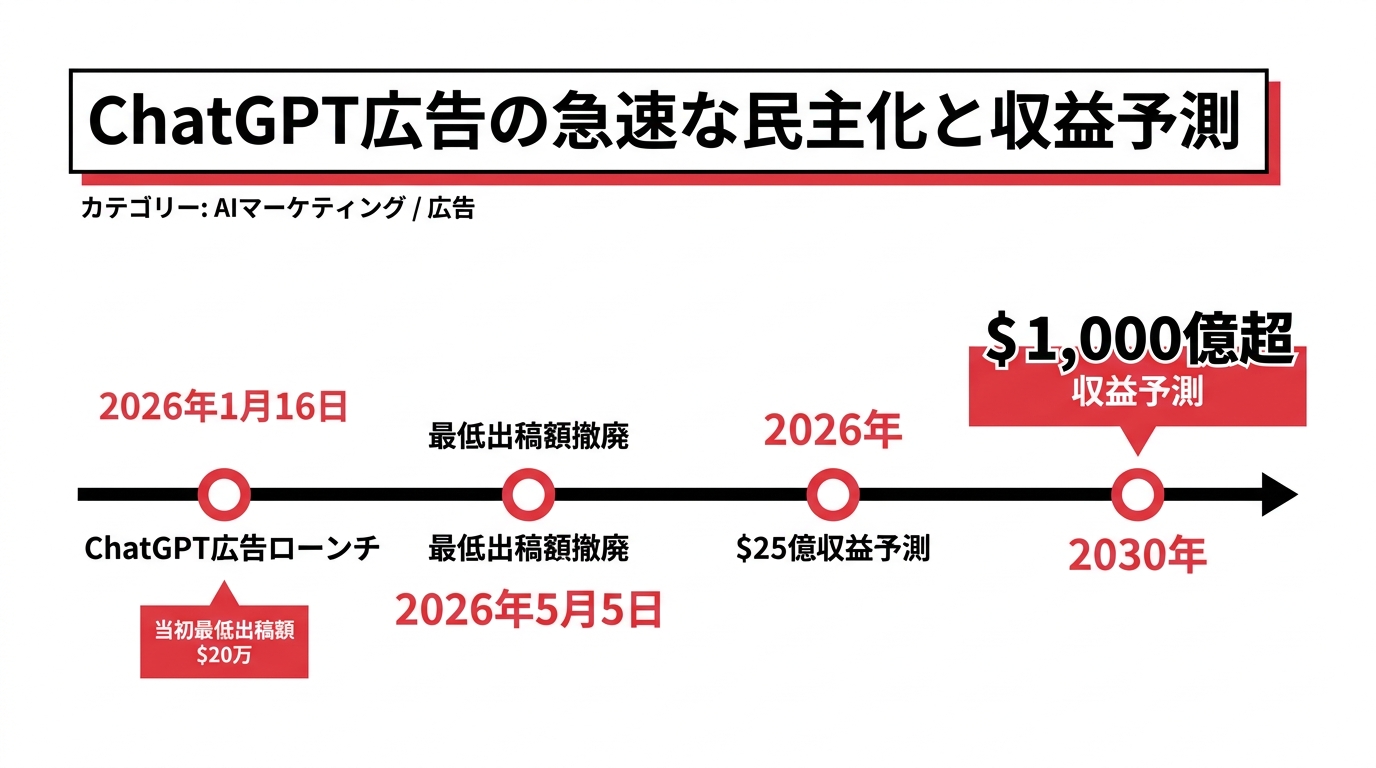
AI can write an ad, and text-to-speech can voice it almost immediately. Put those capabilities together and audio advertising no longer has to be a single prerecorded spot played to everyone. It can change with the subject of an article or episode.
I worked on both the ad-tech and publisher sides of digital media in Japan. One recurring constraint was easy to see: targeting systems could produce more segments than creative teams could support. Better delivery logic did not help much when every segment received the same two assets. Generative tools reduce that production bottleneck.
Production speed is not the same as advertising effectiveness. Audio is difficult to ignore, which makes an irrelevant or poorly voiced message more intrusive than a display ad at the edge of a page.
Creative production is catching up with delivery
Generative advertising systems can turn product information into several versions of copy, images, video, and audio. Google, Meta, and Amazon are all moving in this direction. Amazon describes its current set of tools on its generative AI advertising page.
When I was involved in campaign testing, experiments often paused while teams waited for another asset. The main value of generation is not a clever headline. It is the ability to test more meaningful variations without adding the same amount of production time.
Human review still matters. Brand names can be mispronounced, regulated claims can be rewritten incorrectly, and a synthetic voice can deliver sensitive copy in the wrong tone. Finance, healthcare, recruitment, and other high-risk categories should retain an approval step.
Contextual audio can reduce reliance on personal histories
Audio works well with contextual advertising because an article or episode provides a clear subject. A running story might carry a sports product message; a management article might carry a business software ad. The matching signal is the content being consumed, not a cross-site profile of the listener.
Spotify announced generative production support for scripts, voiceovers, and background music in 2025 (Spotify Newsroom). Spotify has also published a case study in which SHI International generated more site traffic with a Gen AI Ads campaign. That is a platform case study, not a cross-industry benchmark, so it should not be treated as an expected lift.
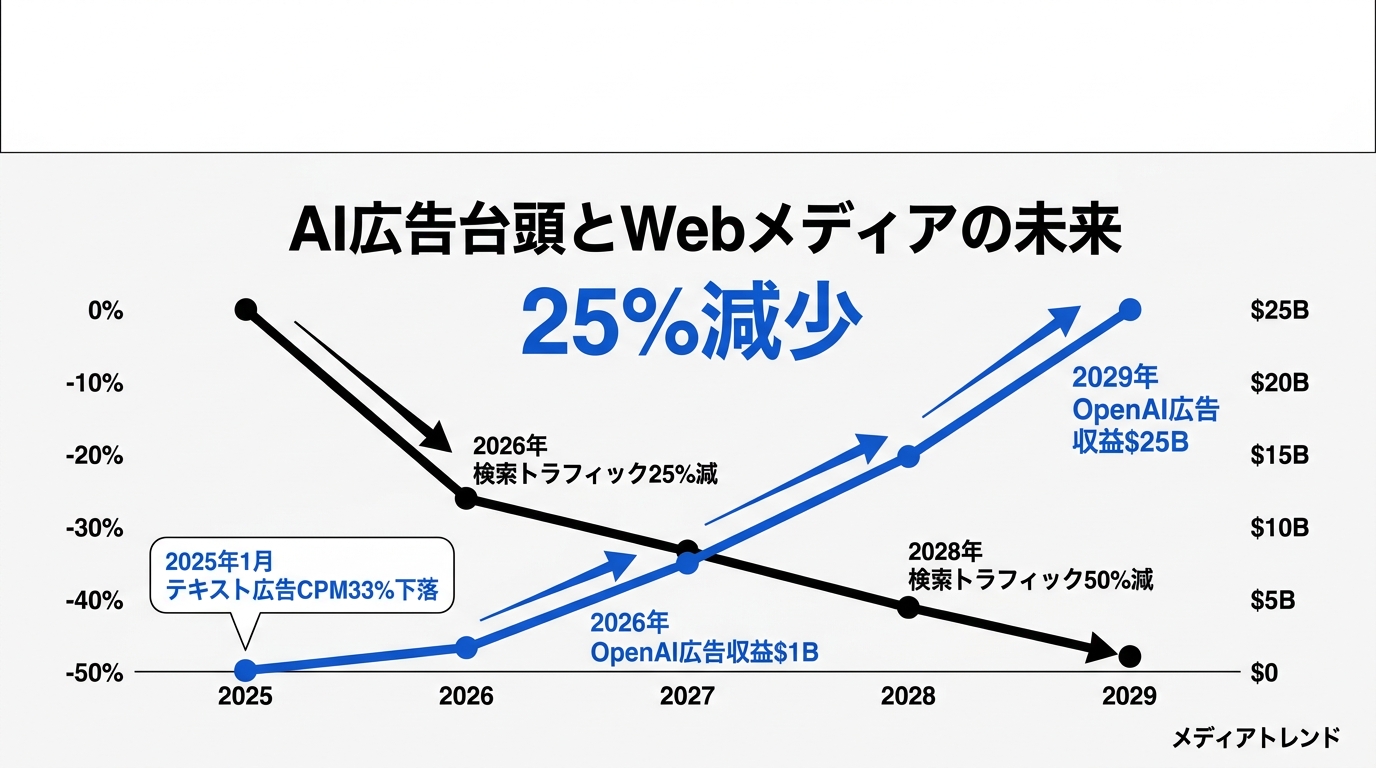
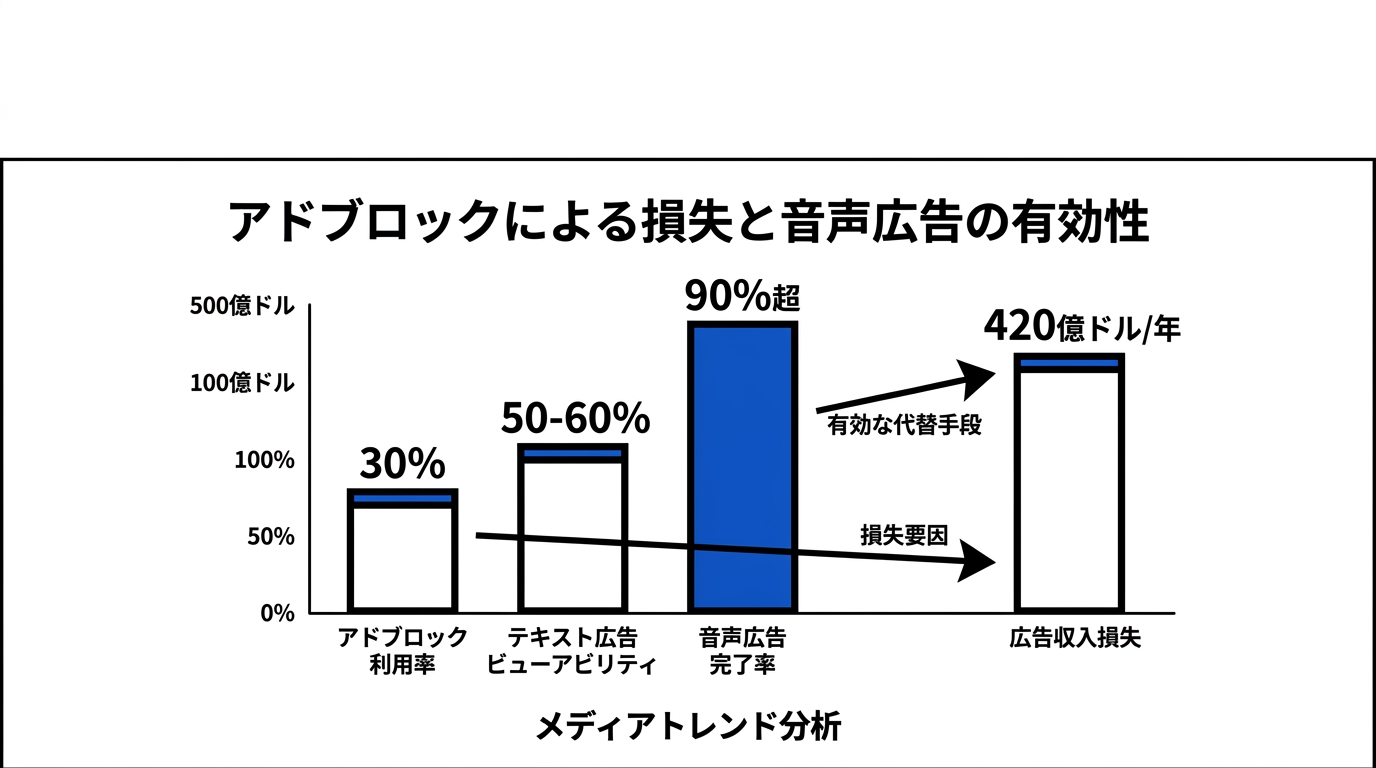
This privacy advantage connects with the broader problem described in Cookie restrictions, ad blocking, and audio ads. Context does not reveal purchase intent on its own, however. If advertisers keep adding personal data in search of precision, the model eventually recreates the tracking problems it was meant to avoid.
New inventory still has a frequency problem
The US podcast advertising market has continued to develop. The IAB Podcast Advertising Revenue Study is a useful reference because it states its geography and methodology. Company earnings, market forecasts, and programmatic audio estimates use different definitions and should not be combined as if they measured the same thing.
In publisher operations, I repeatedly saw forecasts showing that one more ad slot would raise short-term revenue. Those forecasts were usually right. The damage to page speed, completion, and return visits appeared later. Audio has the same tension: a longer session creates more possible breaks, but excessive interruption weakens the program itself.
Claims such as “1.5 to 2.5 times longer” vary with article length, traffic source, placement, and the definition of a session. Rather than present our own observations as a universal effect, we document the conditions in a separate audio measurement guide.
Publishers need listening data before an ad product
Before selling audio inventory, a publisher needs to know which stories are played, where listeners stop, and whether they return. As the YouTube and Spotify audio strategy shows, large platforms are not investing in sound for its own sake. They are expanding the time and contexts in which users remain connected.
At a major Japanese publishing company, I learned to examine ad performance alongside story length, referral source, device, and repeat behavior. Revenue alone makes almost every additional ad unit look attractive. A wider set of signals often changes the decision.
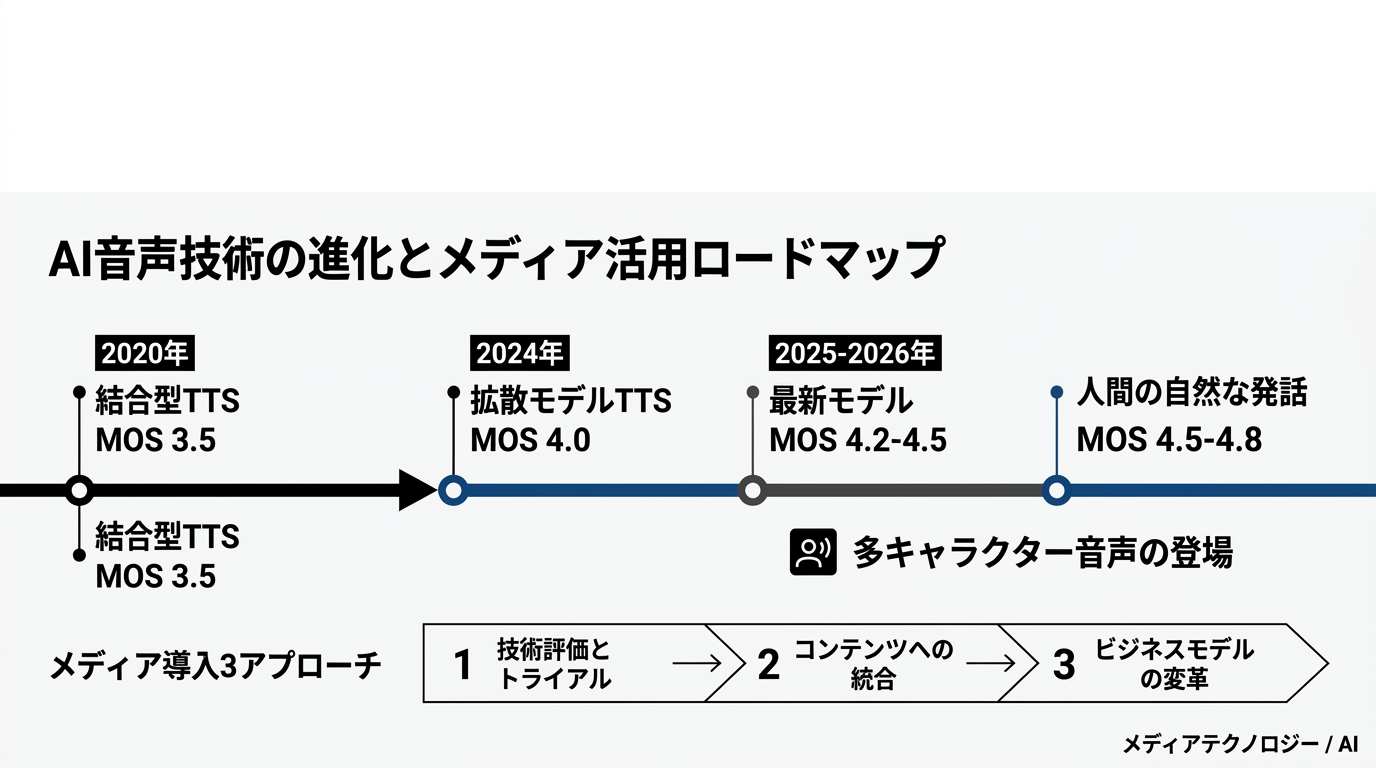
PUBVOICE is one option for turning existing publisher articles into measurable audio. It is not a fit for every page. Short breaking news, data tables, and visual comparisons often work better as text. Long analysis, interviews, and columns are better places to run a controlled test.
The future of AI audio advertising will not be decided by voice quality alone. Publishers also need to decide what context can be used, what personal data will not be used, and how much interruption their audience will accept. Those boundaries determine whether dynamic audio becomes useful inventory or simply a harder-to-close ad.
PUBVOICE - Deliver your articles as audio
We built PUBVOICE so media operators can add a listening experience without extra workload. Register an RSS feed and every new article gets audio automatically.
Every time we hear editors worry that readers never finish their articles, we keep coming back to the same answer: audio reaches the moments text cannot - commutes, chores, workouts. PUBVOICE was born from that conviction.

Yutaro Sasao
We take each person's "I want to" and "I want to be able to" seriously, and use technology to make it happen. That is our mission.
Opening up new possibilities with digital technology. Drawing on roughly ten years in the advertising and media industries, Yutaro builds app development for web media companies with AI-driven efficiency.
Talk to us about your next project
Contact us about app development or other digital initiatives. We will review your requirements and recommend an approach suited to your business.
Related posts
Contact
Contact us to discuss app development for your media business. We will recommend an approach based on your requirements and commercial goals.
Contact Form
Send us your inquiry using the form below. We aim to respond within 24 hours.
Contact by Email
info@media-leap.com
We aim to respond within 24 hours
Business Hours
Weekdays: 9:00–18:00 JST
Weekends and public holidays: Closed