Why Gen Z News Habits Are Expanding into Audio
Younger audiences often discover news through video and continue through audio. The shift is less about abandoning text than separating discovery, understanding, and ongoing attention.
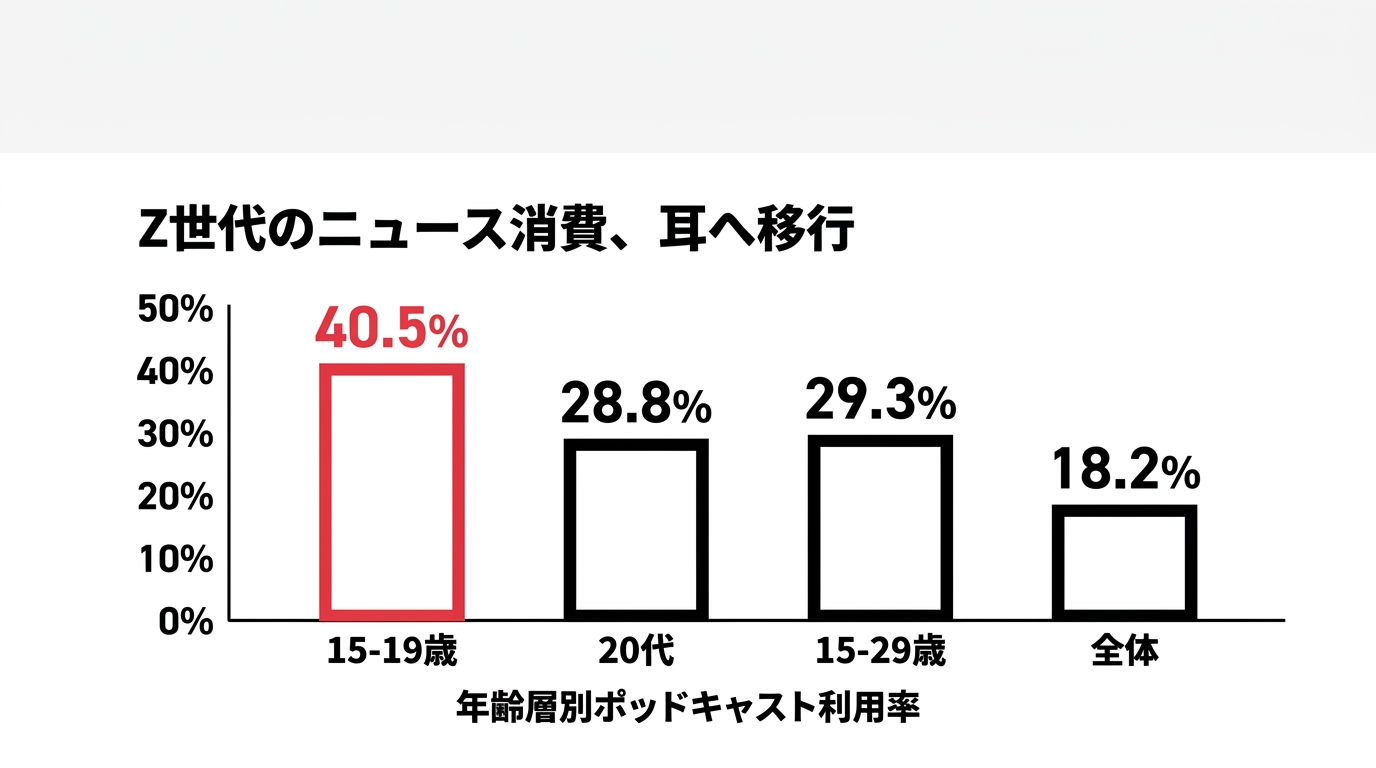
Ask a younger news consumer where a story came from and the answer may be a YouTube channel or a podcast host rather than a newspaper or news site. That does not mean reading has disappeared. Discovery, explanation, and continued consumption now happen through different channels.
I have attempted to produce a podcast several times and stopped when scripting, recording, and editing became too heavy. My listening habit continued. That gap between the effort required to produce audio and the ease of consuming it is central to the publisher opportunity.
Youth data needs its survey context
A joint survey by Otonal and The Asahi Shimbun found strong podcast use among younger respondents in Japan (Japanese survey PDF). The result is useful in Japan, but its age bands, fieldwork dates, and definition of podcast use should travel with the statistic. It should not become a universal claim about all of Gen Z.
Internationally, the Reuters Institute’s Digital News Report documents the rising role of social video and creators in younger people’s news use across many markets. The report also shows substantial country differences. A US or UK percentage cannot be imported as a Japanese audience forecast.
When I analyzed acquisition for a Japanese publishing business, people in the same age group behaved differently depending on whether they arrived through search, social media, or an app notification. “Young audience” is too broad a product brief. Commuter analysis, entertainment commentary, and breaking news each create a different use case for audio.
Moving toward audio does not mean leaving video
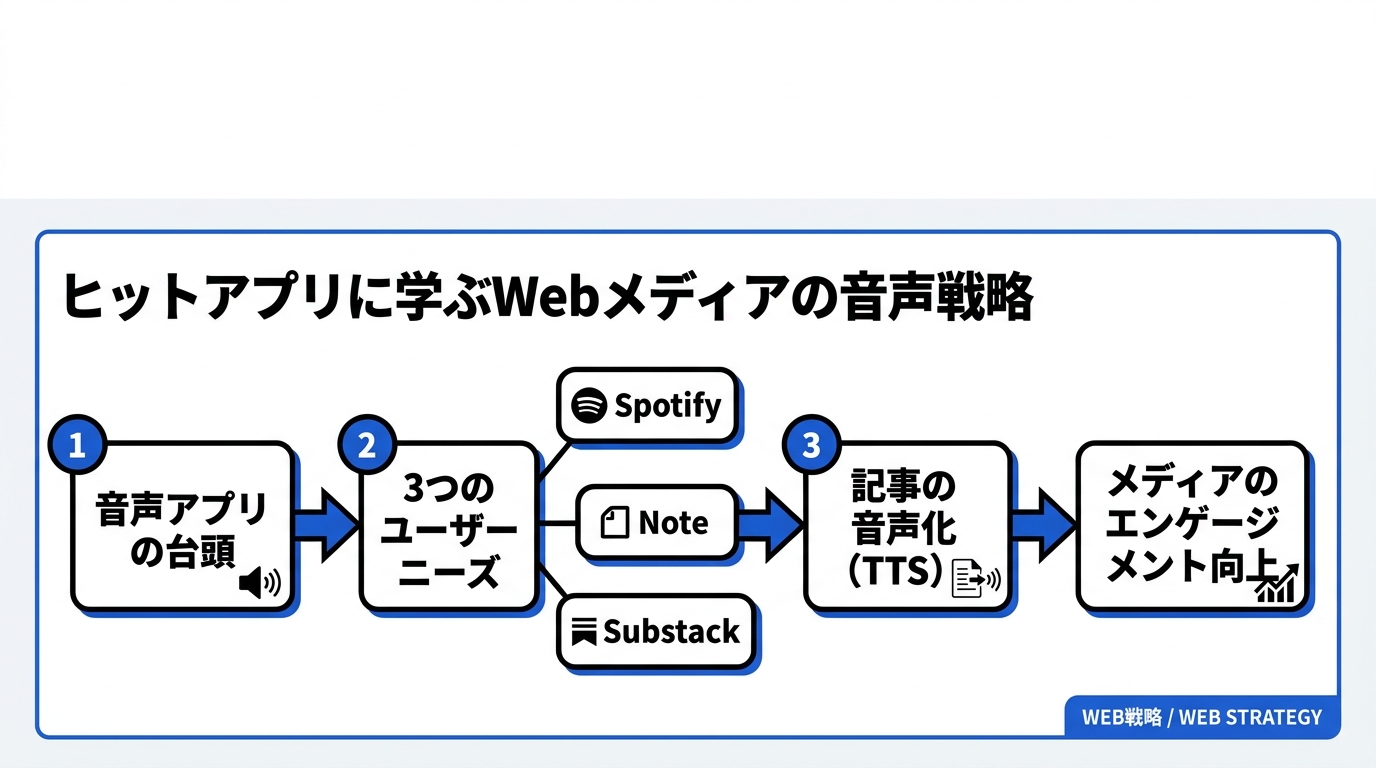
Younger users can discover a program through YouTube or a short clip and continue listening while commuting. As the YouTube and Spotify audio strategy shows, video and audio are often two stages of the same journey rather than substitutes.
Audio’s clearest advantage is that it does not occupy the eyes. The Infinite Dial tracks online audio and podcast behavior in the United States (Edison Research). Its estimates apply to the stated US population, not to global Gen Z or Japanese listeners.
Screen fatigue is sometimes offered as a complete explanation for audio growth. It is plausible, but the evidence does not isolate one cause. Host preference, recommendations, program length, phone plans, connected cars, and daily routines all influence listening.
Voice changes how trust is formed
Text relies on bylines, publication identity, sourcing, and editorial presentation. Audio adds pace, hesitation, tone, and the relationship between speakers. The question shifts from “Which outlet published this?” toward “Whom do I want to hear explain it?”
In publisher analytics, I saw that stronger direct and branded traffic tended to support more stable return behavior. A recognizable voice may create a similar reason to return. Familiarity is not a substitute for accuracy, however. News audio still needs visible sourcing, corrections, and editorial accountability.
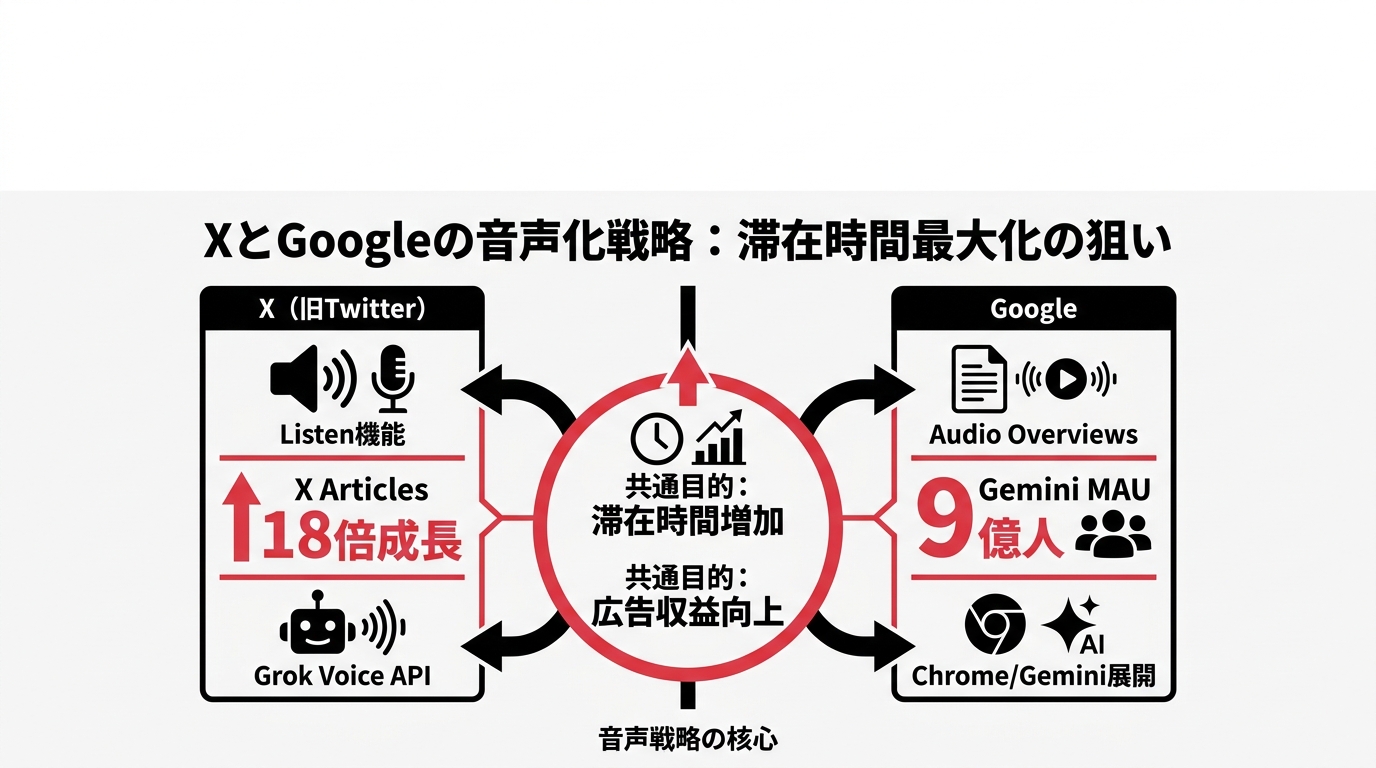
Automated narration will make listening more common. X and Google’s audio products are part of that trend. A generic synthetic voice and a newsroom’s own host can deliver the same facts while creating very different relationships.
Article audio should be selective
Interviews, analysis, essays, and explainers can often be understood with the screen off. Stock tables, code, maps, and product comparisons usually lose value without their visuals. Converting every article creates a large catalog that may rarely be played.
Across conversations with more than 30 Japanese media companies, business publishers were often the most interested in commuter listening. That is an observation from companies we supported or spoke with, not a representative market survey.
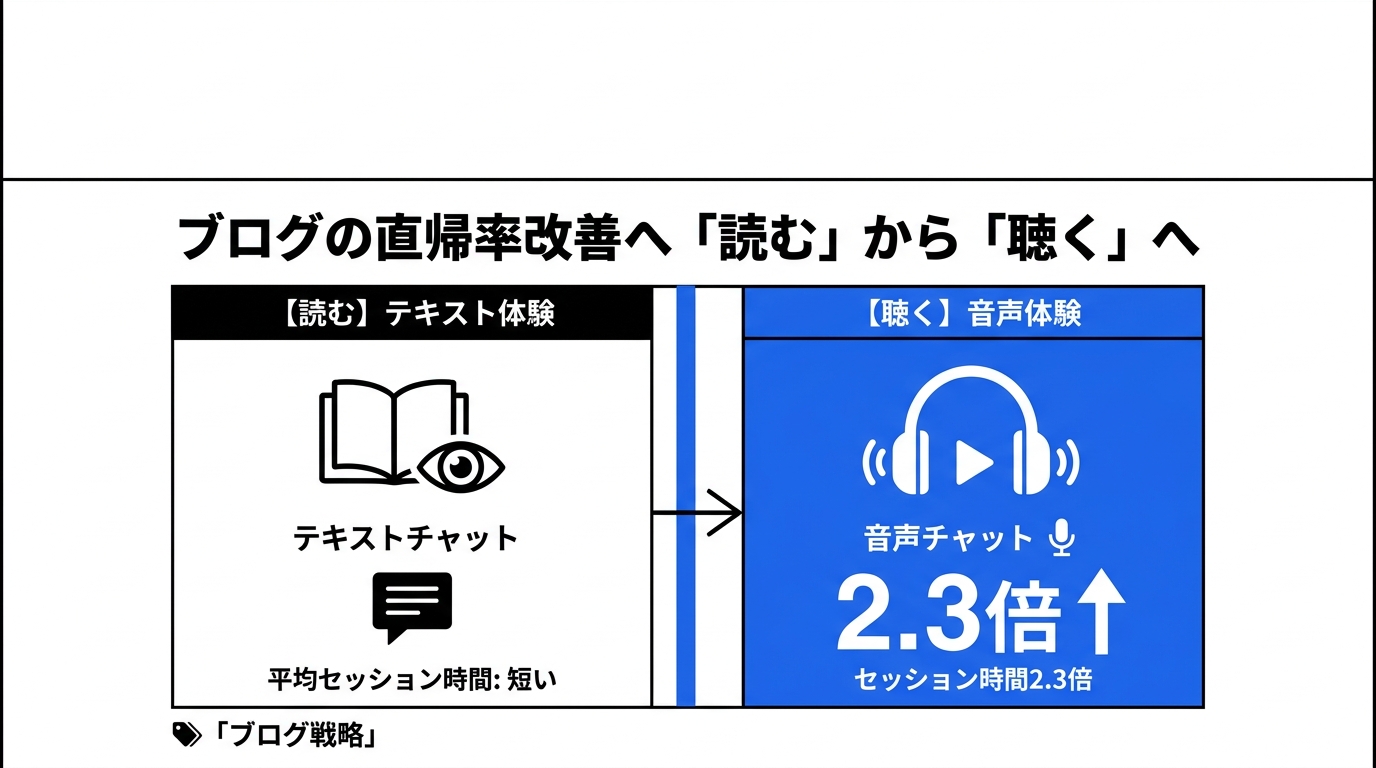
Measurement should separate starts, completion, repeat use, and downstream subscriptions. Internal figures such as “1.5 to 2.5 times longer” can change sharply with story length, referral source, and session definitions. We keep those conditions in an audio measurement guide rather than presenting one multiplier as an industry norm.
PUBVOICE is one way to test existing articles as audio without producing a separate show. A small monthly selection is enough to learn whether listeners use it while commuting, working, or resting. Those situations are more useful than the label “Gen Z.”
Reading is not being replaced. Video is not being replaced either. Listening is becoming another route through the same information. Publishers need to identify where their audience loses the ability to keep looking—and whether audio can carry the story from there.
PUBVOICE - Deliver your articles as audio
We built PUBVOICE so media operators can add a listening experience without extra workload. Register an RSS feed and every new article gets audio automatically.
Every time we hear editors worry that readers never finish their articles, we keep coming back to the same answer: audio reaches the moments text cannot - commutes, chores, workouts. PUBVOICE was born from that conviction.

Yutaro Sasao
We take each person's "I want to" and "I want to be able to" seriously, and use technology to make it happen. That is our mission.
Opening up new possibilities with digital technology. Drawing on roughly ten years in the advertising and media industries, Yutaro builds app development for web media companies with AI-driven efficiency.
Talk to us about your next project
Contact us about app development or other digital initiatives. We will review your requirements and recommend an approach suited to your business.
Related posts
Contact
Contact us to discuss app development for your media business. We will recommend an approach based on your requirements and commercial goals.
Contact Form
Send us your inquiry using the form below. We aim to respond within 24 hours.
Contact by Email
info@media-leap.com
We aim to respond within 24 hours
Business Hours
Weekdays: 9:00–18:00 JST
Weekends and public holidays: Closed