Five Requirements for Audio in AI Search
Generative engine optimization can make audio pages easier for answer engines to interpret. The practical work is in transcripts, metadata, first-hand evidence, sources, and editorial scope—not in the audio file alone.
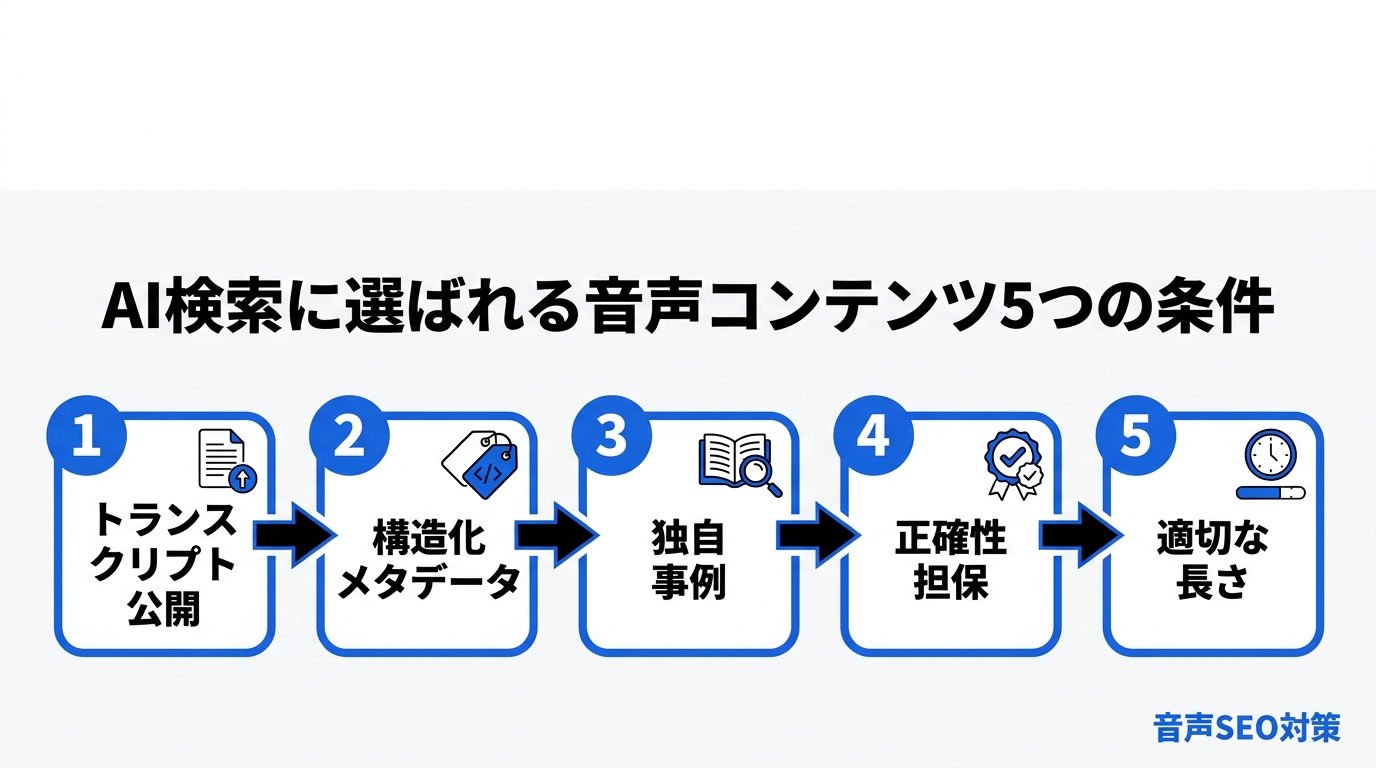
Google AI Overviews, ChatGPT, and Perplexity assemble answers from multiple sources. Audio can contain useful source material, but publishing an MP3 alone does not make its claims consistently accessible.
Generative engine optimization (GEO) is the practice of making content easier for generative search systems to interpret and cite accurately. It cannot guarantee inclusion. For publishers, the durable part of GEO is clear structure, attributable evidence, and an accessible text representation.
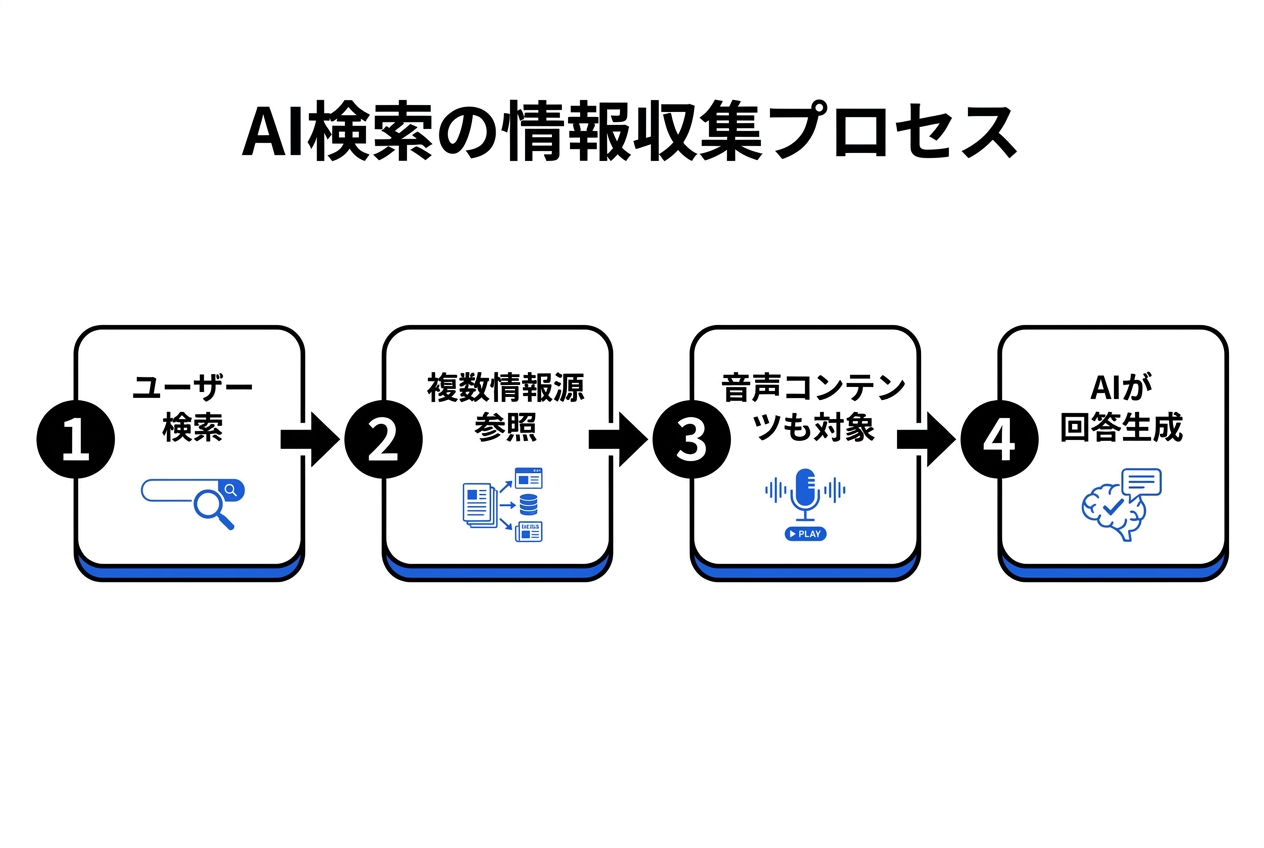
GEO gives an answer engine an entry point and evidence
GEO foundations are the structural and editorial signals that separate a page's topic, answer, evidence, and author. Headings help, but each section also needs enough context to stand on its own.
A direct opening sentence gives a system an entry point. Sources, dates, sample definitions, and author credentials give readers a way to verify what follows. There is no public formula proving that a particular heading structure increases citation frequency.
When I reported analytics inside a publishing company, stakeholders rarely accepted a percentage without asking about the period and audience behind it. The same discipline belongs in AI-facing content. A distinctive claim is useful only when its conditions are visible.
Zero-click SEO and audio content explains why verifiable first-hand material matters more than trying to make an article deliberately difficult to summarize.
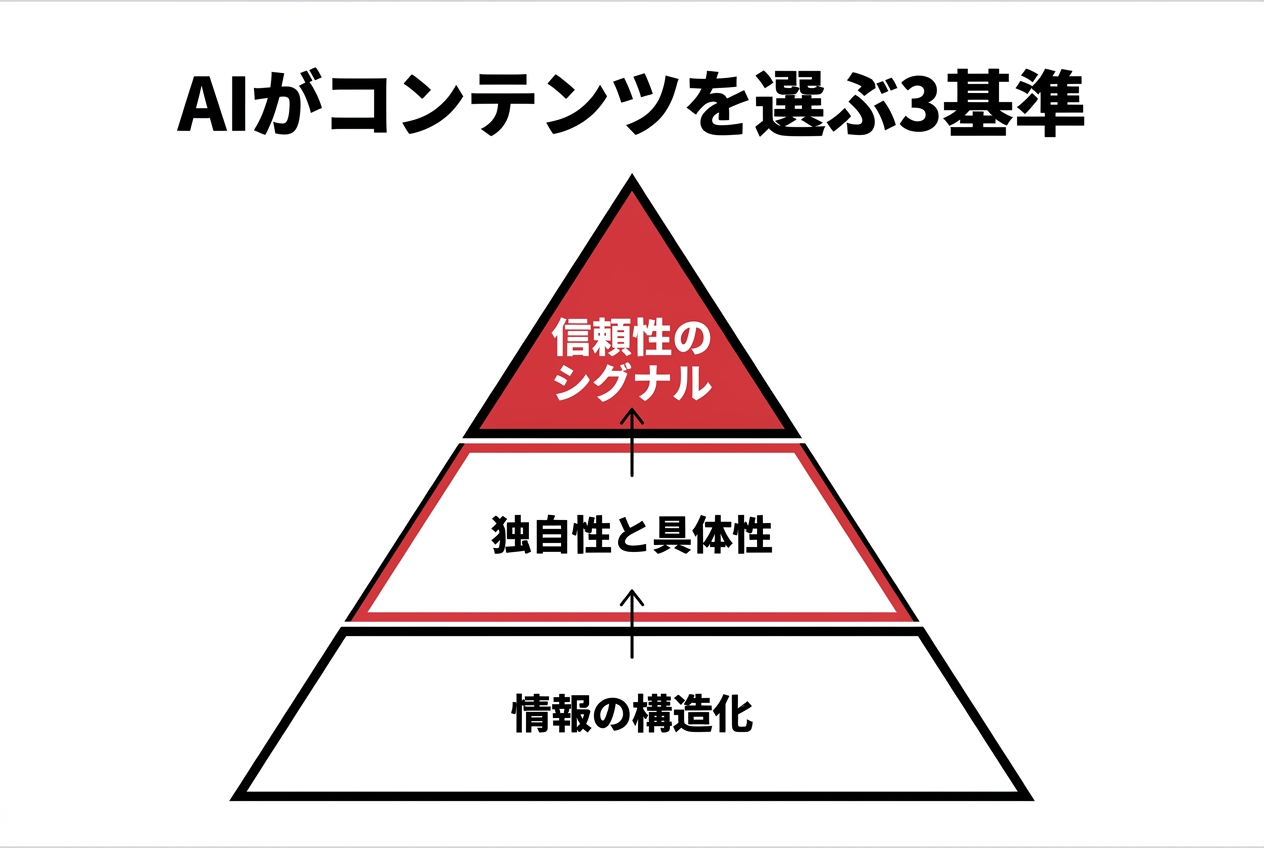
Audio GEO needs a text bridge
Audio GEO is the process of mapping spoken information into transcripts and metadata that answer engines and readers can navigate. Tone and pacing may improve the listening experience, but they are not confirmed AI-search ranking signals.
A complete recording carries context in sequence. Retrieval systems need markers that identify where topics begin, who is speaking, and when the material was published or updated. A transcript with section headings and speaker labels provides those markers.
While developing a voice-chat application, I managed character names, conversation topics, and emotion tags separately. Even when the audio was good, weak metadata made the right item harder for users to find. That observation does not reveal how an answer engine ranks sources, but it does show why discoverability cannot be left to the file itself.
Claims that podcast transcripts have a universally high AI citation rate need qualification. Results will vary by platform, domain authority, transcript availability, and subject. The safe question is whether the unique spoken material is also available in a form that can be checked.
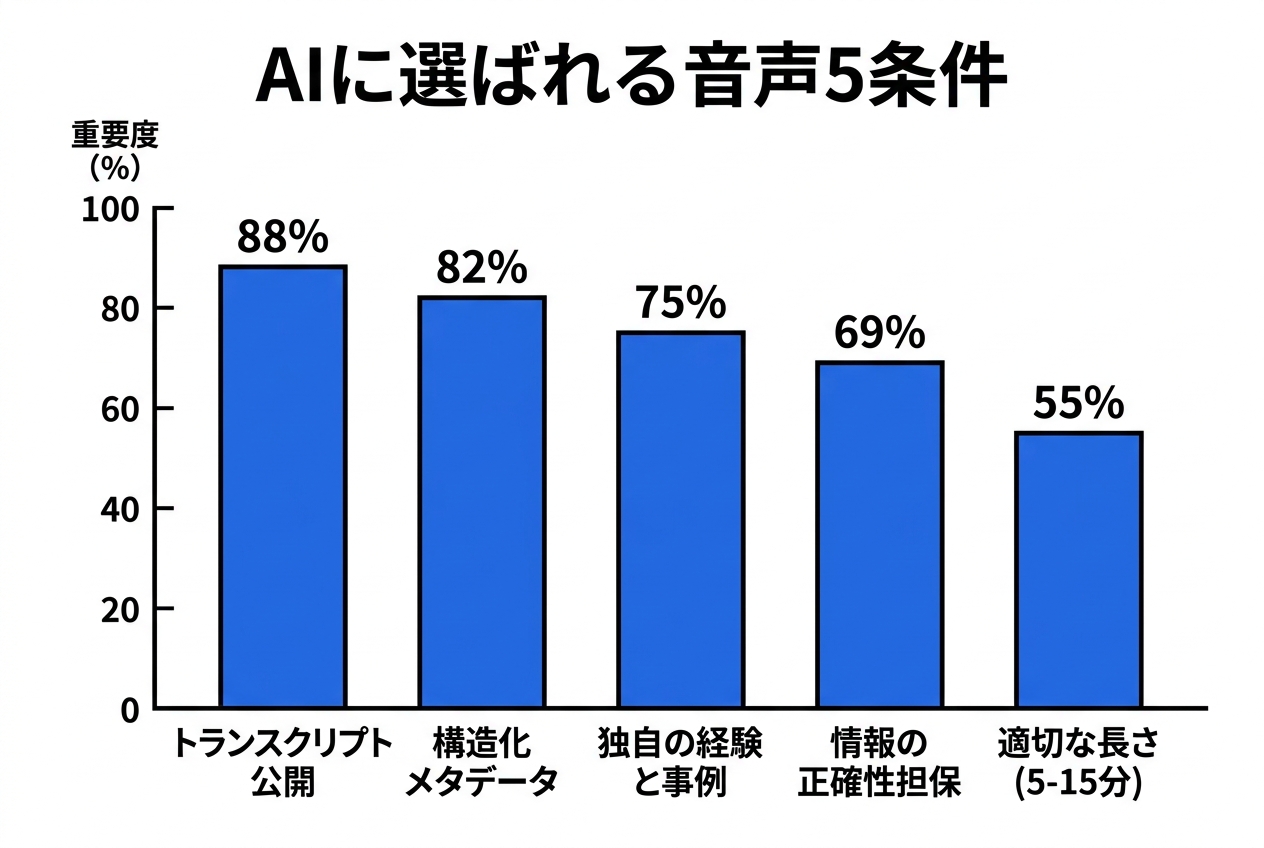
GEO-ready audio meets five requirements
GEO-ready audio is natural enough to listen to while giving machines and readers a clear path through its claims. Five requirements cover most publisher workflows.
- Publish a transcript. Include the examples and judgments added in the recording, then divide them into meaningful sections. A duplicate of the article adds no new evidence.
- Describe the asset. Supply a title, summary, speaker, publication date, duration, and appropriate structured data such as
AudioObject. - Include first-hand evidence. State the subject, time period, decision, and failure—not merely that a tactic "worked."
- Source factual claims. Name the publisher and year for external data. Explain the measurement conditions for internal data.
- Keep the editorial scope focused. There is not enough evidence for a universal "ideal" duration such as 5–15 minutes. Length should follow the job the listener is trying to complete.
How to create AI audio content covers script preparation, pronunciation dictionaries, and quality review.
GEO implementation should begin with a controlled sample
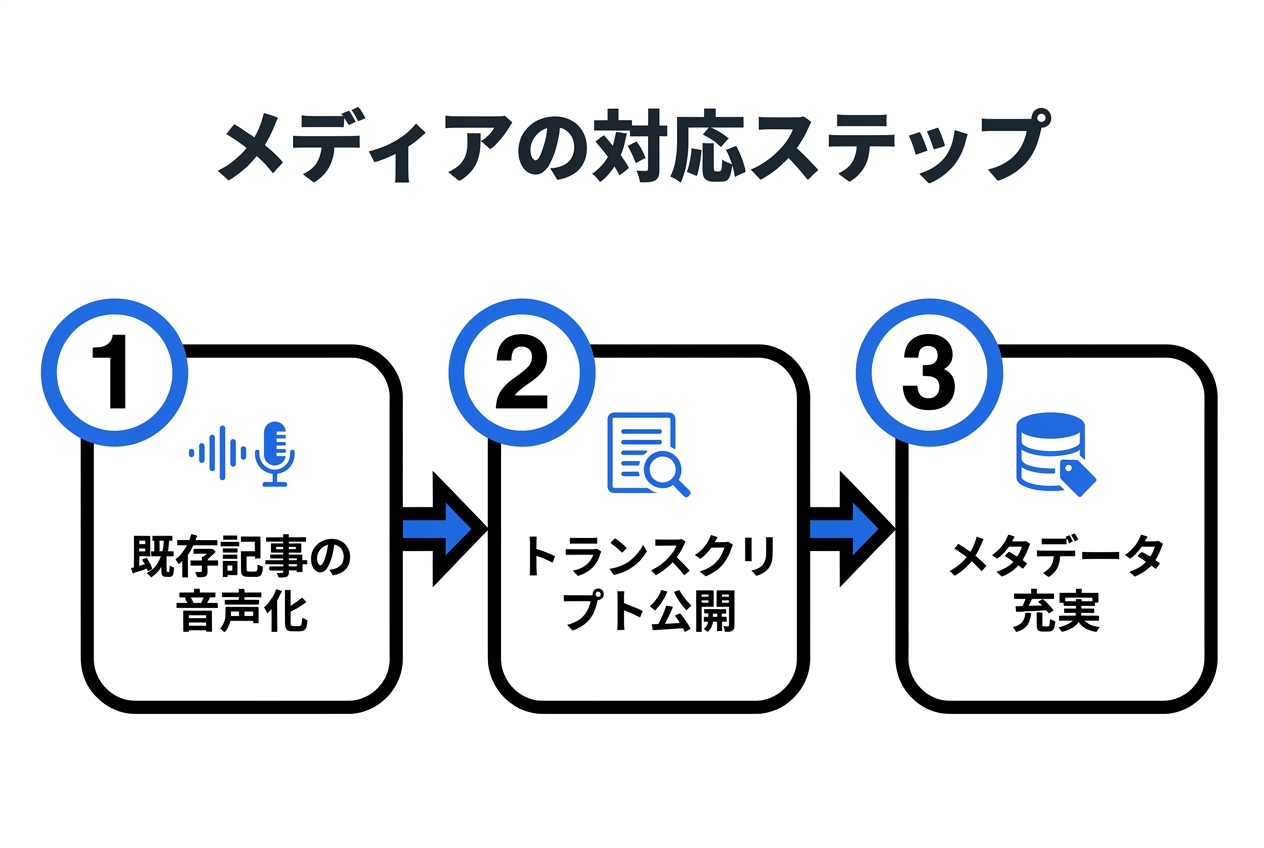
GEO implementation means adding audio, a transcript, metadata, and measurement to a defined group of pages, then comparing their behavior with a reasonable reference group. Converting an entire archive at once makes attribution difficult.
Choose a handful of evergreen explainers with existing search demand. Record starts, milestones, completion, onward navigation, and search visits. Use comparable non-audio articles where possible, and avoid treating a simple before-and-after chart as causal proof.
I learned this in publisher analytics: a target group alone often captures seasonality, a news cycle, or a site-wide design change. Segmentation is slower, but it prevents confident stories built on weak comparisons.
After publishing, review transcript errors, names, section boundaries, and structured-data validation. Why web publishers need an audio option can help identify which articles belong in the sample.
GEO and listener experience share the same source material
GEO-listener alignment means giving a precise answer on the page while preserving a natural spoken sequence in the audio. A script packed with repeated keywords and formal definitions may parse cleanly but sound exhausting.
Keep definitions and citations visible on the page. Adapt the spoken script so that the same meaning arrives in an order that works for the ear. The transcript should remain faithful to the recording, though editorial headings and speaker labels can make it navigable.
Charts, pricing matrices, and code samples rarely work as audio-only material. A short audio summary or no audio at all may serve readers better. As our analysis of audio completion notes, longer playback does not prove deeper understanding.
GEO is most useful when it reduces ambiguity
GEO's durable role is to reduce ambiguity, not to promise citations. Answer engines use different retrieval systems, and their behavior changes.
Clear definitions, sources, authorship, and update dates are still worthwhile because they make a page easier for people to verify. Audio should not sit outside that evidence chain. When the recording is pleasant to hear and its substance is inspectable in text, the page has a stronger foundation for search, accessibility, and reader trust.
PUBVOICE - Deliver your articles as audio
We built PUBVOICE so media operators can add a listening experience without extra workload. Register an RSS feed and every new article gets audio automatically.
Every time we hear editors worry that readers never finish their articles, we keep coming back to the same answer: audio reaches the moments text cannot - commutes, chores, workouts. PUBVOICE was born from that conviction.

Yutaro Sasao
We take each person's "I want to" and "I want to be able to" seriously, and use technology to make it happen. That is our mission.
Opening up new possibilities with digital technology. Drawing on roughly ten years in the advertising and media industries, Yutaro builds app development for web media companies with AI-driven efficiency.
Talk to us about your next project
Contact us about app development or other digital initiatives. We will review your requirements and recommend an approach suited to your business.
Related posts
Contact
Contact us to discuss app development for your media business. We will recommend an approach based on your requirements and commercial goals.
Contact Form
Send us your inquiry using the form below. We aim to respond within 24 hours.
Contact by Email
info@media-leap.com
We aim to respond within 24 hours
Business Hours
Weekdays: 9:00–18:00 JST
Weekends and public holidays: Closed