Why Web Publishers Need an Audio Option
Text still excels at scanning and comparison, but it requires a screen. Audio reaches readers while their eyes and hands are busy, carries additional context, and supports sustained contact. The right strategy is division of labor, not replacement.
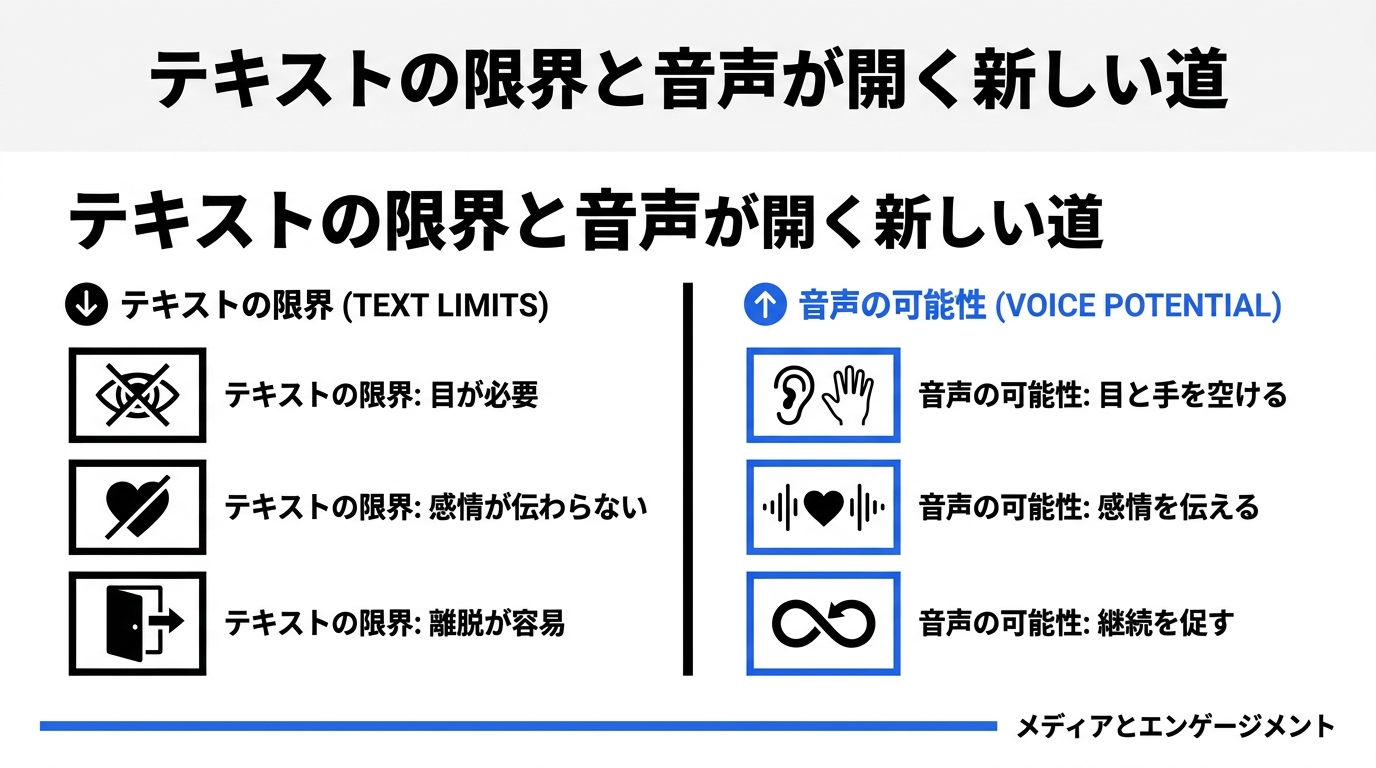
"How much further can we optimize the text article?" Publisher teams eventually run into this question. Better writing and layout remain worthwhile, but they cannot increase the number of minutes in which a reader can look at a screen.
At a large Japanese publishing business, I worked across monetization and audience analytics. Mobile traffic often rose during commuting hours while engagement stayed short. Lack of interest was not the only explanation. People simply could not keep reading while walking or changing trains.
The case for audio is not that text has failed. It is that a second format can occupy a different part of the day.
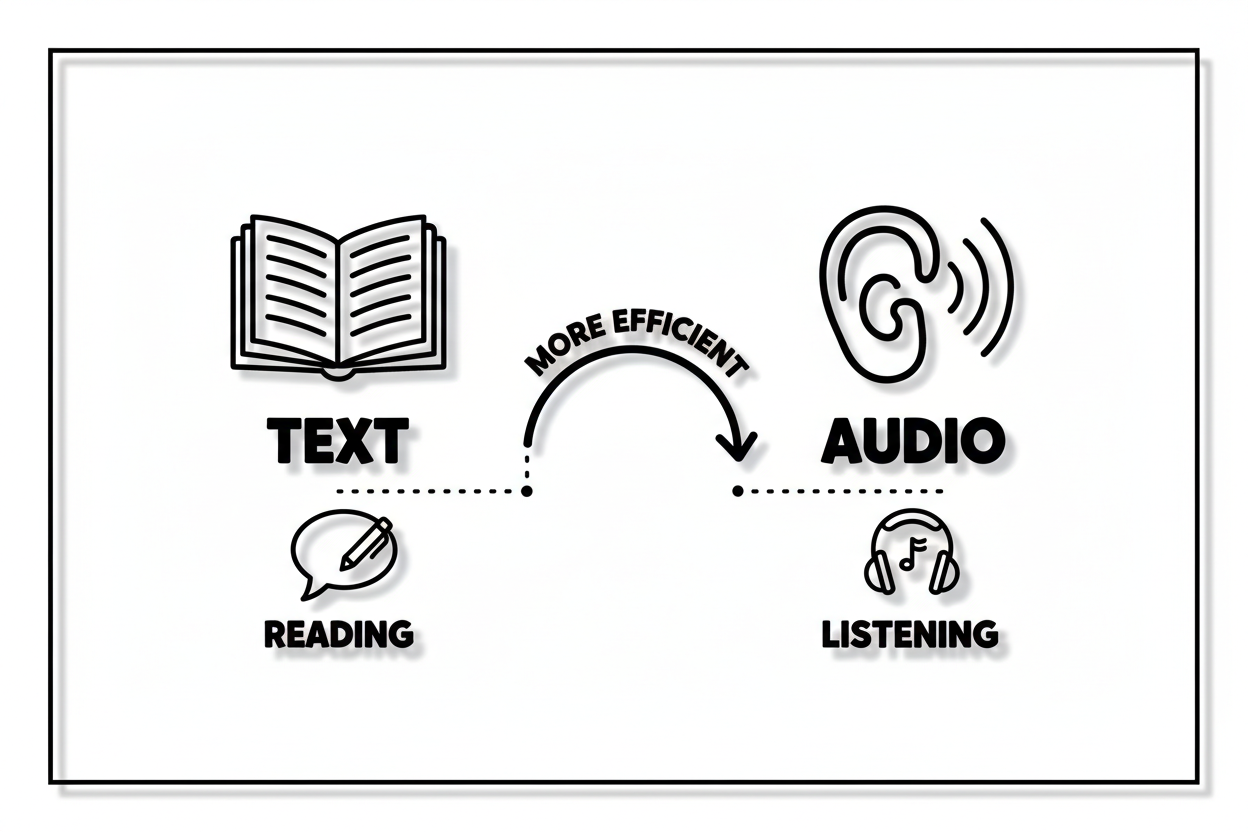
Text is powerful because it lets readers control the pace
Text makes it easy to scan, compare numbers, search for a phrase, and return to an earlier point. The tradeoff is visual attention. Reading competes poorly with cooking, exercise, commuting, and other moments when a screen is impractical.
Text also leaves tone to the reader. That ambiguity can be productive, but it removes pauses, hesitation, and emphasis that matter in an interview or personal analysis.
I have seen editorial teams rewrite strong articles without meaningfully changing exits. Sometimes the subject was not the problem. The article was reaching people in a context that did not support sustained reading.
Audio adds time, tone, and continuity
Audio can continue while a listener's eyes and hands are occupied. It therefore has a chance to expand contact into moments that do not compete directly with reading.
A human recording can communicate personality and judgment. Synthetic speech can reduce the effort required to follow a long article when the script and pronunciation are carefully edited. Neither format manufactures emotion on its own; a flat script still sounds flat through a sophisticated model.
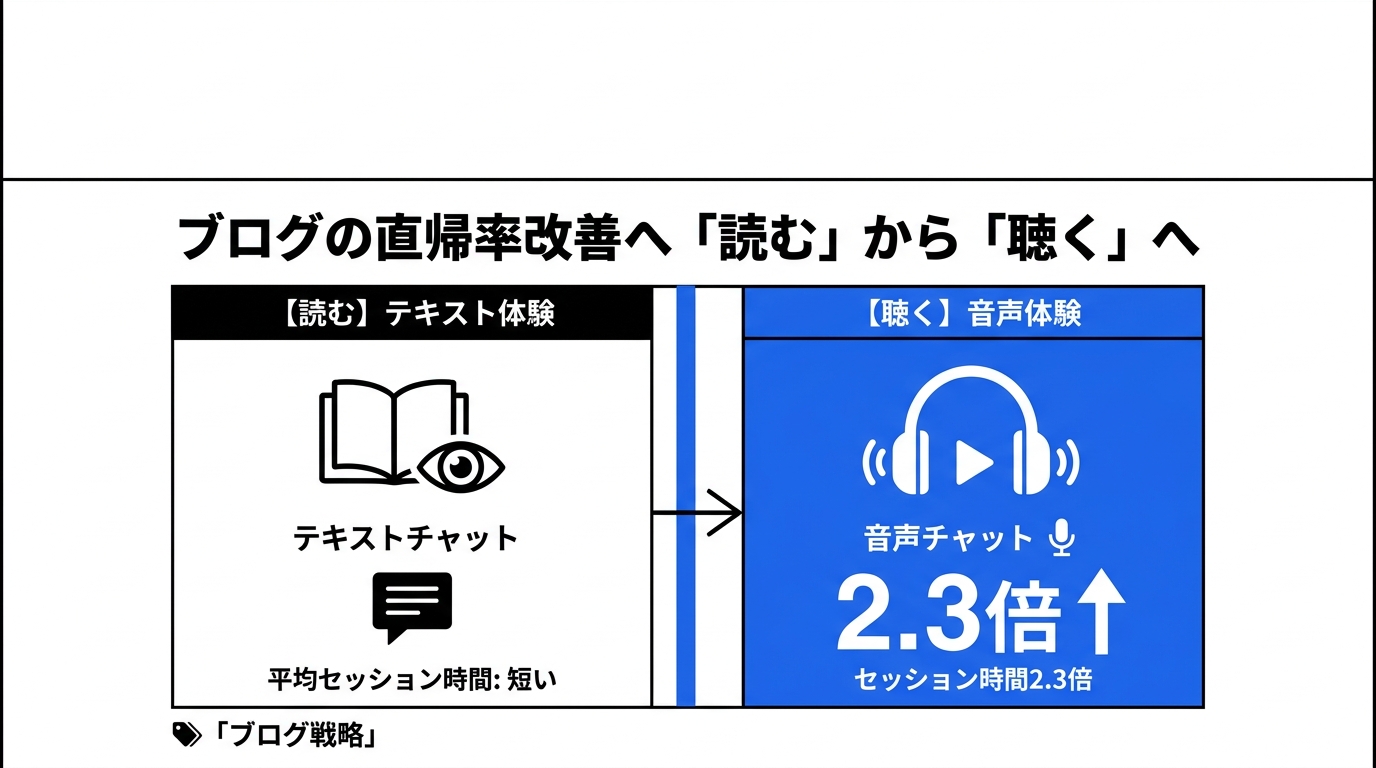
Some case studies report 1.5–2.5x longer sessions among audio listeners. Those figures depend on the article, placement, and self-selection. The conditions and measurement caveats are covered in our analysis of audio and time on page.
Audio should not be designed to trap a listener. Autoplay, hidden controls, and difficult stopping behavior damage trust. The useful property is that a person who chooses playback can continue without maintaining visual attention.
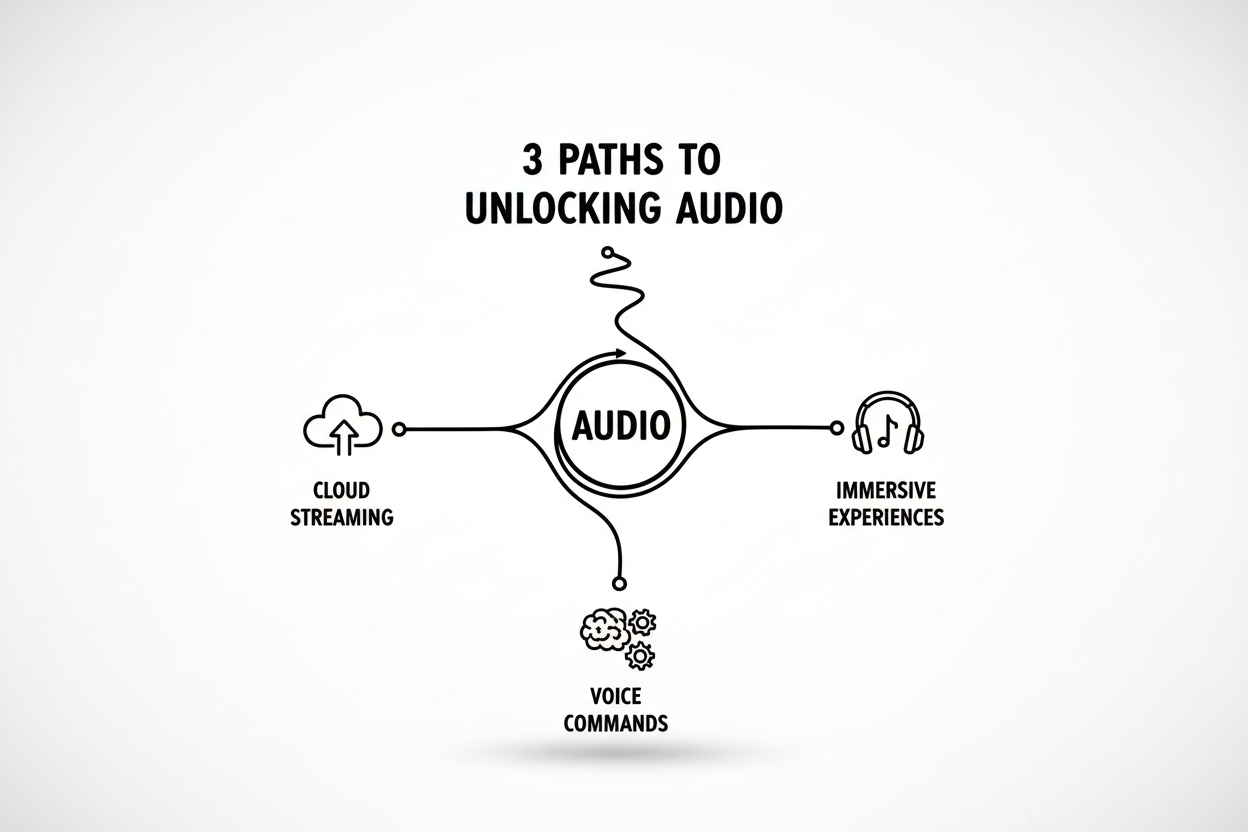
TTS and author recordings create different workloads
Text-to-speech (TTS) converts written language into synthetic audio. It can process a large archive, but names, quotations, tables, and visual references require editorial handling.
Building an AI audio product taught me that connecting an API is the short part. Pronunciation dictionaries, player behavior, regeneration after updates, and quality review become the ongoing system.
A hosted service reduces engineering work but adds recurring cost and vendor dependency. MediaLeap Inc. builds PUBVOICE for this workflow, yet it is only one option alongside a custom stack and general-purpose TTS APIs. The right choice depends on publishing volume, internal engineering, and the amount of review a brand requires.
An author's own recording adds context that was edited out of the written piece. It also demands a quiet space, recording time, editing, and retakes. I abandoned several attempts to publish a regular podcast because that routine did not fit the rest of the work. A hybrid model—human commentary for a few important pieces and TTS for selected evergreen articles—can be more sustainable.
How to create AI audio content details the script and quality-control steps.
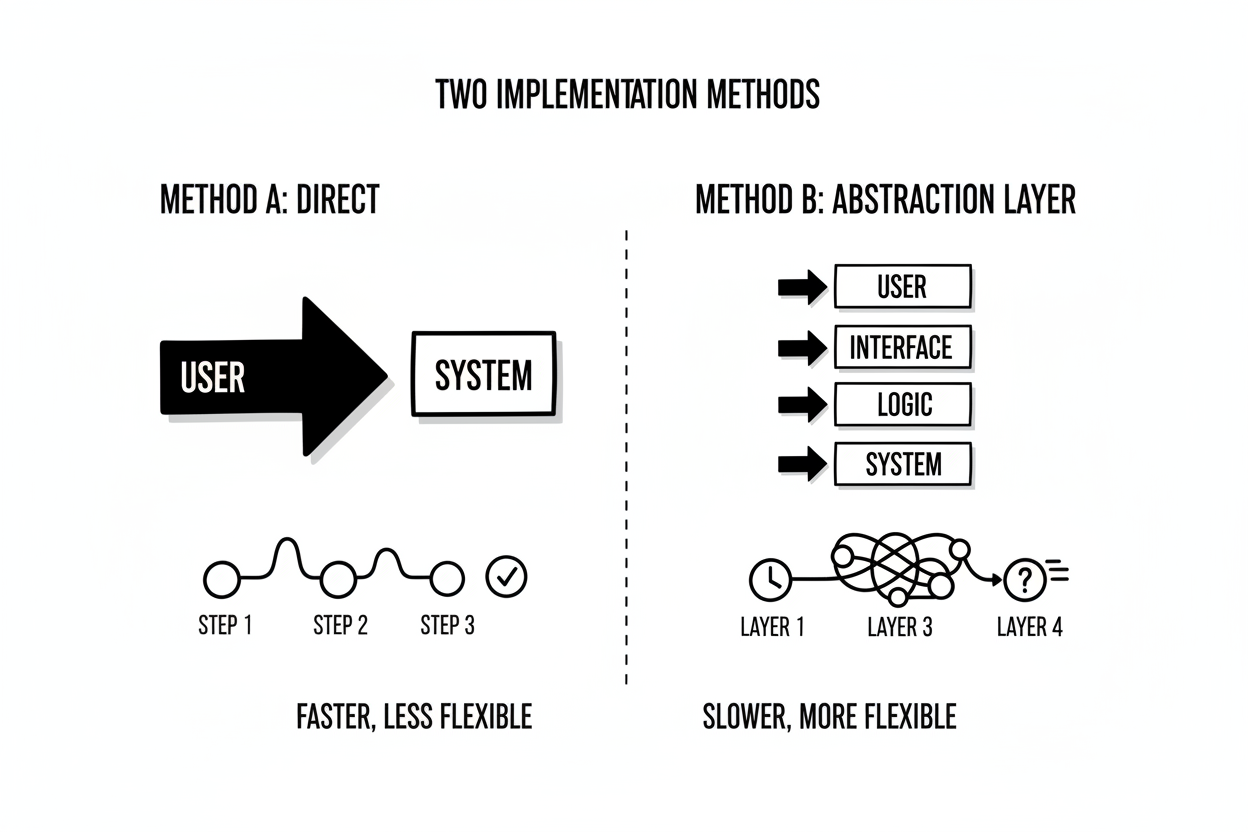
Assign text and audio by the reader's task
Breaking news, prices, instructions, comparison tables, and code are often better in text. Readers need to jump, verify, and compare rather than follow a fixed sequence.
Analysis, columns, narrative reporting, and interviews are stronger candidates for audio. Their value builds through context and sequence. Even then, playback completion is not the same as comprehension, as our article on drop-off and completion explains.
A practical editorial taxonomy has three groups:
- full audio for linear, evergreen articles;
- a short audio summary for visual or mixed-format pieces;
- no audio for pages where scanning is the primary task.
Using one rule for an entire archive creates avoidable regeneration and proofreading work.
Define the poor-fit cases before launch
Audio is a weak fit when visitors arrive to confirm one fact. It also struggles with image-led stories, equations, code, and dense comparisons unless the script is substantially rewritten.
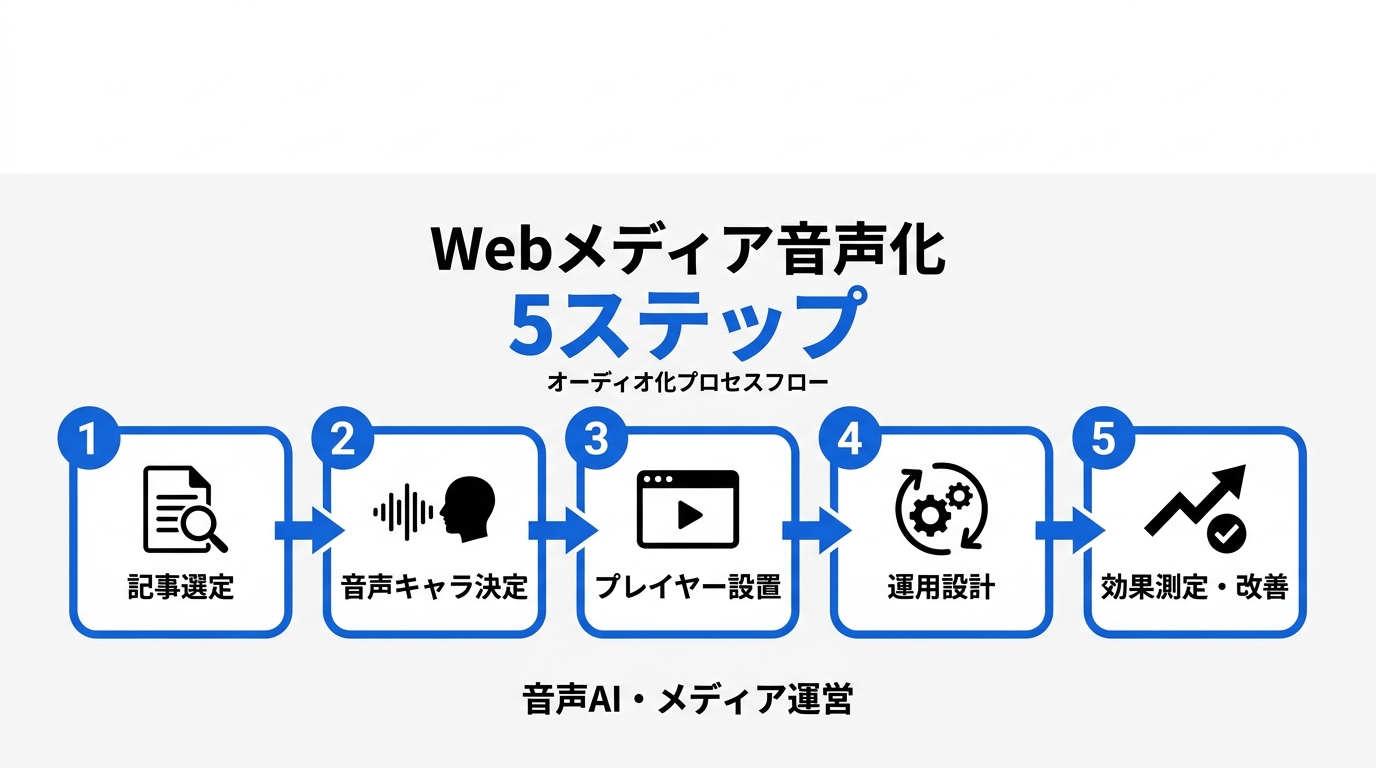
A panel discussion read by one synthetic voice becomes confusing. Multiple voices can fix speaker identity, but increase casting, consistency, and rights checks. The five-step publisher audio workflow begins with this kind of content selection.
Accessibility also requires visible controls, playback speed, captions or a transcript, and no forced audio. File size and mobile data use belong in the product decision.
Text has not reached the end of its value. It has reached the edge of the situations in which a person can look at it. Preserve what reading does well, then use audio only where it creates a genuinely different opportunity to stay with the work.
PUBVOICE - Deliver your articles as audio
We built PUBVOICE so media operators can add a listening experience without extra workload. Register an RSS feed and every new article gets audio automatically.
Every time we hear editors worry that readers never finish their articles, we keep coming back to the same answer: audio reaches the moments text cannot - commutes, chores, workouts. PUBVOICE was born from that conviction.

Yutaro Sasao
We take each person's "I want to" and "I want to be able to" seriously, and use technology to make it happen. That is our mission.
Opening up new possibilities with digital technology. Drawing on roughly ten years in the advertising and media industries, Yutaro builds app development for web media companies with AI-driven efficiency.
Talk to us about your next project
Contact us about app development or other digital initiatives. We will review your requirements and recommend an approach suited to your business.
Related posts
Contact
Contact us to discuss app development for your media business. We will recommend an approach based on your requirements and commercial goals.
Contact Form
Send us your inquiry using the form below. We aim to respond within 24 hours.
Contact by Email
info@media-leap.com
We aim to respond within 24 hours
Business Hours
Weekdays: 9:00–18:00 JST
Weekends and public holidays: Closed