Why YouTube and Spotify Keep Investing in Audio
YouTube and Spotify are extending their reach into the hours when users cannot watch a screen. Their audio investments are about attention, distribution, and monetization.
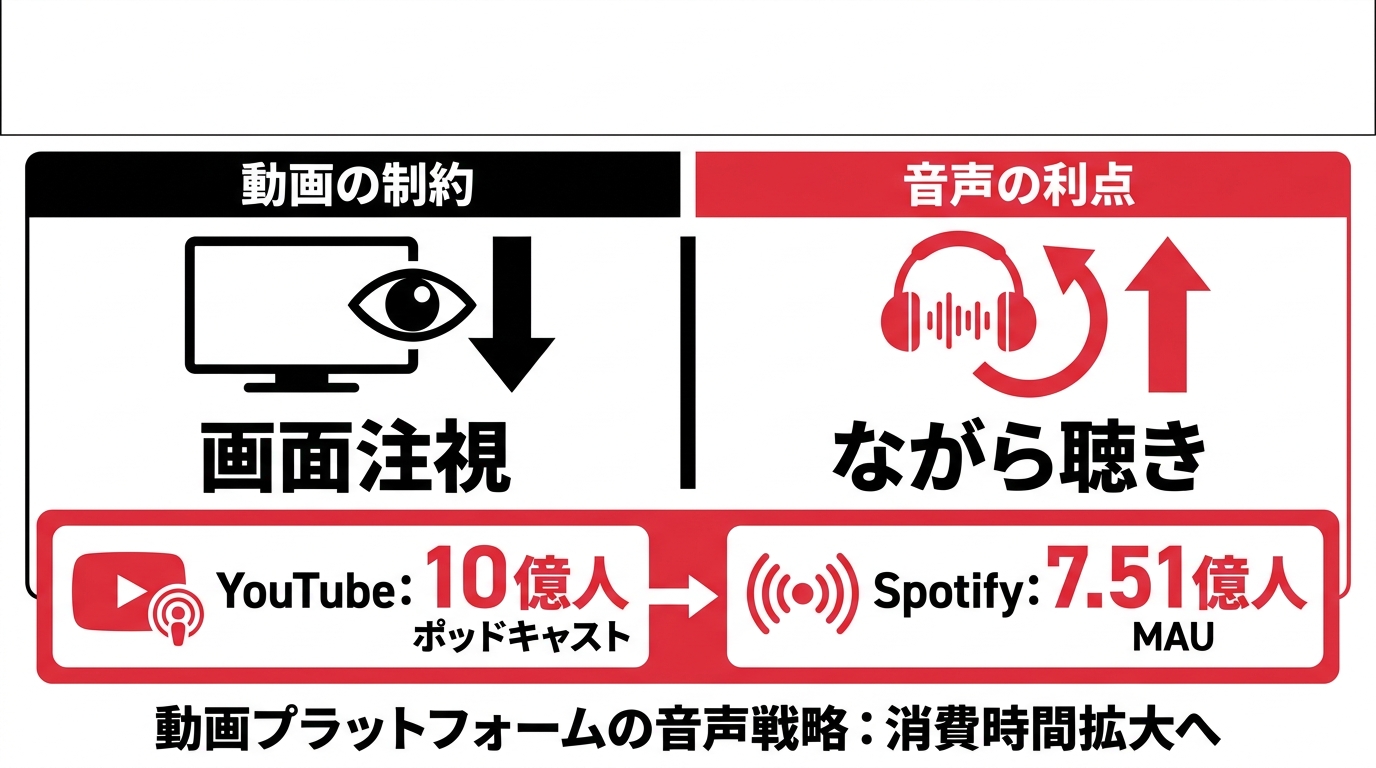
In February 2025, YouTube said it had more than one billion monthly podcast viewers (YouTube Blog). The largest video platform is putting substantial weight behind a format that does not always require a screen.
Spotify has moved in the other direction: from music into podcasts, audiobooks, video, and a broader advertising marketplace. Both companies are pursuing the same scarce resource—the parts of a user’s day that visual media cannot easily reach.
I used to analyze revenue and audience behavior for a large Japanese publisher. Session endings did not always mean that a story had failed. They often reflected a change in the reader’s situation: a train arrived, work began, or hands became occupied. Audio can cross those breaks.
Audio removes the requirement to keep watching
Video carries a great deal of information, but it needs attention from the eyes. Commuting, cooking, and exercise interrupt even strong video content. Background playback and audio-only modes give users a way to continue.
YouTube Music supports audio-only podcast playback, as described in Google’s help documentation. Spotify expanded from music to spoken-word programs and then to audiobooks. Each step increases the number of moments in a day when the service remains useful.
This is not a simple migration from video to sound. Younger audiences may discover a show through a clip, watch part of it, and listen to the rest while moving. The same mixed behavior appears in Gen Z news consumption.
Longer sessions create inventory, not guaranteed revenue
More listening time can create more opportunities for ads and subscriptions. It does not follow that every additional minute produces the same amount of revenue. Paid users may not hear ads, and too many interruptions reduce completion.
Spotify launched the Spotify Ad Exchange in April 2025 and opened inventory to more programmatic buying connections (Spotify Newsroom). This is as much an investment in how audio is sold as in how it is produced.
In publisher work, I often saw a rise in time spent presented as a complete success. The decision looked different when repeat visits or loading performance deteriorated. Audio requires the same discipline: play rate, completion, repeat use, and ad-related exits should be measured separately. Our audio measurement guide explains why headline multipliers without those conditions are unreliable.
Podcasts move between video and audio
Edison Research has found YouTube to be a leading podcast service among weekly US podcast listeners (Edison Research). That result describes a particular US survey population, not worldwide market share.
The distinction matters because a “podcast” is no longer always an audio file delivered through an RSS app. A listener might find a video podcast on YouTube, continue on Spotify, and later return to a video clip. For platforms, discovery and continued consumption can be more valuable than protecting a strict media format.
I have tried to produce a podcast several times and stopped when scripting, recording, and editing competed with product work. Listening is convenient; regular production is not. Publishers should therefore separate the economics of a purpose-built show from the much lighter task of adding audio to an existing article.
Publishers should copy the principle, not the scale
A publisher does not need a three-format expansion plan. A useful starting point is to select several long articles or interviews, add site-based playback, and compare that behavior with external podcast distribution.
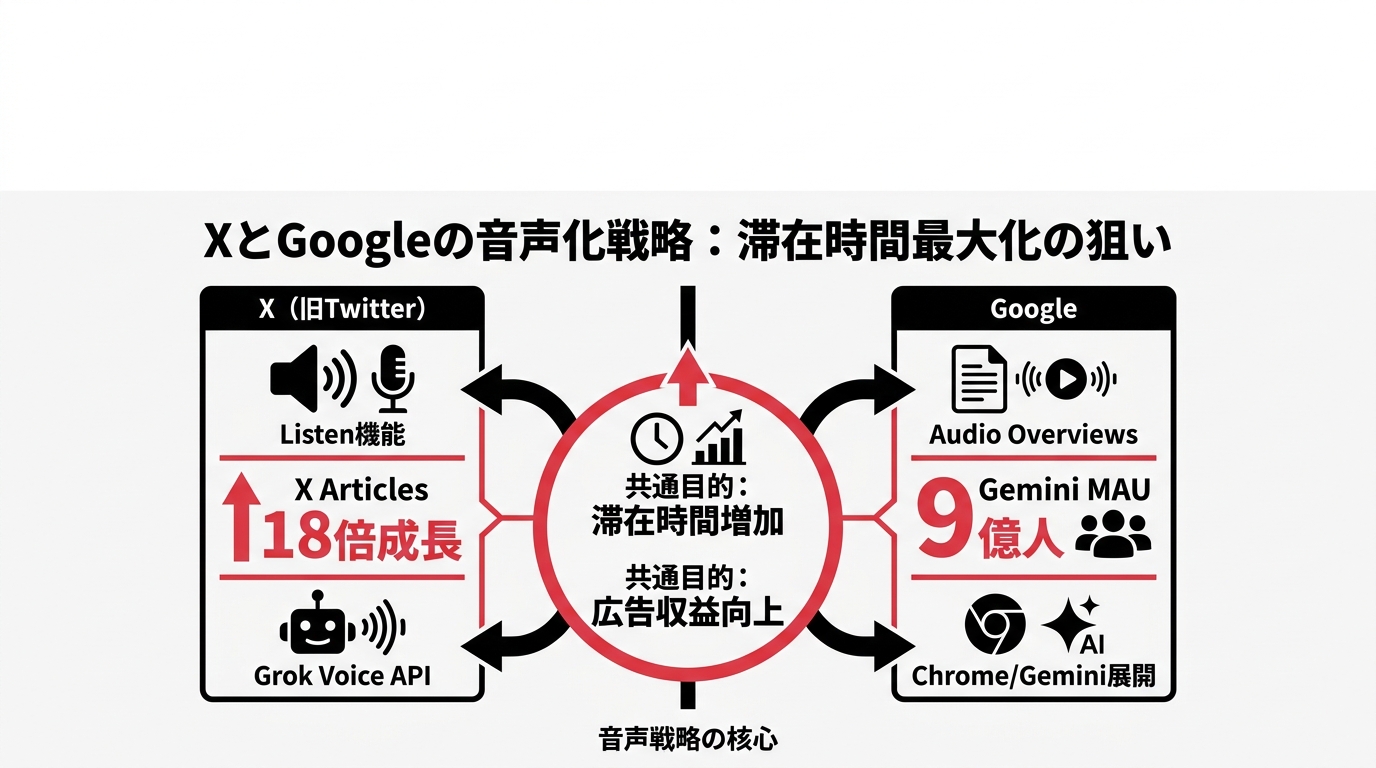
Platform-generated audio is also expanding. X and Google’s audio strategy shows how third parties can lower production costs while retaining control over playback data and the surrounding experience.
PUBVOICE is one option for testing audio versions of existing articles. Breaking news, code samples, charts, and visual comparisons may not justify it. Stories that can be followed with the screen off are better candidates.
YouTube and Spotify are not proving that audio is superior to video or text. They are showing that users do not live inside a single format. Publishers that offer a way to continue after the screen closes can preserve a relationship that would otherwise pause.
PUBVOICE - Deliver your articles as audio
We built PUBVOICE so media operators can add a listening experience without extra workload. Register an RSS feed and every new article gets audio automatically.
Every time we hear editors worry that readers never finish their articles, we keep coming back to the same answer: audio reaches the moments text cannot - commutes, chores, workouts. PUBVOICE was born from that conviction.

Yutaro Sasao
We take each person's "I want to" and "I want to be able to" seriously, and use technology to make it happen. That is our mission.
Opening up new possibilities with digital technology. Drawing on roughly ten years in the advertising and media industries, Yutaro builds app development for web media companies with AI-driven efficiency.
Talk to us about your next project
Contact us about app development or other digital initiatives. We will review your requirements and recommend an approach suited to your business.
Related posts
Contact
Contact us to discuss app development for your media business. We will recommend an approach based on your requirements and commercial goals.
Contact Form
Send us your inquiry using the form below. We aim to respond within 24 hours.
Contact by Email
info@media-leap.com
We aim to respond within 24 hours
Business Hours
Weekdays: 9:00–18:00 JST
Weekends and public holidays: Closed