What Successful Audio Apps Reveal About Demand
Spotify, ElevenReader, note, and Substack reveal three concrete needs: keep hands free, control the listening experience, and stay within a familiar destination.
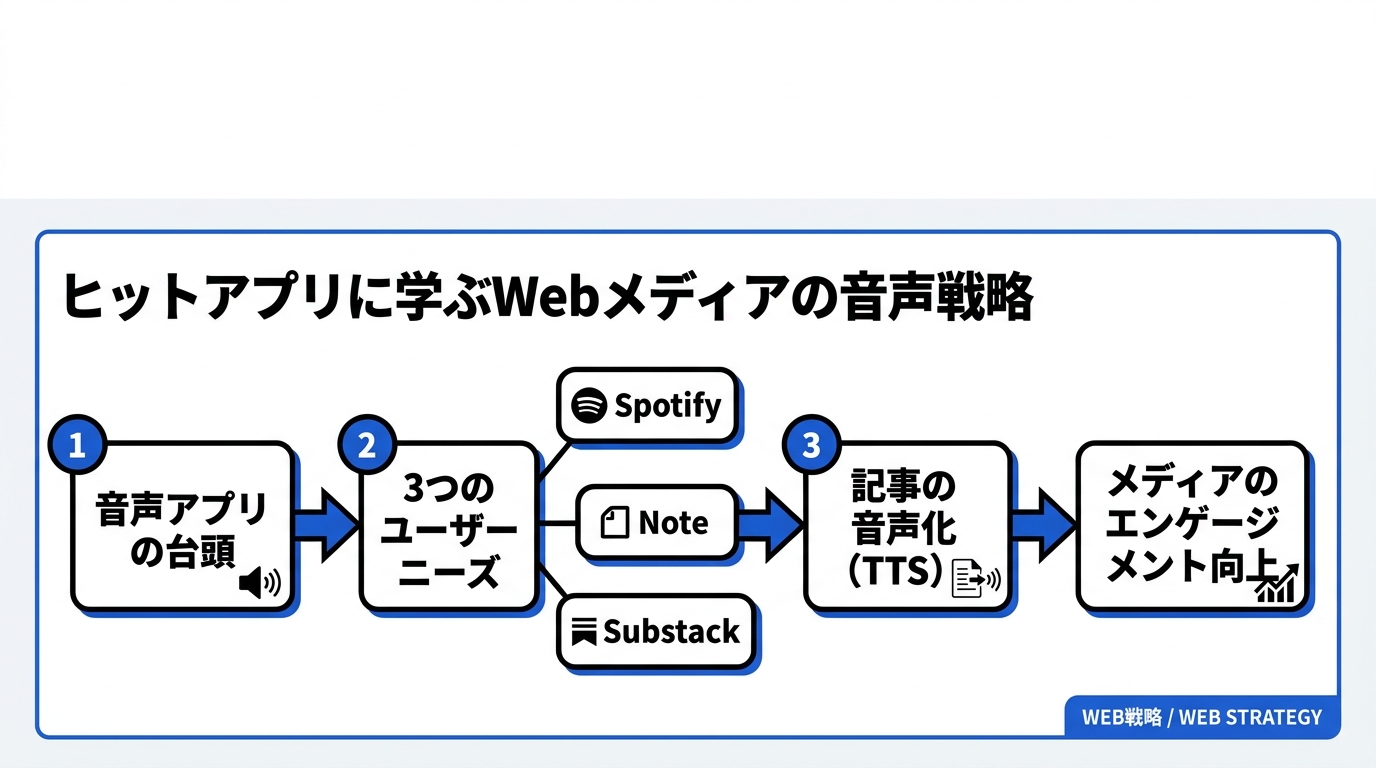
“People want audio” is too broad to guide a product decision. Current products point to more specific needs: people want to keep their hands free, control how they listen, and avoid leaving a familiar destination.
Spotify, ElevenReader, note in Japan, and Substack address those needs in different ways. I have also seen them from the other side while building a voice chat app that passed 5,000 downloads. Users valued listening during a commute, but too many choices at the opening screen could delay the experience they came for.

People want information without holding the screen
Audio enters moments when reading is impractical: walking, cooking, commuting, and exercising. Spotify supports these moments with podcasts, audiobooks, background playback, and saved position.
This does not mean audio always creates concentration. A listener may miss a sentence while crossing a street or doing another task. Resume position and a simple skip-back control matter because divided attention is part of the use case.
Three lessons from a decade of audio products explains why products that fit existing routines tend to outlast products that require a new schedule.
People want control, but not another setup process
ElevenReader remains active in 2026 and can read articles, PDFs, and books with adjustable voices and speed. The broader lesson is not that every publisher needs a large voice library. It is that one story can serve different situations when the listener controls pace and can resume later.
Our AITOMO app grew to more than 100 characters. Finding a favorite was part of the appeal. Presenting too many characters before the first conversation, however, could turn choice into work.
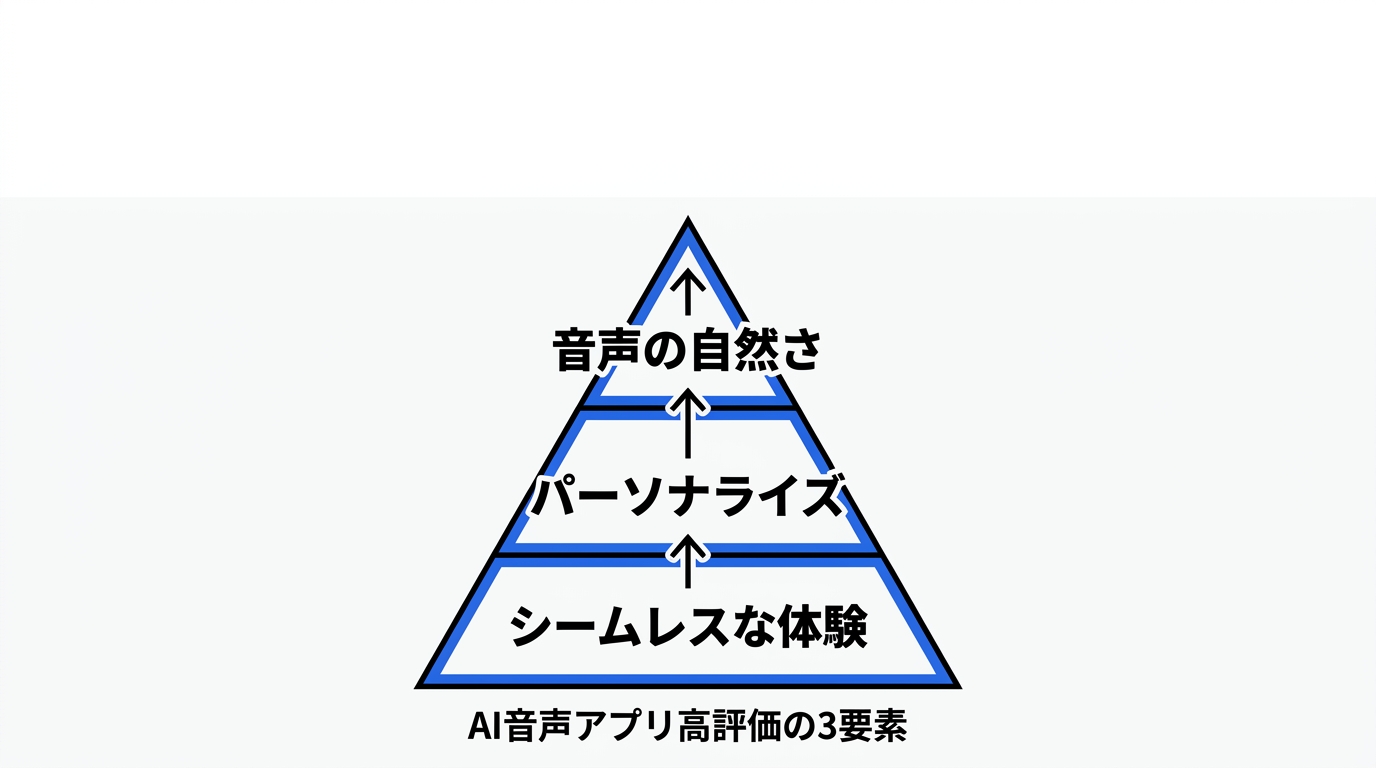
For publisher audio, speed, pause, resume, and clear duration should come before a narrator catalog. What makes AI voice apps work examines this boundary between useful control and decision overload.
People prefer audio where the relationship already exists
Japan's note platform continues to support audio posts alongside text and other media. Substack supports recorded or uploaded audio posts and podcast distribution. Its automatic read-aloud availability has not been uniform across all publications, so it should not be described as a universal feature.
The relevant pattern is still strong: readers can receive text and audio through a publication they already follow. They do not need a separate relationship with a new app.
An independent publisher can apply this on the article page. Put playback near the headline and recommend one relevant audio story when it ends. A sophisticated recommendation engine can wait. International audio app lessons covers the value of this short path.
Some articles should remain text-only
Breaking alerts can be scanned faster than they can be heard. Charts, source code, maps, and image-driven reporting often lose essential context in audio. Frequently updated pages may create a regeneration burden that the newsroom cannot sustain.
Text and audio are complements, not replacements. Start with analysis, interviews, columns, and other stories that make sense without the screen. Five publisher audio mistakes explains why converting an entire archive usually produces more files than listeners.
There is also no need to commission a custom voice model before demand is visible. A standard, credible TTS system can test the use case. Investment in narration should follow evidence from starts, completion, and repeat listening.
Demand appears after the play button
The three needs are concrete: free the hands, let the listener control the session, and keep playback inside an existing reader relationship.
They are hypotheses until tested on a publisher's own audience. Select a small group of suitable stories, make playback obvious, and measure what happens. A market forecast cannot tell a newsroom whether its readers will press play. Its own player can.
PUBVOICE - Deliver your articles as audio
We built PUBVOICE so media operators can add a listening experience without extra workload. Register an RSS feed and every new article gets audio automatically.
Every time we hear editors worry that readers never finish their articles, we keep coming back to the same answer: audio reaches the moments text cannot - commutes, chores, workouts. PUBVOICE was born from that conviction.

Yutaro Sasao
We take each person's "I want to" and "I want to be able to" seriously, and use technology to make it happen. That is our mission.
Opening up new possibilities with digital technology. Drawing on roughly ten years in the advertising and media industries, Yutaro builds app development for web media companies with AI-driven efficiency.
Talk to us about your next project
Contact us about app development or other digital initiatives. We will review your requirements and recommend an approach suited to your business.
Related posts
Contact
Contact us to discuss app development for your media business. We will recommend an approach based on your requirements and commercial goals.
Contact Form
Send us your inquiry using the form below. We aim to respond within 24 hours.
Contact by Email
info@media-leap.com
We aim to respond within 24 hours
Business Hours
Weekdays: 9:00–18:00 JST
Weekends and public holidays: Closed