Web Advertising After Cookie Panic and Ad Blocking
Cookie policy shifts, tracking restrictions, ad blocking, and pricing pressure have made publisher revenue harder to predict. Audio can add another route, but it does not remove the underlying trade-offs.
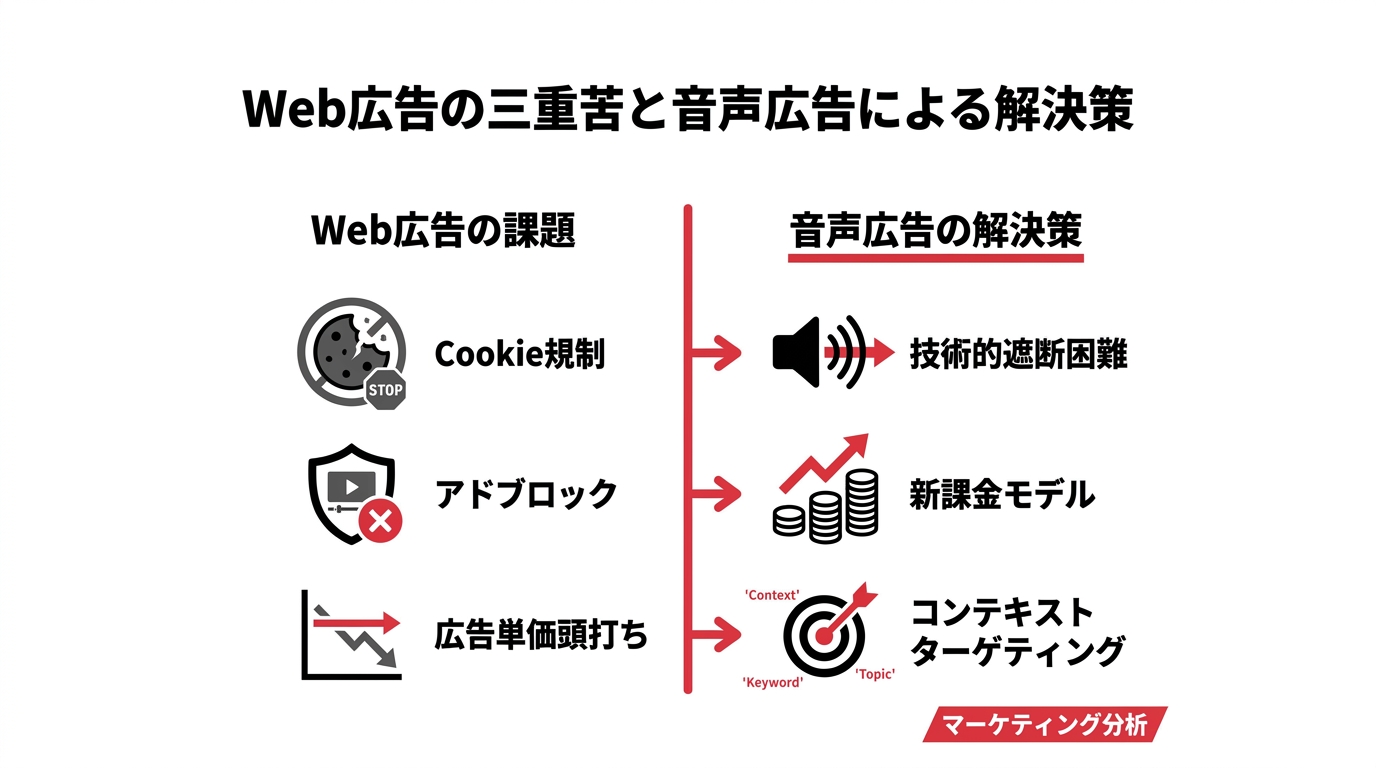
The problem facing web advertising is larger than the future of third-party cookies. Tracking restrictions, blocking, and price pressure are happening at the same time, leaving publishers with less predictable inventory and measurement.
I have worked in digital advertising since 2015, first with SSP and ad-network operations and later inside a major Japanese publishing company. Adding an ad unit often raised revenue in the short term. The effect on speed, readability, and return visits arrived later. That timing gap makes the business difficult to manage.
Audio advertising can provide another revenue path. It cannot resolve cookie restrictions and ad blocking in one step.
Third-party cookies can remain while tracking gets harder
Google changed its plan for a universal phaseout of third-party cookies in Chrome. The current history and status of related technologies can be followed through the Privacy Sandbox blog.
That change did not end the tracking problem. Browser restrictions outside Chrome, regional privacy law, platform policies, and user consent still apply. Technical availability is not permission to combine personal behavior without limits.
While implementing and debugging advertising tags, I repeatedly saw attribution change with browser and consent state. Publisher teams need to make decisions with incomplete measurement rather than treating every dashboard total as a complete record.
Context can replace some behavioral signals
Contextual advertising matches a message to the article or program being consumed instead of relying on a person’s browsing history. A business story might carry an enterprise software ad; travel reporting might carry a transport offer.
Audio makes that relationship clear because the ad sits inside a specific listening experience. Generative systems can adjust the copy to the subject, as described in AI and audio advertising.
Context is not automatically harmless. Health, debt, family conflict, and other sensitive subjects can make even contextual matching feel invasive. Publishers still need exclusions, review, and clear rules about subjects that should not trigger commercial messages.
Ad-blocking totals vary by definition
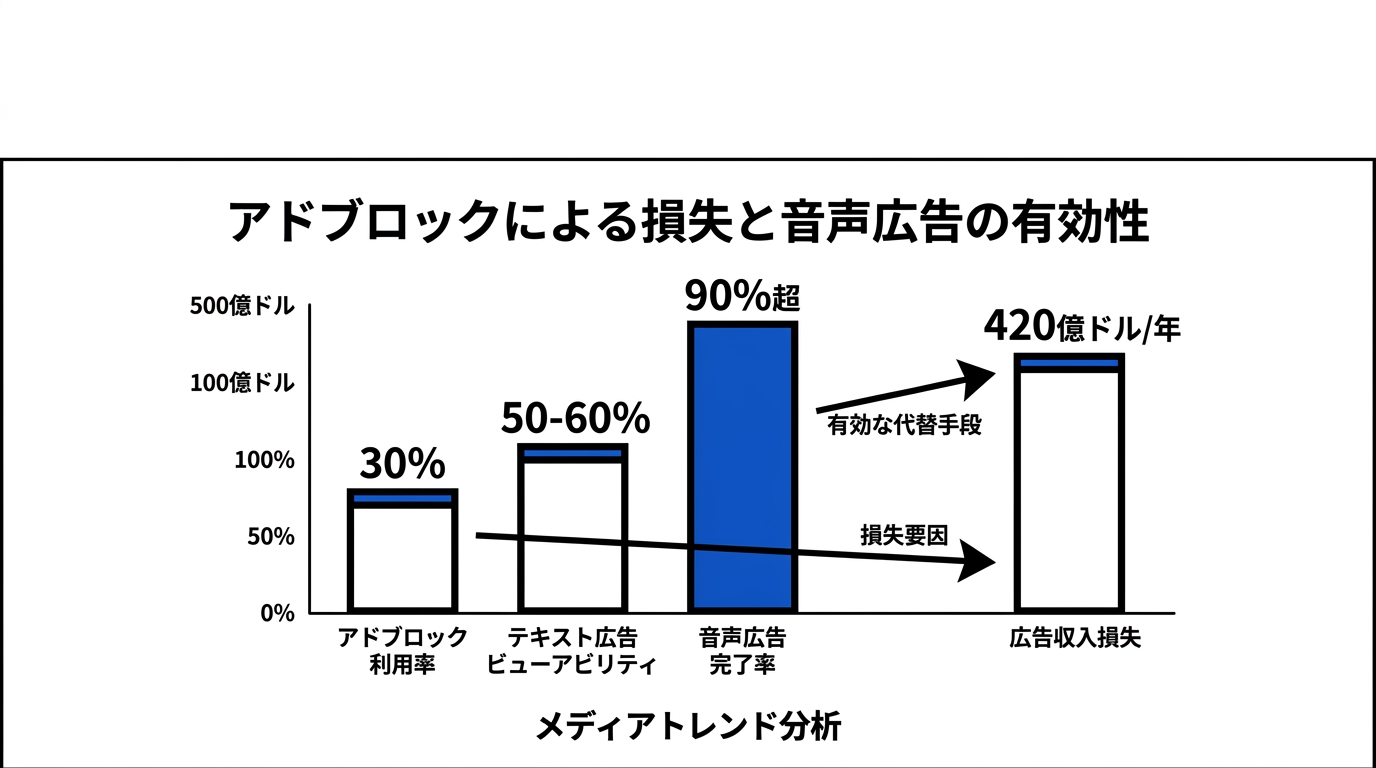
Global ad-blocking figures differ according to the survey population, devices included, and whether browser-level tracking protection counts as blocking. For that reason, this adaptation does not repeat a single “global percentage” or user total as settled fact. Ongoing reports such as DataReportal’s global overview are more useful when their methodology travels with the estimate.
Around 2015, teams I worked with often treated ad blockers as a concern for a small technical audience. Browser defaults changed that environment. Today, measurement or delivery may be restricted even when a user has not installed a dedicated extension.
Server-side dynamic ad insertion can stitch an ad into an audio stream, leaving no separate client request for a conventional blocker to stop. But delivery architecture varies. Some players and ad servers still make blockable requests. “Audio ads cannot be blocked” is not a defensible claim.
CPM comparisons need comparable inventory
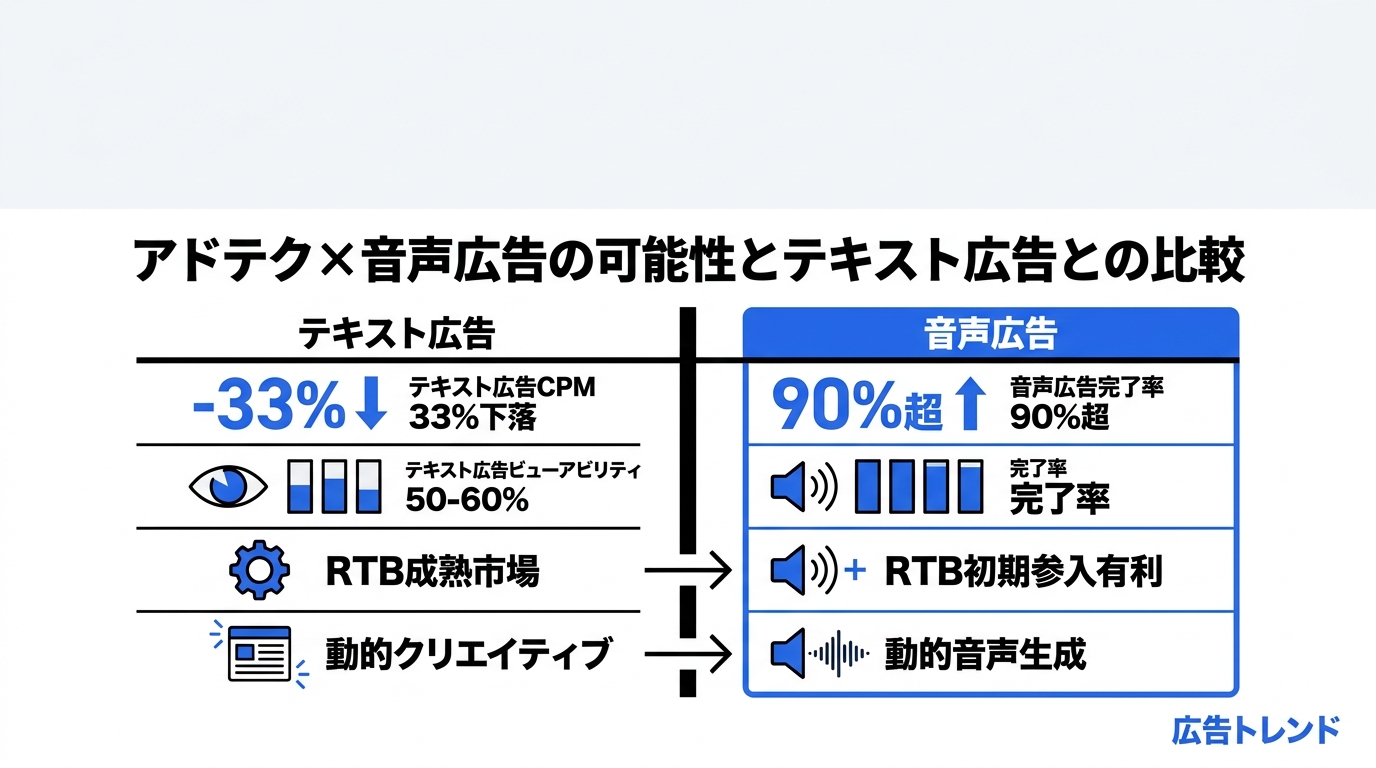
Display CPMs and podcast CPMs refer to inventory with different geography, audience, placement, and creative. Comparing the largest reported decline in one display benchmark with a premium host-read podcast rate produces an attractive chart, not a useful forecast.
The IAB Podcast Advertising Revenue Study provides a structured view of the US market. It does not establish what a Japanese niche publisher—or any individual international publisher—can charge.
When I worked on ad experience for publishers, daily revenue alone pushed decisions toward more inventory. Adding return visits and performance data sometimes reversed the choice. Audio should be judged the same way.
Test listening before selling audio inventory
A publisher can begin with several articles that remain understandable without visual reference. Measure starts, completion, repeat use, and exits before approaching advertisers. The scale of YouTube and Spotify’s audio businesses is not evidence that an embedded player will work on every publisher site.
Internal results such as “1.5 to 2.5 times longer” depend on story length, traffic source, player position, and session definitions. We document those conditions in an audio measurement guide rather than use the range as a general promise.
PUBVOICE is one possible tool for this kind of controlled test. It will not suit short alerts, visual product categories, or pages dominated by charts. Those are cases where text and video remain stronger.
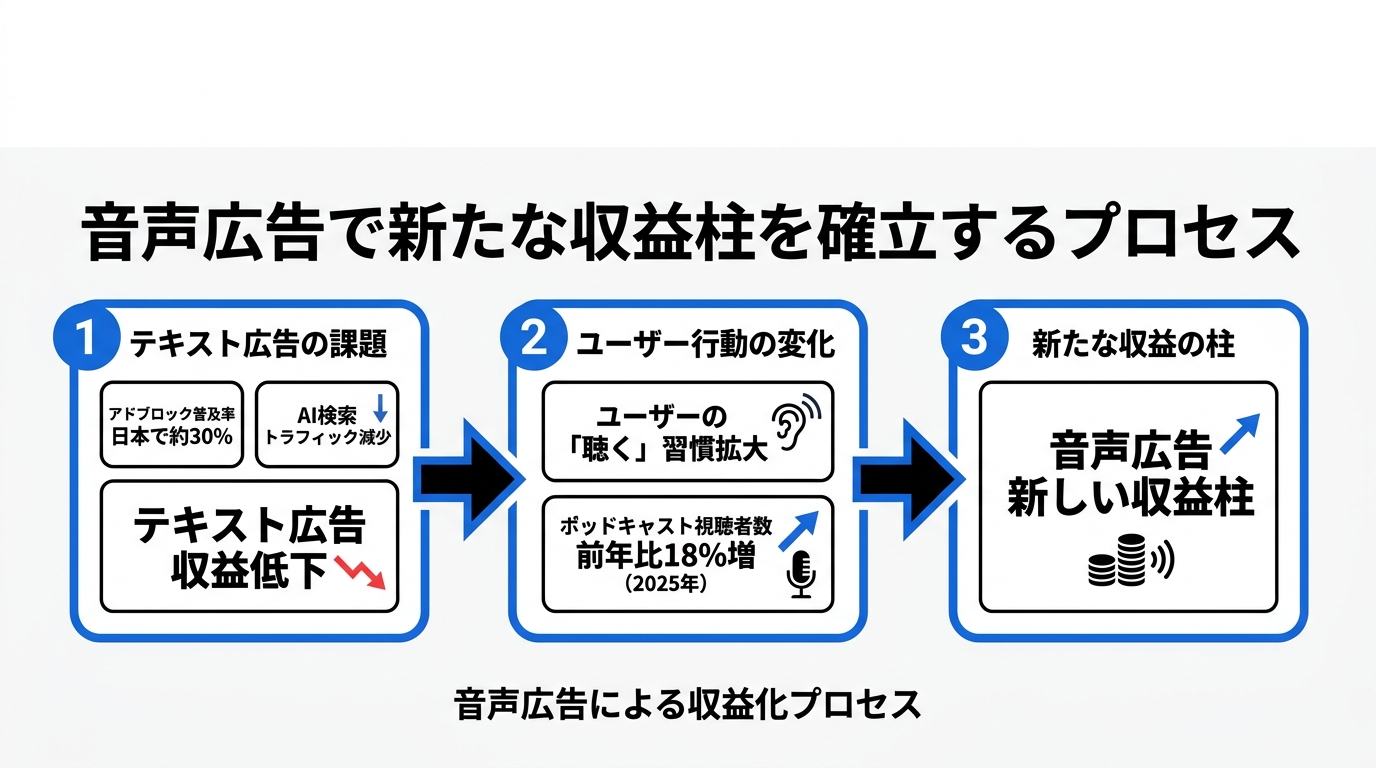
Audio advertising offers a different point of contact. It does not erase privacy rules, audience fatigue, or attribution problems. Its practical value is smaller and more useful: publishers gain another format whose context, frequency, and measurement they may be able to control.
PUBVOICE - Deliver your articles as audio
We built PUBVOICE so media operators can add a listening experience without extra workload. Register an RSS feed and every new article gets audio automatically.
Every time we hear editors worry that readers never finish their articles, we keep coming back to the same answer: audio reaches the moments text cannot - commutes, chores, workouts. PUBVOICE was born from that conviction.

Yutaro Sasao
We take each person's "I want to" and "I want to be able to" seriously, and use technology to make it happen. That is our mission.
Opening up new possibilities with digital technology. Drawing on roughly ten years in the advertising and media industries, Yutaro builds app development for web media companies with AI-driven efficiency.
Talk to us about your next project
Contact us about app development or other digital initiatives. We will review your requirements and recommend an approach suited to your business.
Related posts
Contact
Contact us to discuss app development for your media business. We will recommend an approach based on your requirements and commercial goals.
Contact Form
Send us your inquiry using the form below. We aim to respond within 24 hours.
Contact by Email
info@media-leap.com
We aim to respond within 24 hours
Business Hours
Weekdays: 9:00–18:00 JST
Weekends and public holidays: Closed