Zero-Click SEO: Three Ways Audio Can Help
AI Overviews are moving part of the search journey onto the results page. Audio will not restore lost clicks, but it can deepen engagement, expose original reporting through transcripts, and give visitors another way to use an article.
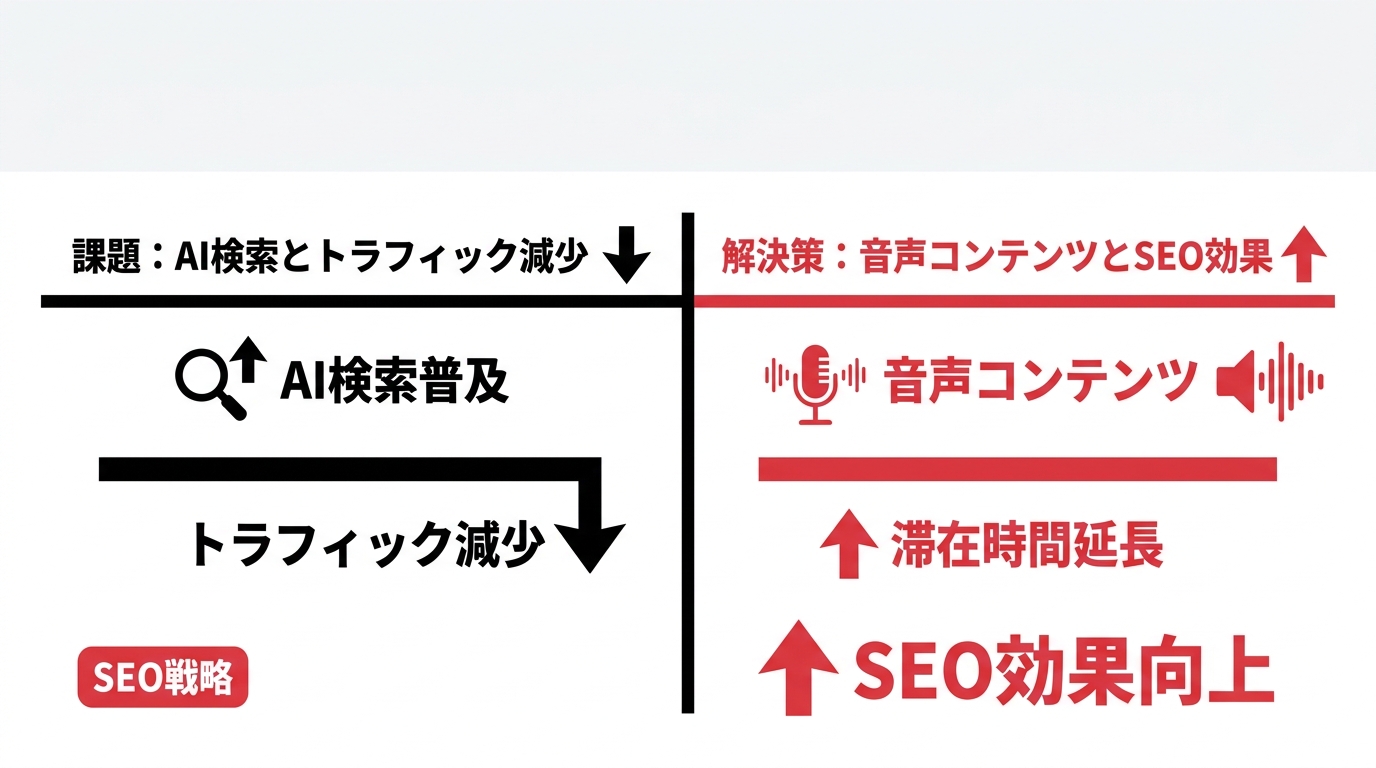
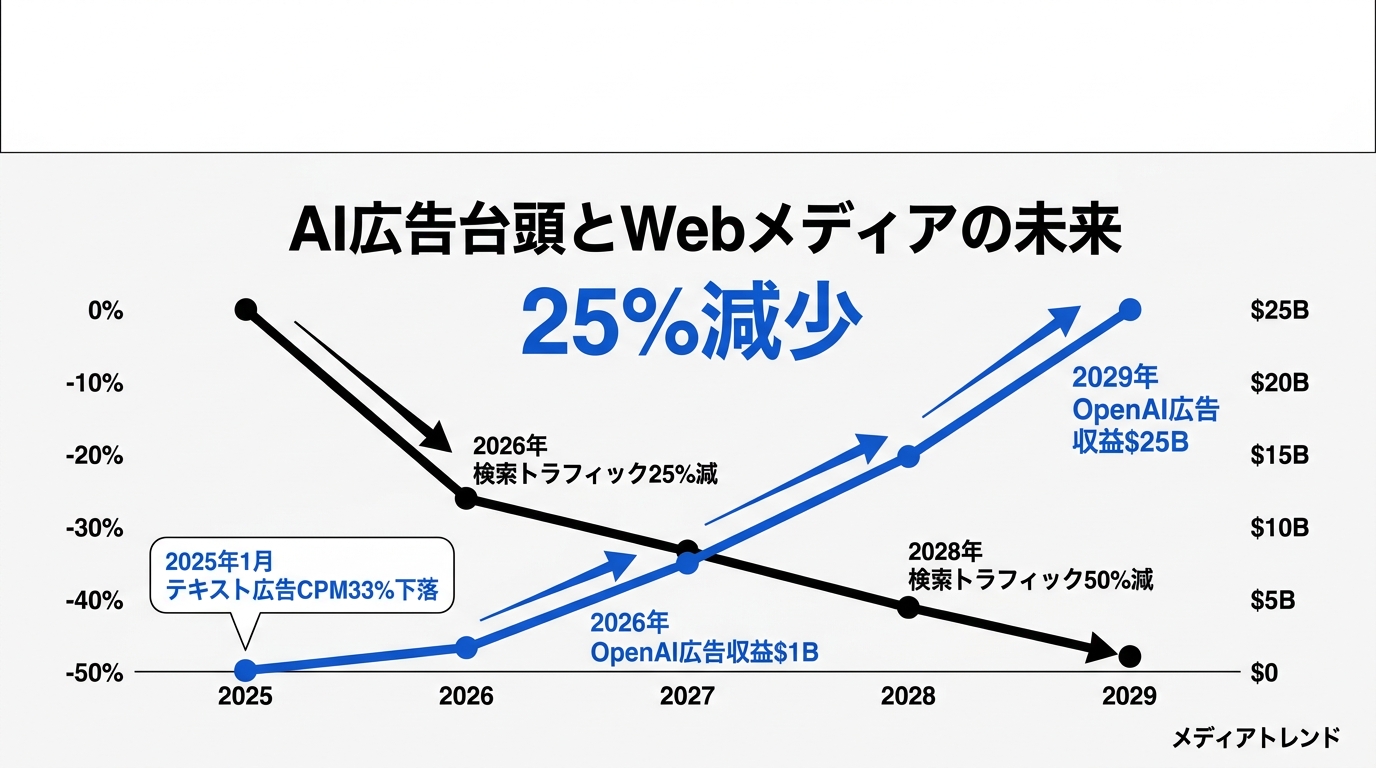
"Our rankings are stable, but organic traffic is falling." Publishers increasingly face this mismatch as Google AI Overviews and other answer features resolve part of a search directly on the results page.
I spent years working with search rankings, click-through rates, time on page, and exits at a large publishing business in Japan. That experience makes me cautious about simple fixes. Adding an audio player will not replace clicks lost to an answer engine. It can, however, make the visit more useful once someone does reach the page.
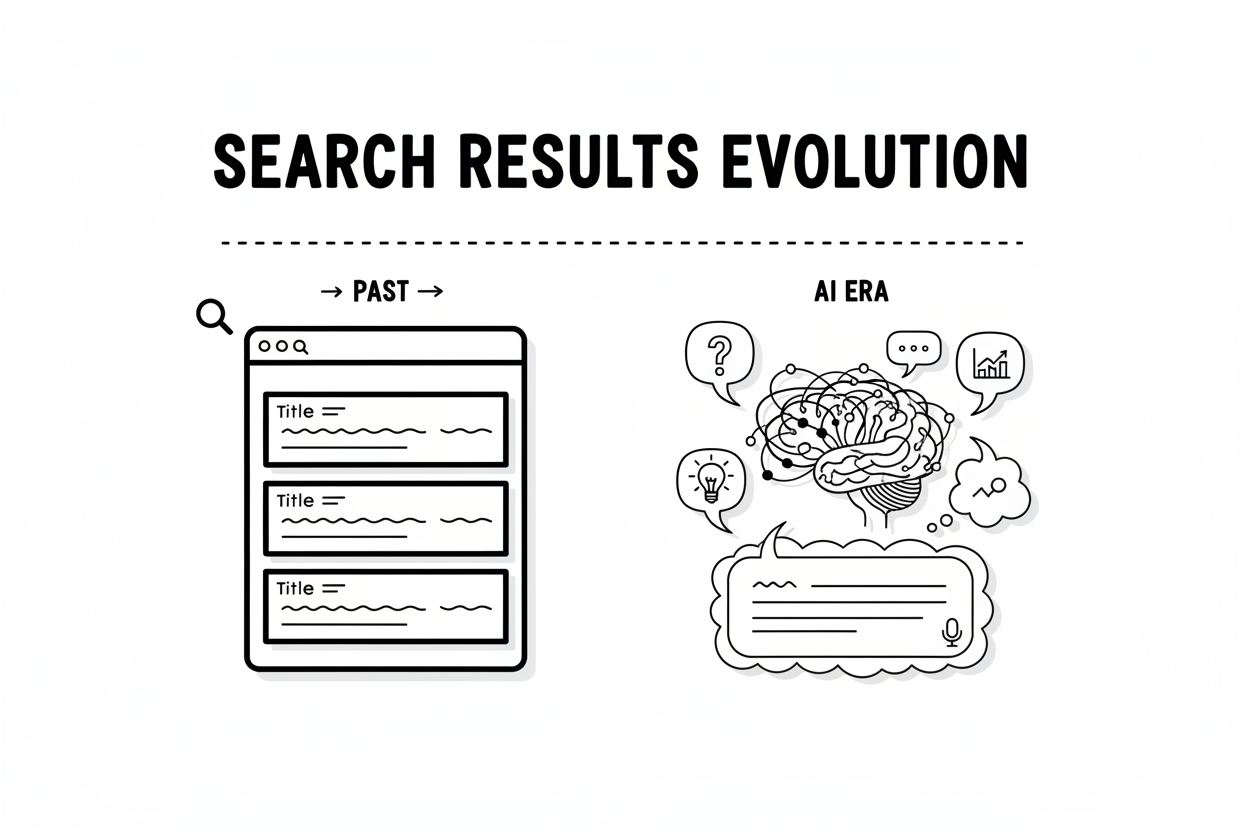
Zero-click search moves part of the journey upstream
A zero-click search ends on the results page rather than on an external website. The effect varies by query, market, device, and the presence of an AI-generated answer. It does not mean that every search is becoming clickless.
Definitions, dates, and short procedures are easy to resolve without a visit. Decision criteria, original reporting, and the conditions behind a result often require the full source. Publishers therefore need to look beyond aggregate organic sessions and examine what happens after the remaining clicks.
I have seen click-through rates change while rankings held steady. A publisher cannot control every feature Google places around a listing. It can control whether visitors find first-hand evidence and a format that suits their situation. What makes audio usable by AI search covers the structure and evidence side of that work.
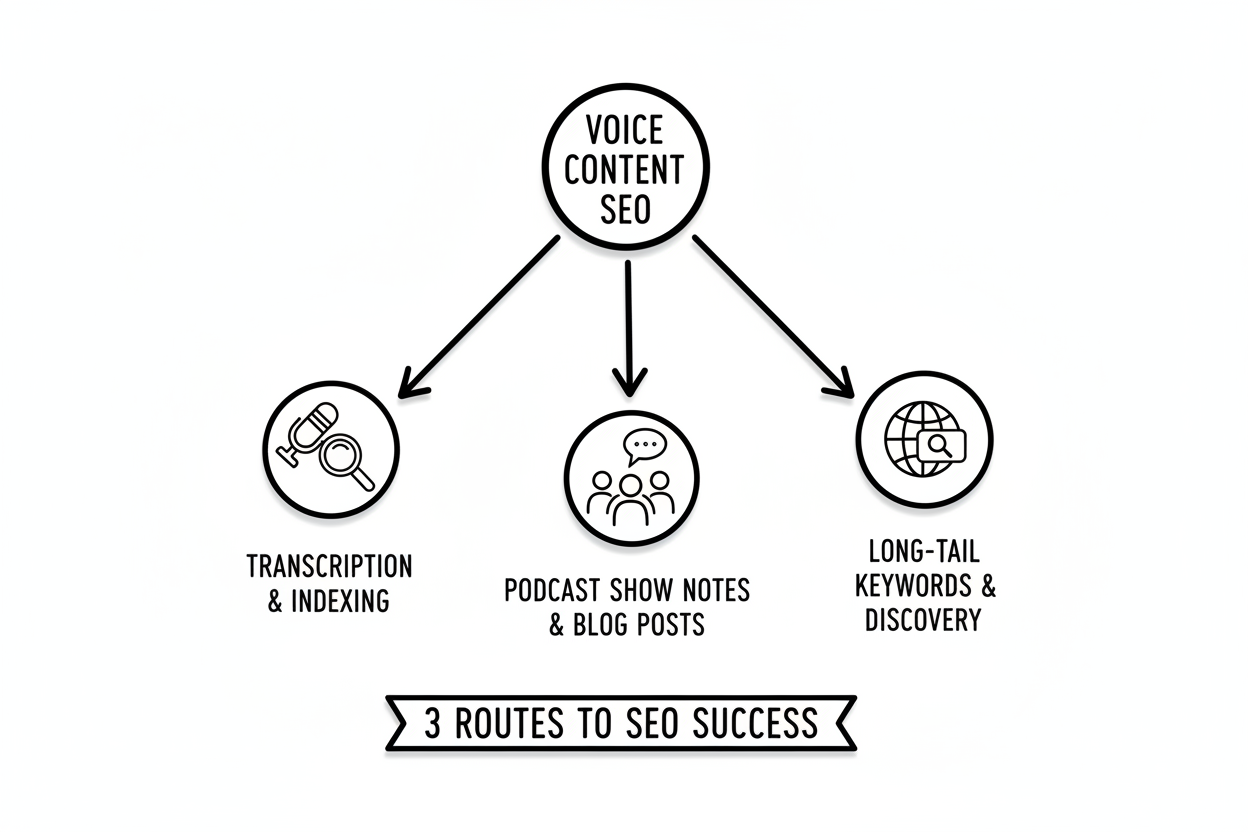
Audio can support SEO through three routes
Audio SEO means using an audio edition, transcript, metadata, and measurement to improve how an article is consumed and understood. It does not mean that an audio file carries a known ranking bonus.
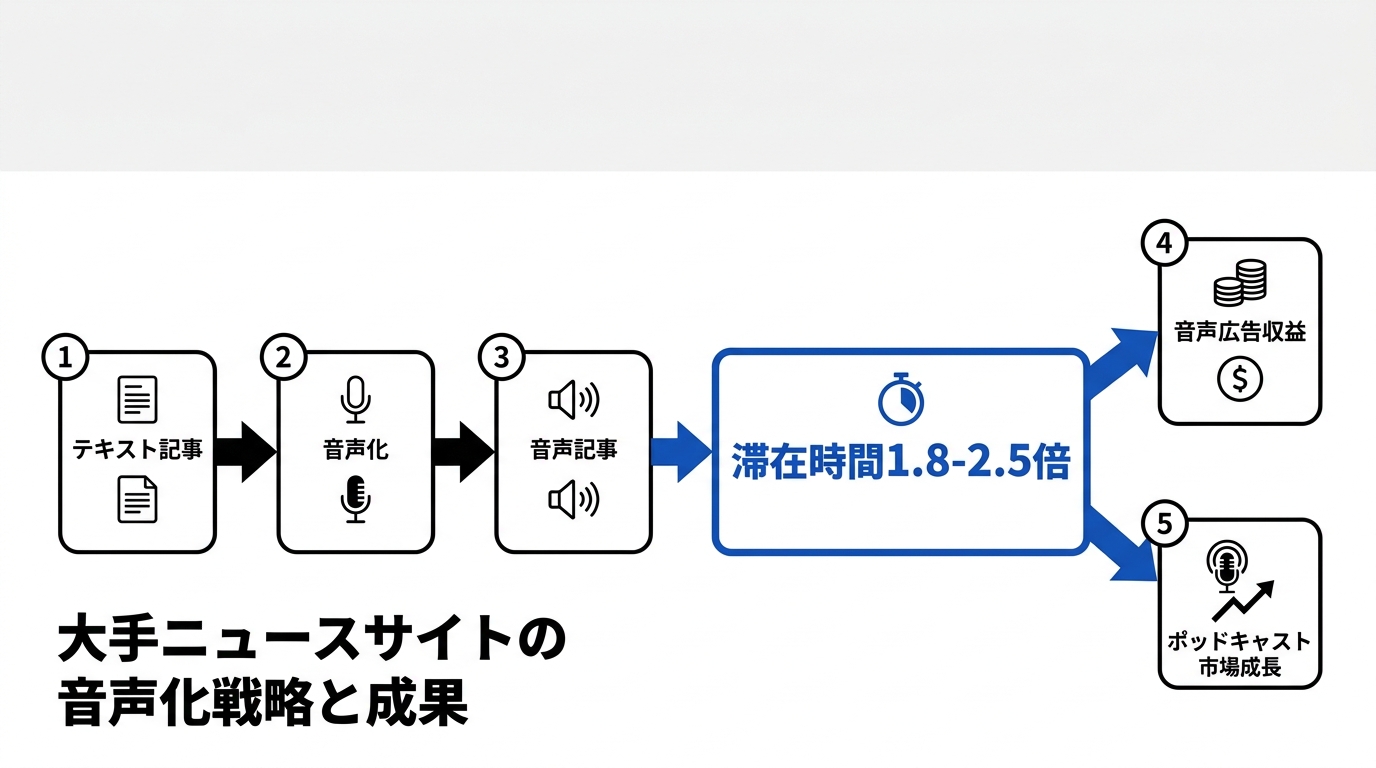
The first route is sustained contact. A listener can leave the screen and continue with an article while commuting, cooking, or walking. Some publisher case studies report 1.5–2.5x longer sessions among audio users, but selection effects matter: people who press play may already be more interested. The measurement conditions are discussed in our guide to audio and time on page.
Google has not confirmed time on page as a direct ranking factor. When I saw rankings move after audio launches, content updates and internal linking changed at the same time. It would be misleading to assign the movement to audio alone.
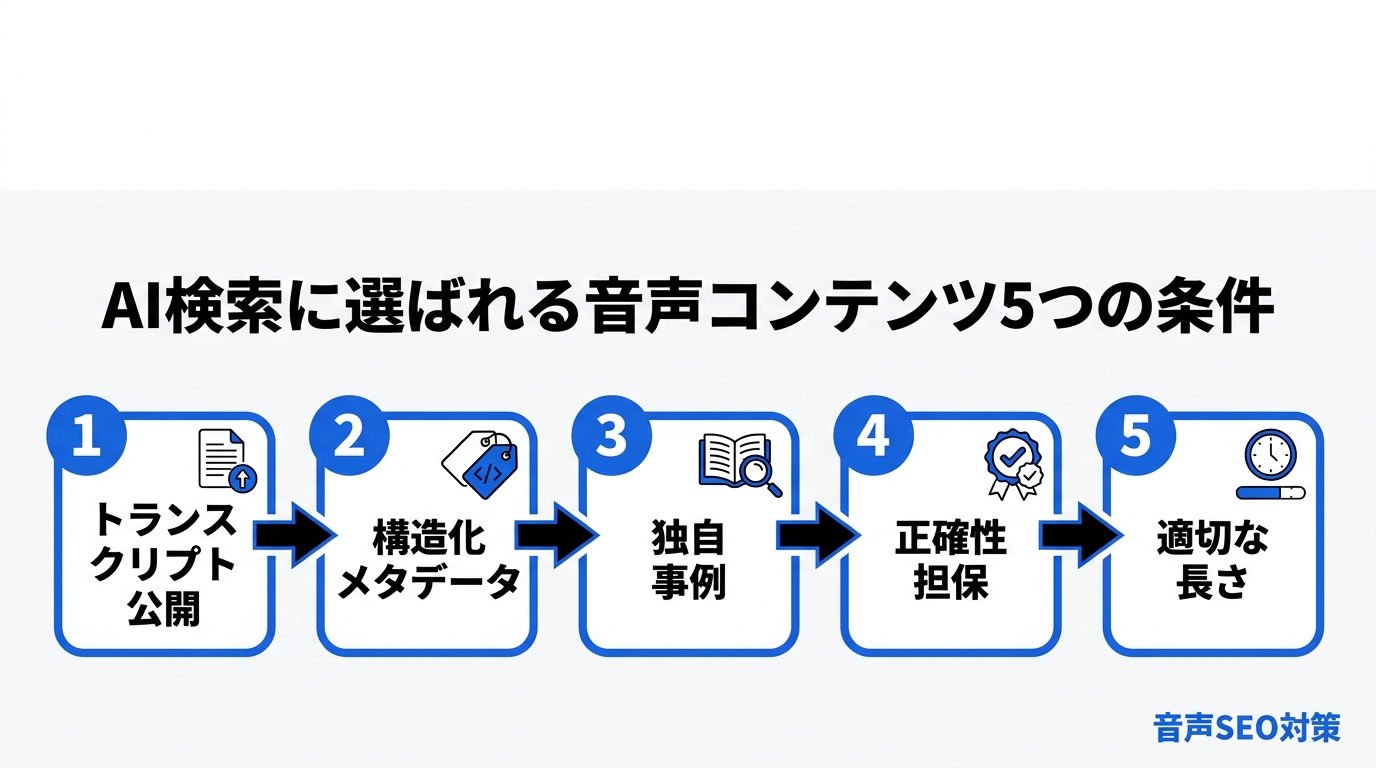
The second route is the transcript. A transcript becomes valuable when the audio includes an editor's explanation, an interview detail, or a decision that was absent from the original article. Duplicating the article verbatim adds little. Organizing new material under descriptive headings makes it available to readers, search engines, and assistive tools.
The third route is first-hand experience. Vocal tone itself is not an established ranking signal. Recording often prompts an author to explain uncertainty, context, and failed approaches that were edited out of the written piece. Bringing those details back into the transcript makes the page more distinctive and verifiable. Why web publishers need an audio option explores this division of labor between text and sound.
AI search rewards usable evidence, not deliberate obscurity
Content designed for AI search should make claims, sources, conditions, and authorship easy to identify. Trying to write something an AI "cannot summarize" usually produces vague copy rather than durable differentiation.
In publisher analytics, I repeatedly saw the same tactic perform differently across sites. "Engagement increased" is not enough. Readers need the article type, placement, comparison group, and measurement period. No public evidence guarantees that supplying these details will earn an AI citation, but it does make the claim easier to check.
Audio can hold the explanation behind a number or editorial decision. Converting that explanation into a short, self-contained transcript passage gives both people and machines something concrete to evaluate.
Decide the measurement plan before choosing a voice
An audio implementation includes the player, file delivery, transcript, metadata, and analytics. Schema.org types such as AudioObject can describe the asset, but structured data does not guarantee a special search treatment.
Start with a small group of evergreen articles that already receive search traffic and take several minutes to read. Track starts, 25%, 50%, completion, onward navigation, and return visits. Compare audio users with non-users, while recognizing that this is not a randomized experiment.
My earlier analytics work taught me that overall averages can hide a weak rollout. Segment by article, device, and acquisition source. How to create AI audio content explains the production workflow behind such a test.
Breaking news, pricing tables, code-heavy guides, and visual explainers may be poor candidates. Readers often need to scan or compare rather than follow a linear narration. Generating audio for everything can create more proofreading work than reader value.
Treat audio as audience design, not a ranking shortcut
Audio cannot reverse the shift toward zero-click search. It can give the people who still visit a page another way to stay with the reporting, and it can surface original context through a well-edited transcript.
Search interfaces will keep changing outside a publisher's control. The choice to read or listen can be built on the publisher's own page. Measure that choice as a form of audience contact first. Any search benefit should remain a secondary, carefully qualified outcome.
PUBVOICE - Deliver your articles as audio
We built PUBVOICE so media operators can add a listening experience without extra workload. Register an RSS feed and every new article gets audio automatically.
Every time we hear editors worry that readers never finish their articles, we keep coming back to the same answer: audio reaches the moments text cannot - commutes, chores, workouts. PUBVOICE was born from that conviction.

Yutaro Sasao
We take each person's "I want to" and "I want to be able to" seriously, and use technology to make it happen. That is our mission.
Opening up new possibilities with digital technology. Drawing on roughly ten years in the advertising and media industries, Yutaro builds app development for web media companies with AI-driven efficiency.
Talk to us about your next project
Contact us about app development or other digital initiatives. We will review your requirements and recommend an approach suited to your business.
Related posts
Contact
Contact us to discuss app development for your media business. We will recommend an approach based on your requirements and commercial goals.
Contact Form
Send us your inquiry using the form below. We aim to respond within 24 hours.
Contact by Email
info@media-leap.com
We aim to respond within 24 hours
Business Hours
Weekdays: 9:00–18:00 JST
Weekends and public holidays: Closed