How Audio Ads Can Build a Second Revenue Stream
Audio ads turn existing articles into new inventory. This guide compares pre-roll, mid-roll, and post-roll formats and lays out a low-risk test for publishers.
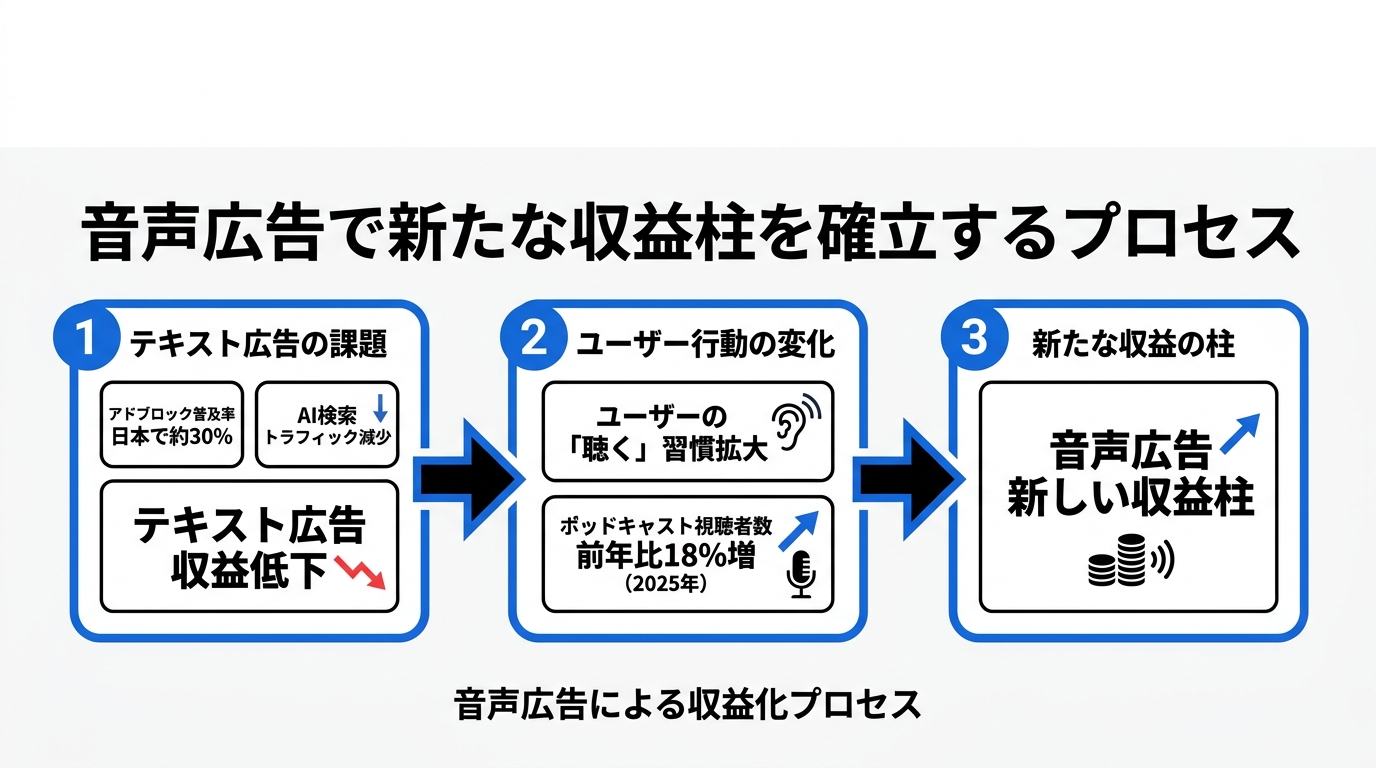
“Display advertising alone no longer gives us a dependable plan for next year.” I hear versions of that concern from publishing teams more often now.
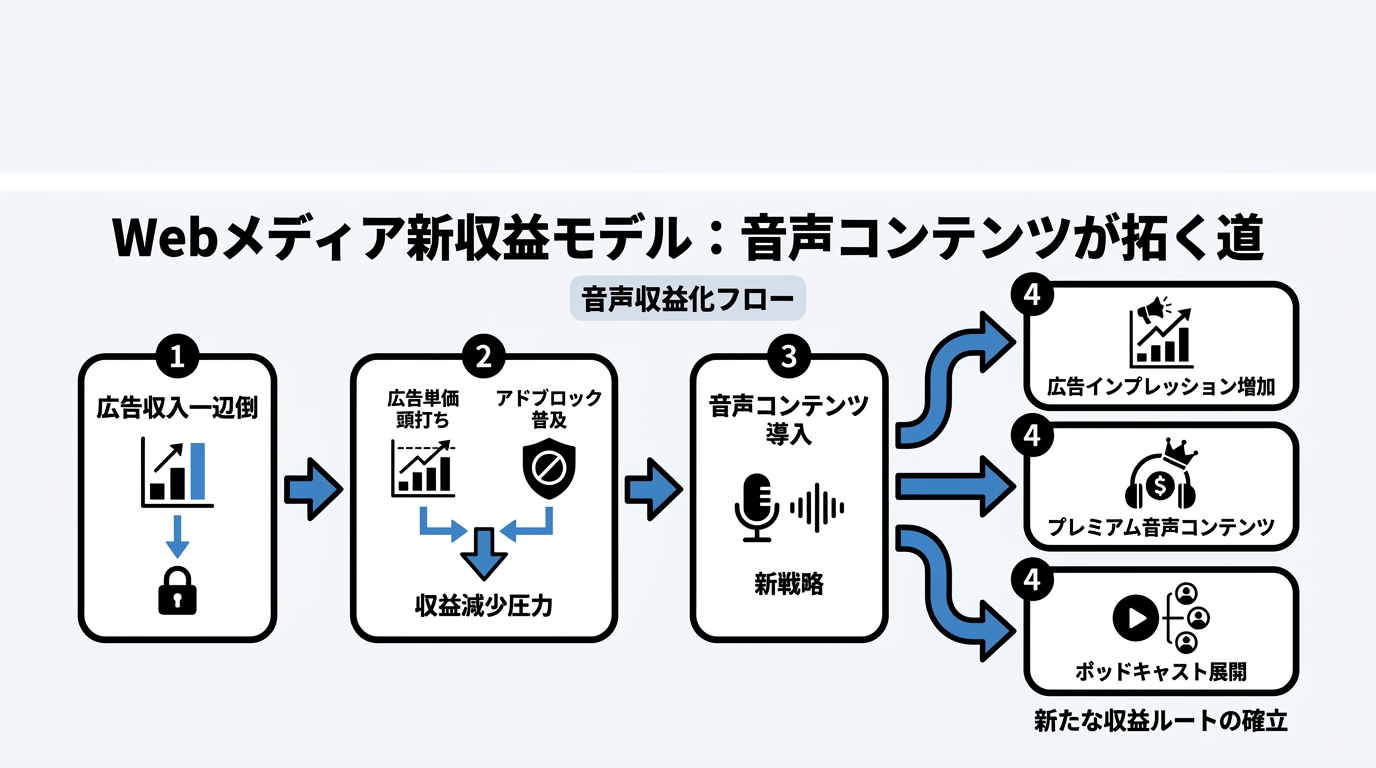
Search traffic, privacy rules, ad prices, and browser behavior all sit partly outside a publisher’s control. Audio advertising does not replace display revenue. It does, however, create inventory from reporting and commentary a newsroom has already paid to produce.
I have worked on both sides of this problem: helping publishers monetize inventory from the ad-tech side, then managing revenue and analytics inside a large publishing organization in Japan. I have watched a new ad unit lift short-term revenue and hurt user behavior a week later. Audio creates the same tension.
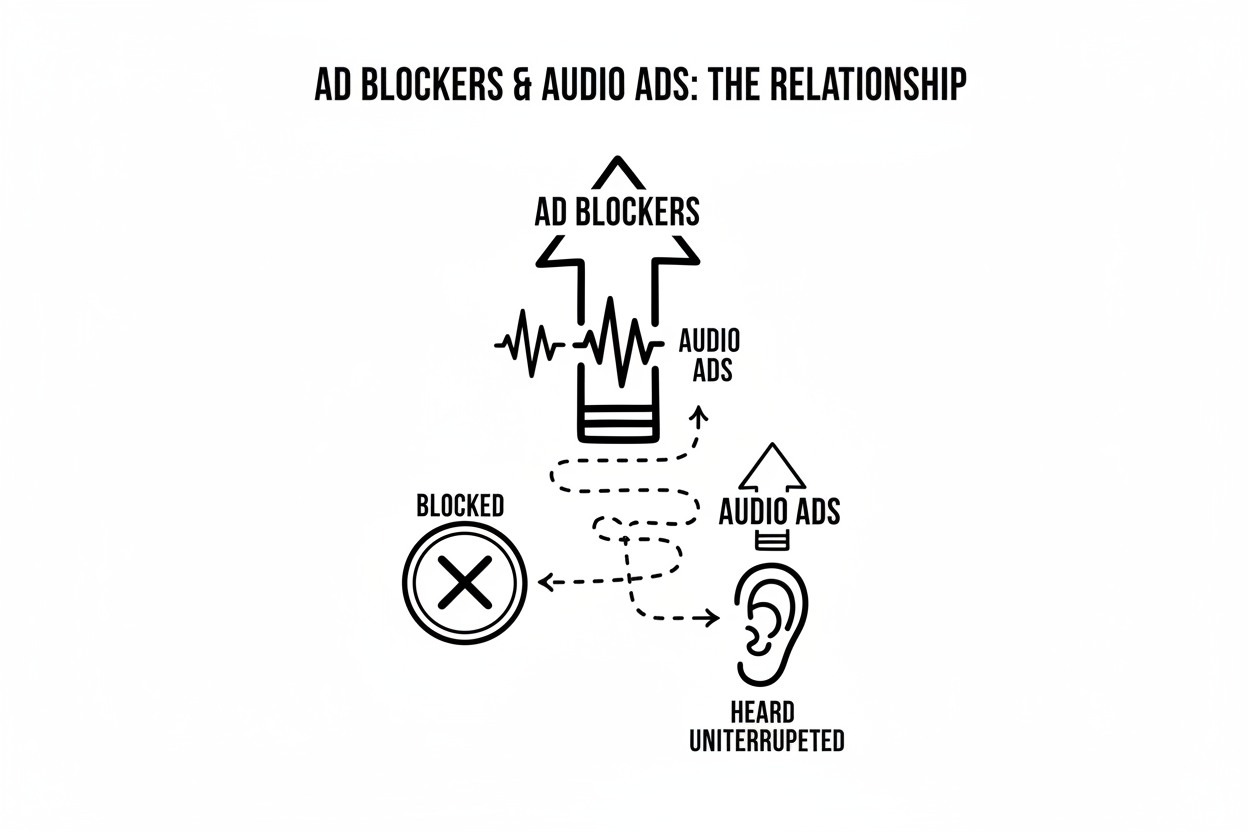
Audio creates inventory separate from the page
An audio ad runs before, during, or after the narrated version of an article. Because it occupies listening time rather than a banner position, it gives publishers another way to monetize the same pageview.
Ad blocking is part of the context, but it should not become the sales pitch. A GWI estimate summarized by Backlinko puts global ad-blocker use at about 30% of internet users. Results vary by country, device, and methodology; the figure is not a publisher-specific loss rate.
Audio is not immune, either. A blocker may not remove an ad already stitched into an audio file, but it can block a request to a known ad server. Why publishers consider audio in the ad-block era separates those cases.
Pre-roll, mid-roll, and post-roll make different trade-offs
Pre-roll runs before the editorial audio, usually for five to 15 seconds. It reaches more listeners but asks for patience before they receive any value. For a site with many first-time visitors, a five-second test is safer than a conventional 30-second spot.
Mid-roll appears inside the story. A chapter break can make it feel natural, particularly in interviews and long analysis. It is a poor fit for short pieces, where the ad can take up a disproportionate share of the session.
Post-roll follows the article. Reach is lower, but the remaining listeners have demonstrated interest. It can work for a newsletter, a related report, or a sponsor offer tied closely to the subject.
Context and frequency matter more than volume
A contextual ad uses the subject of the article rather than a reader’s browsing history. A running story might carry sports equipment; a personal-finance story might carry a financial service. Programmatic audio ad technology explains how this can be automated.
Start with one ad per session. Compare five- and ten-second pre-rolls, then track the share of users who reach the editorial audio and complete it. Ad impressions without editorial completion are a warning, not a win.
In display advertising, I built many forecasts showing that one more unit would lift the month’s revenue. Those forecasts were often directionally right. They said nothing about whether readers would return the following month. The audio dashboard must place revenue beside completion and repeat use.
Test ten popular articles before selling inventory
Add audio to ten high-traffic long-form articles and run them without ads for two to four weeks. Measure starts, 25% and 50% progress, completion, and next-page activity. Selling inventory before proving that people listen produces a media kit, not a business.
Once behavior is stable, run a five-second house promotion. Compare sessions with and without it. Only then approach one sponsor whose product fits the editorial subject. Publishers should also compare advertising with the four audio revenue models and audio subscription strategies.
Some editorial formats should stay silent
Short breaking news, reference pages that answer a single question, and highly visual explainers rarely create enough listening time. Audio can also remove essential information from charts, formulas, and image-led reporting.
Revenue projections remain assumptions until the test runs. Plays, ad-load rate, fill rate, CPM, production cost, and listener drop-off all affect ROI. A large forecast based on an assumed play rate is less useful than one verified cohort of people who keep listening after the ad.
MediaLeap Inc. builds PUBVOICE for publishers that want to run this kind of test without creating a full audio workflow. We still do not treat audio-ad revenue as guaranteed. A second revenue stream begins with the unglamorous work of measuring what happens after someone presses play.
PUBVOICE - Deliver your articles as audio
We built PUBVOICE so media operators can add a listening experience without extra workload. Register an RSS feed and every new article gets audio automatically.
Every time we hear editors worry that readers never finish their articles, we keep coming back to the same answer: audio reaches the moments text cannot - commutes, chores, workouts. PUBVOICE was born from that conviction.

Yutaro Sasao
We take each person's "I want to" and "I want to be able to" seriously, and use technology to make it happen. That is our mission.
Opening up new possibilities with digital technology. Drawing on roughly ten years in the advertising and media industries, Yutaro builds app development for web media companies with AI-driven efficiency.
Talk to us about your next project
Contact us about app development or other digital initiatives. We will review your requirements and recommend an approach suited to your business.
Related posts
Contact
Contact us to discuss app development for your media business. We will recommend an approach based on your requirements and commercial goals.
Contact Form
Send us your inquiry using the form below. We aim to respond within 24 hours.
Contact by Email
info@media-leap.com
We aim to respond within 24 hours
Business Hours
Weekdays: 9:00–18:00 JST
Weekends and public holidays: Closed