記事を読むから聴くへ:TTSが変えるテキストコンテンツの未来
TTSはWeb記事に「聴く導線」を加える。音声プロダクト開発の経験から、技術の現在地、運用負担、収益への影響、向かない記事までを考える。
執筆:笹尾祐太朗(株式会社メディアリープ代表/AI音声プロダクト開発)
「この記事、読みたかったんですが、長くて途中で諦めました」。
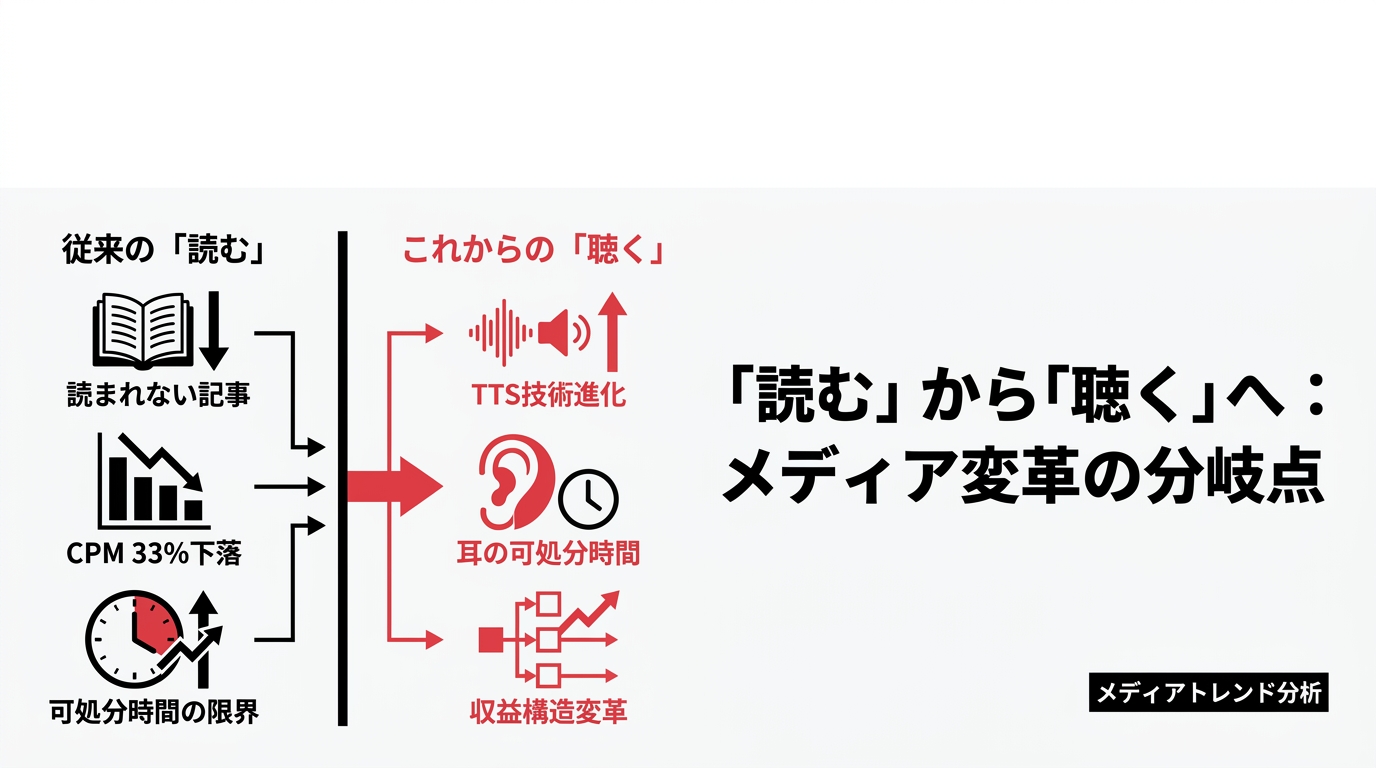
メディア運営に関わっていた頃、定性調査のインタビューで何度もこの言葉を聞きました。開いてみたものの、家事が始まったり、別のタブを開いたり、電車が着いたり。最後まで読まれない記事のほうが、実は圧倒的に多いです。
長文が「読まれない」というより、生活の途中で読み切れません。生成AIによって公開量は増えましたが、「AI生成」の定義は調査ごとに異なり、人が一部を編集した文章まで含む場合があります。公開本数だけで読者の選別行動を説明するのは危険です。それでも、書き手の労働時間が増える一方で、読者の1日は24時間のままです。
つまり、問題は「AIが書いた記事が増えたこと」ではありません。一次体験を持たない書き手が、それらしいテキストを大量に出せるようになったことです。人間が書いていても、現場の肌感覚や実体験がない文章は、AIの出力と区別がつかない。読者から見て両者が区別できないなら、テキストという形式そのものの希少性が下がる。書き手の労働時間は増え続けているのに、読者の可処分時間は1日24時間のまま、という構造は、この先さらに強まると思います。
一方で、通勤中、家事中、運動中。目と手はふさがっているけれど、耳は空いている時間が、1日の中にぽっかりと空いています。ここに書き手の言葉が入っていけたらどうなるか。この数年、ずっとこの問いを考えてきました。
私は2015年からWeb広告とWebメディアの両側で仕事をしてきました。大手出版社系メディアで記事の収益化とデータ分析を担当し、SSP・アドネットワーク事業ではプログラマティック広告の収益化を支援してきました。2025年5月にメディアリープを創業し、いまはWebメディアの記事をAIが自動で音声化するSaaS、PUBVOICEを一人で作っています。
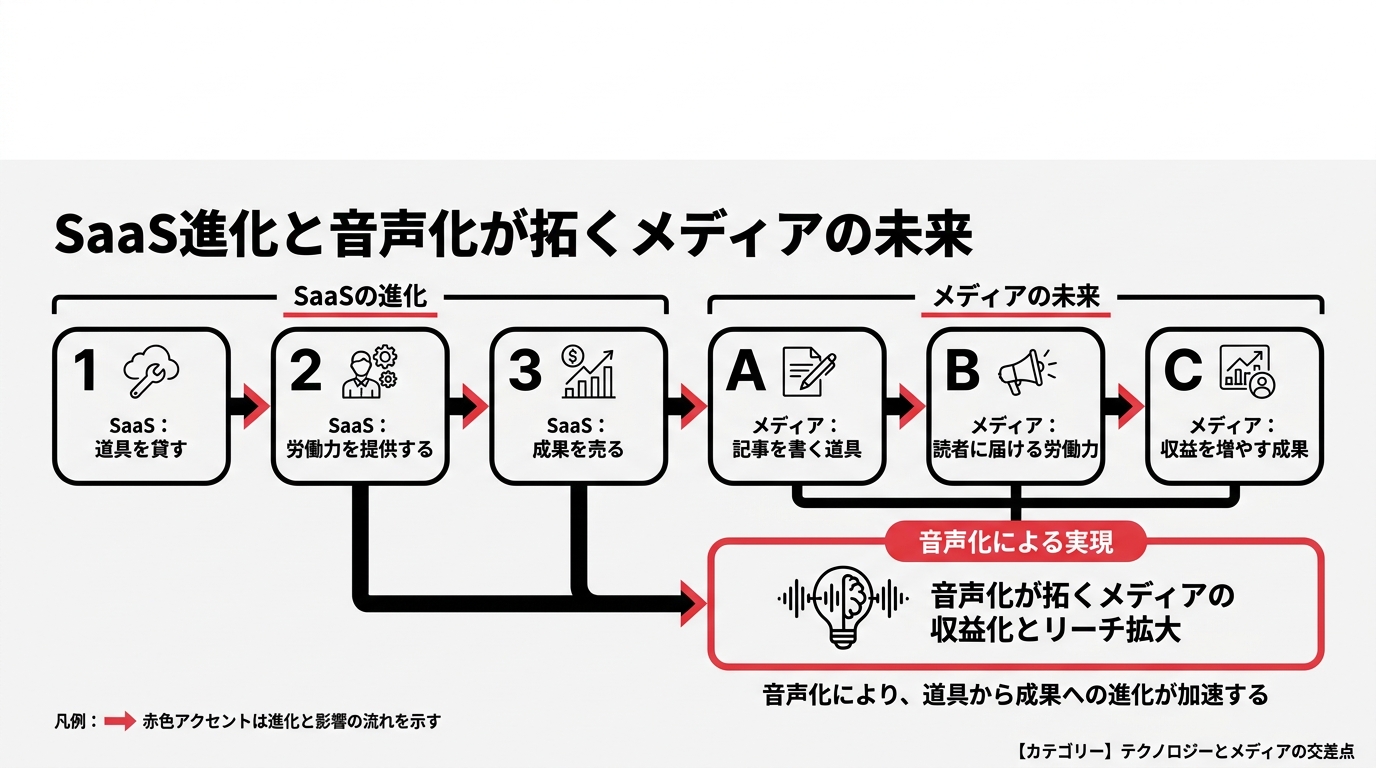
「読む」から「聴く」への広がりは、単なる技術の進歩ではありません。メディアの収益構造、書き手の労働時間、読者との接点が変わります。導入手順はWebメディア音声化の5ステップに分け、ここでは設計思想を掘り下げます。
「読み切られない」という、メディアの構造的疲労
ここ数年、テキストコンテンツのディスプレイ広告CPMは構造的に下がり続けています。正確な月次数値は公開データが限られますが、業界関係者の多くが「テキスト面の単価は年々厳しくなっている」と実感しています。供給が需要を上回る構造は変わっておらず、広告で食う方程式が、10年前なら成立していたものの、いまは成立しづらいフェーズに入っています。
広告単価が下がる理由は単純で、供給が需要を上回っているからです。記事の本数が増え、枠が増え、インプレッションが積み上がる一方で、広告主の予算は伸びない。PVあたりの単価が下がるのは、構造的な結果です。
ここに、読者が最後まで読まないという事実が重なります。滞在時間が短いページは、広告のインプレッションが積み上がりません。広告収益を支える「読者が枠を見る時間」が、読み切られない記事からは生まれません。
広告主も馬鹿じゃありません。滞在の短いページからは離れ、滞在の長い動画や音声プラットフォームに予算を移しています。これが、いまテキストメディアが抱えている構造的な疲労の正体です。誰かが意地悪をしているわけでも、メディアが堕落したわけでもない。需要と供給のバランスが変わっただけです。
ピラミッドの頂点が、取り分を厚くしにいっている
もうひとつ、現場の感覚として書いておきたいことがあります。
広告業界のピラミッドの頂点にいるGoogle自身が、この1〜2年で広告フォーマットの露出を一段と強めているように見えます。これは事実ではなく、私の解釈です。ただ、具体例を挙げないと業界の人間は納得しないので、観測していることを書きます。
第一に、AI Overviewsの中に広告が出るようになりました。Semrushの分析では、AI Overviewsが表示された検索結果ページのうち、Googleの広告が掲載された割合は、2025年3月の時点で5.17%でした。これが同年10月には25.56%まで跳ね上がっています(Semrush 2025年11月)。検索結果画面は今、「AIサマリーの上」「サマリーの中」「サマリーの下」の3層の有料枠に切り分けられつつあります。
第二に、AdSenseのフォーマットも動いています。Related SearchのAuto adsは2026年8月6日に完全に停止されることが発表されており(relevantaudience)、AdSense for Searchのカスタムスタイルは2025年10月以降、強制的に標準レイアウトに統一されています。加えて、AdSenseは従来のクリック課金(PPC)からインプレッション課金への移行を進めています(ProBlogBooster)。
頂点のプレイヤーが、自らのフォーマットをここまで強化していくというのは、業界全体が成長の踊り場にあることの現れではないか、というのが私の見立てです。
ただし、別の読み方もできることも書いておきます。AI検索への移行期における収益源の再設計とも読めるし、単純な収益最大化とも読めます。複数の読み筋が立つ中で、あえて自分の見立てを置くなら、現場感覚としては「テキスト広告の取り分を、プラットフォーム側が再構築している最中だ」と受け取っています。
TTSは「届け方」を増やす技術になりました
少し、現場の感覚を書かせてください。
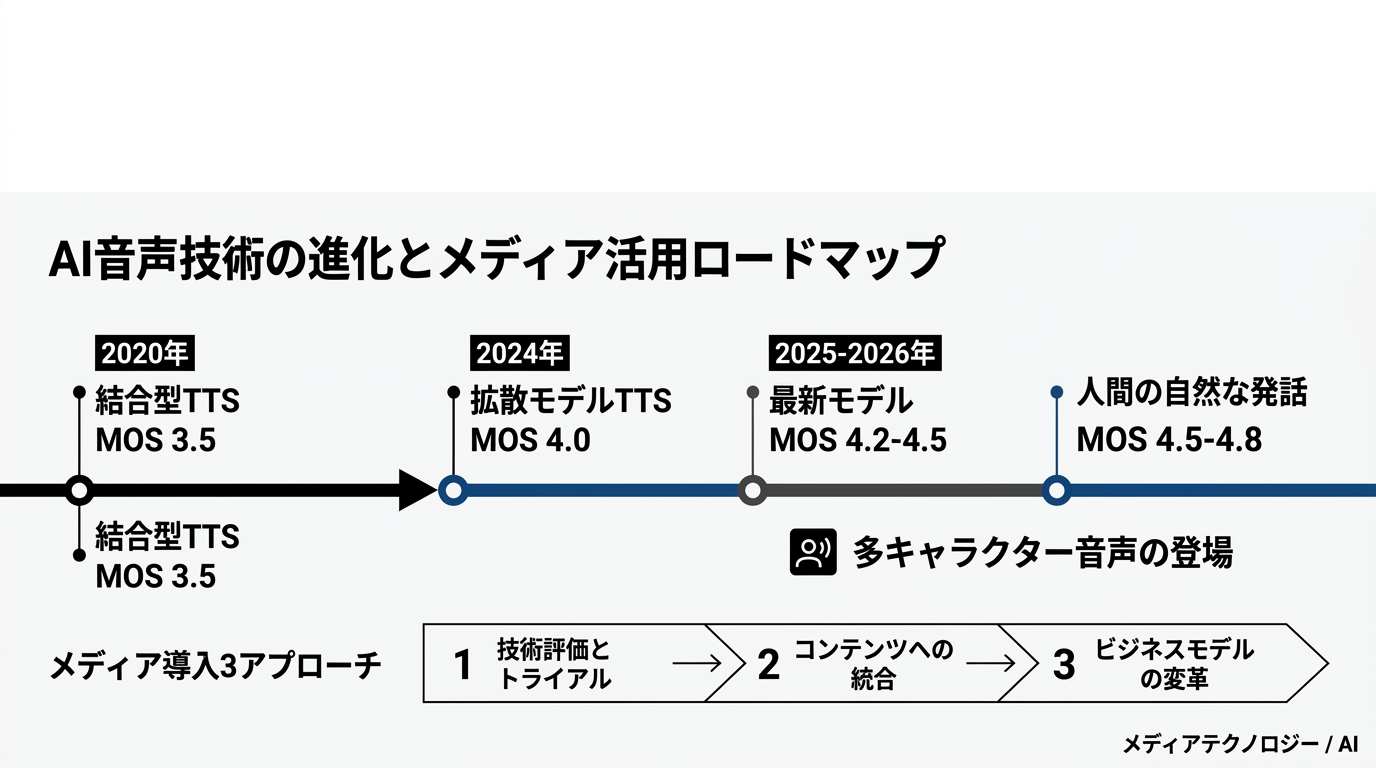
音声合成(TTS:Text-to-Speech)という技術は、長らく「ロボットが原稿を読み上げる」ものでした。最初にTTSに触れたのは2018年頃、Google Cloud TTSを業務で試した時でした。たしかに文字は読み上げているけれど、「人間が話している」という錯覚には至らない。そのギャップが、数年で埋まりました。
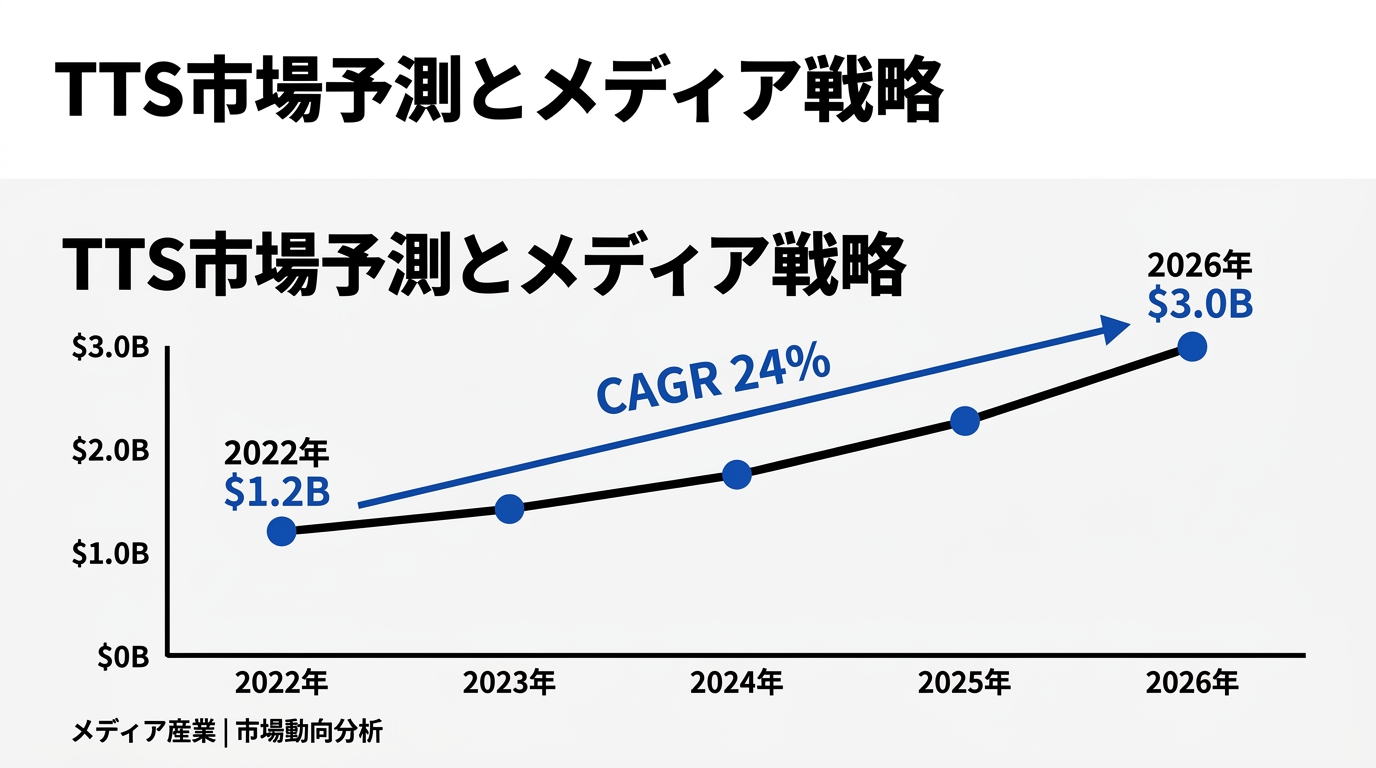
何が変わったのか。2017年のTacotron 2(Google、arXiv:1712.05884)が、テキストから直接メルスペクトログラムを生成するエンコーダ・デコーダ構造を実用化しました。評価指標のMOS(5点満点)で、このモデルは4.53を記録しています。人間の録音音声が4.58ですから、ほぼ追いついた計算です。
とはいえ、技術のディテールは、この記事の本筋ではありません。知りたいのは、メディアにとってそれが何を意味するか、です。
意味はシンプルで、TTSは「書いた記事を耳で受け取れる品質」に近づいたということです。2024年以降は、感情や間を制御できる商用モデルが増えました。ただし、対応言語数と日本語の自然さは別です。製品ページの数字ではなく、自社の固有名詞や文体を入れた試聴で判断します。
音質の微差でサービスを選ぶ時代は、たぶん過ぎています。日本語のTTS基盤は、すでに実用レベルに達しています。
メディアに「聴く導線」が生まれたとき、何が変わるか
業界の外からは見えにくい部分があります。
自社で音声チャットアプリを開発した際、VOICEVOXの合成エンジンを組み込んでリリースしました。開発期間は約3ヶ月。音声品質のチューニングよりも、UIの設計とユーザー体験の調整に時間がかかりました。音声品質そのものは、エンジン任せで十分なレベルにありました。
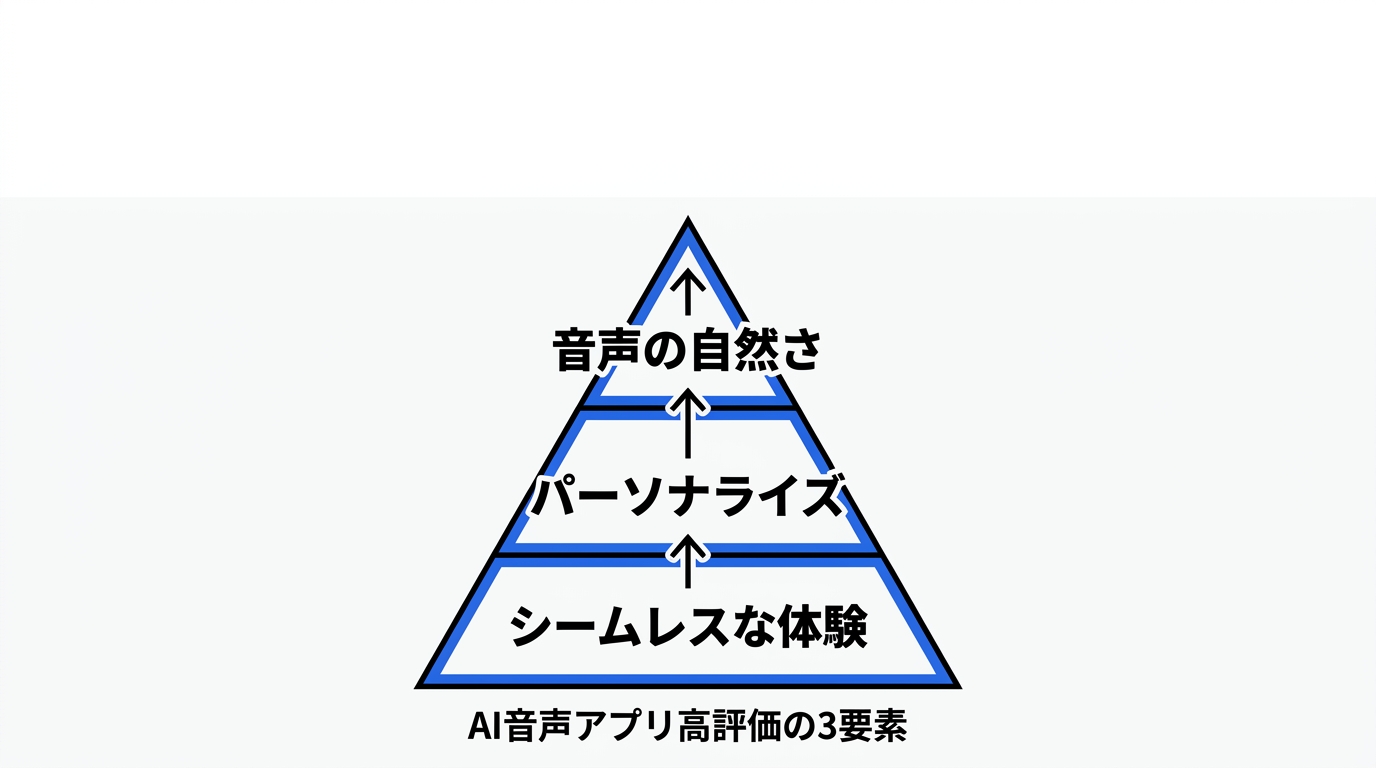
アプリは5,000ダウンロードを超え、評価は4.2でした。それ以上に残ったのは、「AIと話していることを忘れる瞬間があった」という複数のレビューです。自社アプリの実績であり、TTS全体の品質を示す比較試験ではありません。それでも、音声が文字とは違う接触を作ることは実感できました。
この体験から、ひとつ確信があります。TTSは、テキストコンテンツに「もう一本の届け方」を足す技術だということです。
Webメディアの記事は、いままで「目で読まれる」という単一のチャネルに依存してきました。読者が目を開けて、手を空けて、画面に向き合う時間帯でしか届かない。この制約が、読者の手元から記事を遠ざけています。
音声化が変わるのは、この時間帯の制約です。通勤の往復1時間、家事をしながらの30分、ランニング中の40分。目と手がふさがっていても、耳が空いている時間に、記事が届く。書き手は1回書くだけで、読む導線と聴く導線の両方が、公開された瞬間に同時に立ち上がります。
<figure> <img src="https://images.media-leap.com/blog/2026/07/1784643011938-g9gldwja.png" alt="読む導線と聴く導線を比較する図" /> <figcaption>図: 読む時間に加え、通勤・家事・運動など耳が空く時間へ記事を届けます。操作を求めない安全な設計が前提です。</figcaption> </figure>広告収益の文脈で言えば、この「聴く導線」は、滞在時間を直接押し上げます。プラットフォーム企業が滞在時間を最重要指標にしているのは、広告のインプレッションと直結するからです。SSP事業にいた頃、現場でその構造を内側から見てきました。
音声化によってメディアが掴む構造的変化
現場での実感を、もう少し解像度を上げて書きますね。
現場で変化が見えたのは、滞在時間です。導入先30社以上を2024〜2026年にGA4で観測すると、音声再生セッションは同じ媒体の非再生セッション比でおおむね1.5〜2.5倍でした。再生者は元から関心が高い可能性があり、音声化だけの因果効果ではありません。条件と限界は滞在時間の検証記事に記載しています。
もうひとつ、書き手の労働時間を増やさないという点も外せません。ここが肝で、ポッドキャストや動画がメディアに載らない理由の多くは、書き手が台本を書き、吹き込み、編集する時間がないからです。書き手の1日の労働時間は有限で、その中に新しい作業を足すと、多くの人が挫折します。私自身、ポッドキャストを「やればいい」と3回くらい挫折しました。
TTSは、この「書き手の労働時間を増やさずに、届く時間帯だけを増やす」という点で、メディアの構造にフィットします。書いて公開する。その瞬間に、テキスト版と音声版が、読者の前に並んで現れる。
収益の多角化という側面もあります。広告単価が下がり続けるテキスト記事に、広告以外のもう一本の収益柱を作る。聴取データ、プレミアム音声、音声広告、サブスクリプション。いまはまだ実験段階ですが、テキスト単価が下がり続ける未来を考えれば、音声で収益柱を一本作っておくことは、メディアの持続性の観点から合理的だろうと思っています。
いちばん大事なのは、入力テキストの質
ここでひとつ、現場の感覚を書いておきますね。
よくある勘違いが「高価なTTSを使えば品質が上がる」という思い込み。確かに品質は上がりますが、入力テキストの質が悪いと、どんなに高価なエンジンを使っても不自然になります。テキストの整備に投資する時間のほうが、結果的に大きな差を生みます。
これ、メディア運営者には逆説的に響くかもしれません。これまで「読まれる文章」を書くために磨いてきた技術は、そのまま「聴かれる文章」を書く技術にはなりません。読みの長い文、漢字の連続、体言止め、箇条書きの多用。目で読むときに映える表現は、耳で聴くときに鼻につきます。
メディアがTTSを導入するとき、いちばん時間がかかるのはエンジンの選定ではなく、音声で聴きやすいテキストの設計です。固有名詞の読み、長い文の分割、見出しの位置、引用の扱い。記事を「耳向け」に組み直す前処理に、どれだけ丁寧に取り組めるかが、最終的な品質を決めます。
AIが音声を生成する速度に、人間のチェックが追いつく形にするのが、現場での一番の課題だと思っています。
日本のメディアは、まだ「読む前提」で組まれている
NHKがAIアナウンサーをニュース番組で使い始めて久しいです(ITmedia NEWS 2022)。Yahoo!ニュースは2010年代からエーアイのAITalkで音声版を提供してきましたが、2025年12月には生成AIでニュースの背景を深掘り解説する機能を追加、2026年7月にはプレスリリースをYahoo!ニュース風に書き換える「ニュースPR by LINEヤフー」を始めるなど、音声以外の生成AI活用も一気に広がっています(ITmedia NEWS AI+ 2025年12月、Real Sound 2026年7月)。朝日新聞デジタルも主要ニュースをAI音声で読み上げる機能を実装しています。
大手は動いています。ただ、Webメディアの多くは、いまだに「読まれる前提」で組まれています。記事のレイアウト、広告の配置、分析のKPI、すべてが「目で読む」ことを前提に設計されています。
ここが変わるとき、メディアの設計思想そのものが変わります。記事の構造、見出しの付け方、段落の長さ、広告の配置、KPIの設計。「聴かれる」ことを前提に全体を組み直す。これは、1本の記事のリライトではなく、メディアのアーキテクチャの変更です。
なぜ広告モデルにしなかったのか
ここで、素直な疑問があると思います。音声の中に広告を挿せば、メディアは無料で使える。広告モデルにもできたのに、なぜしなかったのか。
技術上は、プレイヤーへ広告を挿入し、媒体が無料で使うモデルも選べました。配信量が増えれば売上になる一方、再生前広告は離脱も生みます。
それをしなかったのは、広告を増やす側にもう一度回るなら、このプロダクトを作る意味がないと思ったからです。私は10年間、広告枠を増やして収益を伸ばす仕事をしてきました。「広告を増やせば収益は伸びるが、ユーザーは離れる」というジレンマを、現場で何度も抱えてきました。もうその側に立ちたくない、というのが正直な気持ちです。
そこで、広告ではなく利用者が費用を負担する構造を選びました。料金は改定されるためここでは固定額を書きません。有料にする以上、媒体ごとの効果で判断されます。これは楽な選択ではありません。
ただし、「広告を増やしたくない」と言いながら課金する以上、それに見合う効果を出す責任があります。「広告モデルにしなかった」という事実だけでは、誠実さの根拠にはなりません。効果を出すことだけが、根拠になります。
詳しくは、広告枠を増やさずに、広告の価値を上げる方法を考えているに、崩されるのを想定しながら書きました。
読者の「耳」は、いま過剰供給の影響を受けていない
個人的なことを、ひとつだけ書きます。
長文が読まれない、供給が過剰、広告単価は下がる。こういう話を続けていると、メディアの終わりのような話に聞こえるかもしれません。が、私はそうは思っていません。
耳が空いている時間には、書き手の言葉が届く余地があります。一方、図表中心の記事、速報、短文では音声化の手間が上回ります。音声市場もいずれ混み合うかもしれません。ChatGPT広告とメディア収益が示すように、配信経路は常にプラットフォームの変化を受けます。書く時間を増やさず、届く時間帯だけを増やせるか。このプロダクトで確かめたいのは、その一点です。
「読む」から「聴く」への転換は、技術の進化の話ではなく、情報の届け方の設計の話です。この谷を埋める仕事は、まだ始まったばかりだと思っています。
記事を「音」で届けるサービス、PUBVOICE
私たちが開発したPUBVOICEは、メディア運営者の作業負担を増やさずに音声体験を追加できるサービスです。RSSを登録するだけで、新しい記事が公開されるたびに自動で音声が生成されます。
「読者が記事を最後まで読んでくれない」——その悩みを聞くたびに、音声なら解決できると感じていました。通勤中、家事の合間、運動中。テキストが届かない時間に、音声は届きます。PUBVOICEは、その想いから生まれたサービスです。

笹尾 祐太朗
デジタル技術の力を借りて、一人ひとりの「やりたい」「できるようになりたい」に真摰に向き合い、技術の力で実現していく。それが私たちの使命です。
デジタル技術で、すべての人に新しい可能性を。広告・メディア業界での約10年の経験を基盤に、AI技術を活用して開発効率を抜本的に高めたWebメディア向けアプリ制作を提供しています。
関連記事
お問い合わせ
アプリ制作について、お気軽にご相談ください。 お客様のご要望に合わせた最適な解決策をご提案いたします。
お問い合わせフォーム
以下のフォームからお気軽にお問い合わせください。24時間以内にご返信いたします。
メールでのお問い合わせ
info@media-leap.com
24時間以内にご返信いたします
営業時間
平日: 9:00 - 18:00
土日祝日: 休業